EmJUnbound
Where rope becomes language, and education is an act of love.
Rope is my love language
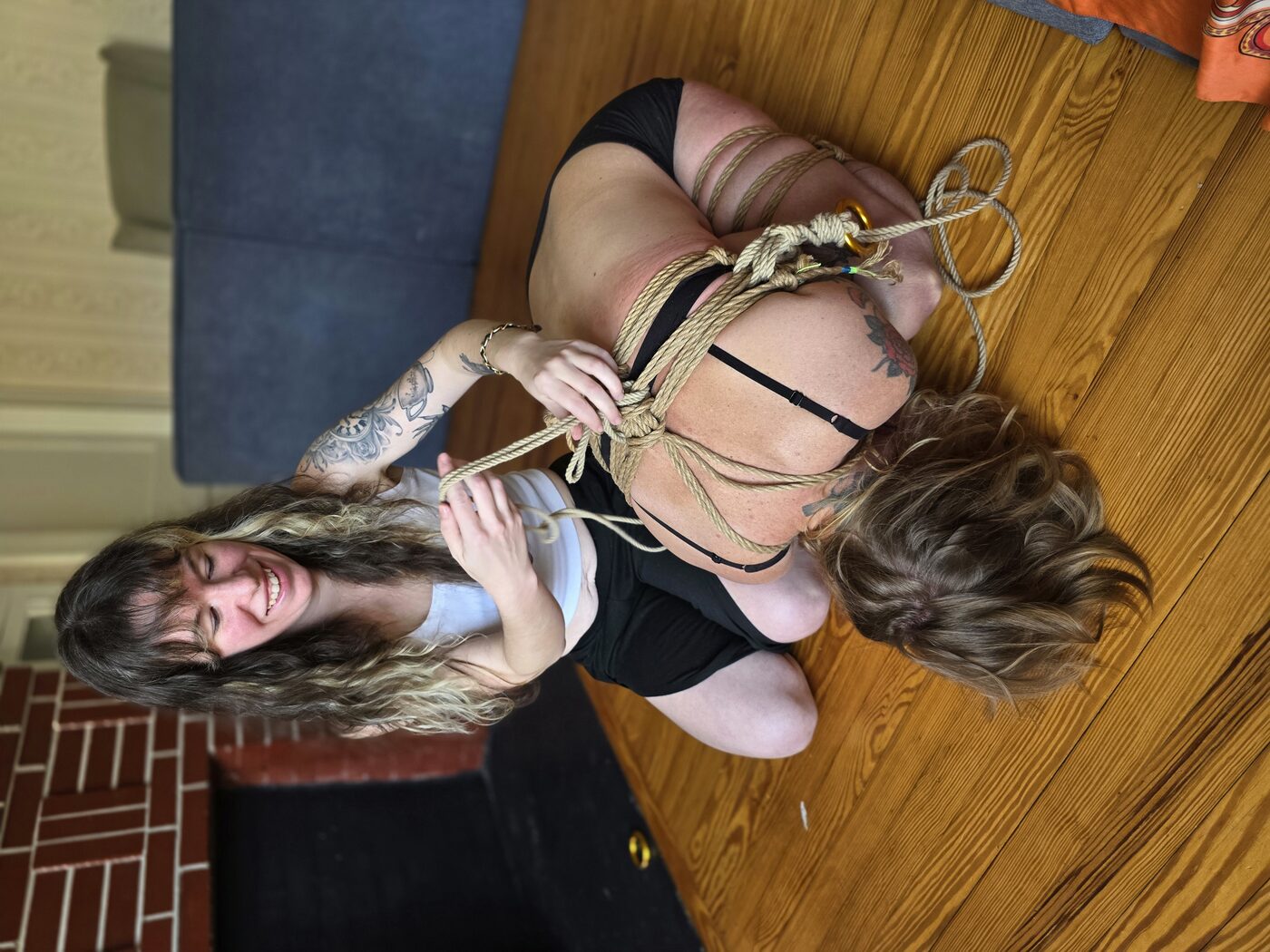
For me, rope and education are more than just skills. They are my love languages. Tying and teaching never feel like work because they are what I am most deeply passionate about.
I am a queer, non-binary rope switch and self-suspender, and I bring that identity into everything I do. I believe rope is for every body and every human, and I am committed to making the spaces I create and the communities I participate in more inclusive, safe, and accessible for everyone, especially those who have historically been pushed to the margins of kink and rope spaces.
I actively prioritize minority voices in my teaching, my performances, and my community work. Whether you are queer, trans, non-binary, disabled, a person of color, fat, or simply new and uncertain, you belong in rope, and you belong in my space.
Based in Asheville, NC and available nationwide, I offer private sessions, workshops, and performances rooted in safety, consent, and the deep belief that this art form should be as expansive as the people who practice it.
✈ Based in Asheville, NC, available nationwide. EmJ travels across the country to teach, perform, and connect with rope communities. Travel workshop rates are open to negotiation. Reach out to discuss.
Sessions tailored to you
Every session is shaped around your goals, experience level, and curiosity, whether that means instruction, service topping, or suspension prep. Here is exactly what you walk away with.
Rope Education
Private lessons covering fundamentals through advanced techniques, including nerve safety, consent frameworks, suspension prep, and practical skill-building. Nothing is off the shelf. I build the lesson around what you actually want and where you actually are.
- A lesson built for you. Your goals, your skill level, your pace.
- Unlimited questions between sessions. Text me, email me, send me a photo of the tie that is not working. You are not on the clock.
- Everything we make is yours to keep. Lesson plans, written notes, photos, and video from your session, sent to you afterward.
Service Topping
Floor and suspension sessions for those who want to experience being tied by a skilled, attentive rigger. Your experience and comfort are the priority, and the scene is built around what you tell me you want.
- A real negotiation first. We go through your goals, limits, body, and safe signals before any rope comes out.
- All rope, hardware, and the rigging point. You bring yourself. I bring the rest.
- Aftercare in the room, then a check in 24 hours later. I follow up the next day to see how your body and your head are doing.
- Photos are yours. If you want them, every photo from your session gets sent to you to keep.
Pro-Domme Services
Sessions start at $300 per hour and go up depending on what is requested. A la carte services can also be booked on their own, including special request photo sets, standalone virtual or in person requests, instructions, and control and denial dynamics. All engagements are fully consensual and professional.
- A private conversation first. Nothing gets scheduled until we have talked through what you are looking for.
- Negotiated limits in writing. Same standard as every other session I run.
- Aftercare and a 24 hour check in. Included, always.
Rope is for every body
I practice and teach from a place of deep belief that rope arts should be accessible, affirming, and welcoming to all, not just the people who have traditionally been centered in these spaces.
Queer & Trans Affirming
As a queer, non-binary practitioner, I create spaces where LGBTQIA+ folks are not just tolerated but genuinely centered. Your pronouns, your body, and your identity are respected unconditionally.
Minority Voices First
I actively prioritize the voices, experiences, and needs of BIPOC, disabled, fat, and otherwise marginalized practitioners in my teaching and community work. Representation in rope matters.
Accessible Education
Sliding scale rates, small group options, and genuine flexibility exist because cost should not be a permanent barrier to learning. If you want to be here, let’s find a way.
Building Safer Communities
I am committed to building rope communities that hold safety, consent, and accountability as non-negotiable, not just in the rope space, but in the culture around it.
Complete your pre-booking forms
All clients must complete required forms before their session. Which forms you need depends on your session type. The guide walks you through it step by step.
Let’s create something together
View full pricing, booking rules, and schedule your session.
Rope Services & Booking
Sessions are tailored to your goals, experience level, and curiosity, covering instruction, service topping/bottoming, and suspension prep. Pro-domme sessions start at $300 per hour, and a la carte services can be booked on their own without session time.
⚡ Session Rates
Service Topping
Floor and suspension sessions. These are scenes, priced accordingly. Flat hourly rate, no packages.
- Pre-scene negotiation. Before any rope comes out we go through what you want, your hard and soft limits, your body and health history, your safe words and signals, and what you need when the scene ends.
- All rope, hardware, and the rigging point. You do not need to own anything or bring anything. Everything is mine, inspected, and maintained.
- The scene itself, built around you. Floor or suspension, paced to your body and your headspace, with check ins the whole way through.
- Aftercare in the room. Water, warmth, quiet, whatever you told me you need. Nobody gets rushed out the door.
- A 24 hour check in. I reach out the day after your session to see how your body and your head are doing. Rope drop is real, and you are not left holding it alone.
- Your photos, if you want them. With a signed photo release, every photo taken during your session gets sent to you and is yours to keep.
Suspension requires a 2-hour minimum for negotiation and safety. Floor sessions have a 1-hour minimum.
Instruction
- A lesson built around your goals and your skill level. I ask what you want out of this before we start, and I teach to that. Whether you have never held rope or you are refining a suspension line, you get met where you actually are.
- Unlimited questions between sessions. Once you have taken a lesson with me, you can reach out any time between sessions. Send me a question, a photo of a tie that is not sitting right, a video of something you are stuck on. I answer. There is no extra charge and no clock running.
- Everything we make together is yours to keep. Any content created for you or during your lesson, written lesson plans, notes, diagrams, photos, and video, gets sent to you afterward and is yours. Keep it, review it, practice from it.
Virtual education is discussion based, so it covers consent frameworks, risk profiles, nerve safety, and Q&A rather than hands on tying. Everything above still applies, including the questions between sessions and the material being yours to keep.
Sliding scale and small group rates available. Email EmJUnbound@gmail.com to discuss.
Pro-Domme Sessions
Sessions start at $300 per hour and go up from there depending on what is being asked for. What you want shapes the rate, so nothing is quoted until we have talked.
- A private conversation first. Nothing gets scheduled until we have talked through what you are looking for, what you are curious about, and what is off the table entirely.
- Negotiated limits in writing. Same standard as every other session I run. Your limits are recorded, not remembered.
- Aftercare and a 24 hour check in. Included, always. I reach out the day after to see how you are doing.
Every engagement is fully consensual and professional. Email EmJUnbound@gmail.com to start the conversation.
Pro-domme deposits work differently: 50 percent of your quoted session is due at booking, and the remaining 50 percent is due at least 24 hours before your session starts. The deposit is non-refundable and comes off your total, so the two payments together are the full price.
A La Carte & Standalone Requests
Not everything has to be a full session. These can be booked on their own, virtually or in person, without scheduling session time.
- Tell me what you actually want. The list above is a starting point, not a menu I am limited to. If what you have in mind is not on it, ask.
- You get a quote before anything is booked. What you are asking for shapes what it costs, so pricing is set per request rather than off a fixed list.
- The same standards apply. Negotiation, limits, and consent are handled exactly the way they are for a session, whether we are in the same room or not.
Email EmJUnbound@gmail.com with what you are looking for and I will come back with a quote.
Educational Videos
Instructional rope videos are available in the shop, starting at $5. Buy a single tutorial or take the full Load Bearing and Hardware collection. Visit the shop, or email EmJUnbound@gmail.com with questions.
Foundations
Suspension & Equipment
Booking Rules & Boundaries
Session Minimums
2-hour minimum for suspension (for negotiation & safety). 1-hour minimum for floor tying.
Deposits
A deposit equal to one hour of your session rate is required to secure your slot via Venmo, CashApp, or cash. All deposits are non-refundable, and every deposit is applied to the cost of your session. It is not an extra fee, it comes off your balance.
Pro-Domme Deposits
Pro-domme bookings run on a split deposit. 50 percent of your quoted session is due at booking, and the remaining 50 percent is due at least 24 hours before your session starts. The deposit is non-refundable and is applied to the cost of your session, so the two payments together are the full price and nothing more.
A La Carte Requests
Standalone requests, photo sets, instructions, and control and denial dynamics are priced per request rather than by the hour. Email with what you are looking for and you will get a quote before anything is booked.
Payment Deadlines
All dues are paid at the time of booking or no later than 24 hours before your scheduled appointment. Late payment may result in rescheduling or cancellation.
Paying in Cash
If you intend to pay in cash, you must indicate this at the time of booking. A deposit is still required and must be submitted according to the deposit standards and deadlines above, prior to your session. The remaining balance is paid in full at the start of the appointment. Checks are not accepted.
Between-Session Access
Lesson clients can ask me questions between sessions at no extra cost. Send a message, a photo, or a video of what you are working on and I will answer.
Your Content, Your Copy
Lesson plans, notes, photos, and video created for you or during your session are sent to you afterward and are yours to keep. Photos from a topping session require a signed photo release.
The 24 Hour Check In
After every service topping session I reach out the next day to see how you are doing, physically and emotionally. It is part of the session, not an add on.
Virtual Sessions
Strictly discussion-based: consent, risk profiles, nerve safety, Q&A. No physical services or suspension demonstrations.
Safety & Age
All sessions strictly 18+. Required forms must be completed before your first session. See “Before You Book”.
✈ Travel & On-the-Road Bookings
EmJ is based in Asheville, NC but travels nationally for sessions, workshops, and performances. Session rates are the same whether you book in Asheville or on the road. Rates for travel workshops are negotiable. Group size, travel distance, and event format are all considered. Email to discuss.
Complete your required forms before booking. Which forms you need depends on your session type.
Book Your Session
Select a time that works for you below.
Deposits and required forms must be submitted to confirm. Questions? Email EmJUnbound@gmail.com
Complete Your Payment
Booked your time? Your session isn't confirmed until your deposit is received. Send it below.
Deposits are equal to one hour of your session rate. Every deposit is non-refundable and is applied to the cost of your session, so it comes off your balance rather than sitting on top of it. All dues are due at booking or no later than 24 hours before your appointment. Paying in cash? You must indicate that at the time of booking. A deposit is still required. Checks are not accepted.
Questions about payment? Email EmJUnbound@gmail.com
Before You Book
All clients must complete certain forms before their first session. Select your session type below to see exactly which forms apply to you, what that session includes, and then complete your forms right here on this page.
What kind of session are you booking?
- A lesson built around your goals and skill level
- Unlimited questions between sessions
- Lesson plans, notes, photos, and video from your session, yours to keep
- Full pre-scene negotiation before any rope comes out
- All rope, hardware, and the rigging point provided
- Aftercare in the room and a check in 24 hours later
- Everything in Option B, negotiation, gear, aftercare, and the 24 hour check in
- Every photo from your session sent to you
- Those photos are yours to keep
Your Required Forms: Lessons Only
You need to complete one form before your session:
- Liability Waiver: required for all clients before any physical tying
Please complete and submit the form below. Once submitted, you are ready to book.
- A lesson built for you. I ask what you want out of this before we start, then teach to your goals and your current skill level.
- Unlimited questions between sessions. Message me any time with a question, a photo of a tie that is not sitting right, or a video of where you are stuck. No extra charge.
- Everything we make is yours. Lesson plans, notes, photos, and video created for you or during your lesson get sent to you afterward and are yours to keep.
Liability Waiver
Required for all clients before tying or being tied
All done? Go ahead and schedule your session.
Your Required Forms: Service Topping (No Photos)
You need to complete two forms before your session:
- Pre-Scene Negotiation Form: establishes your needs, limits, and preferences
- Liability Waiver: required for all clients before any physical tying
Complete both forms in full. You may do them in any order. Once both are submitted, you are ready to book.
- Pre-scene negotiation. We go through your goals, your hard and soft limits, your body and health history, your safe words and signals, and what you need when the scene ends.
- All rope, hardware, and the rigging point. You bring yourself. Everything else is mine, inspected and maintained.
- The scene, paced to you. Floor or suspension, with check ins the whole way through.
- Aftercare in the room. Whatever you told me you need. Nobody gets rushed out the door.
- A 24 hour check in. I reach out the day after to see how your body and your head are doing. Rope drop is real and you are not left holding it alone.
Pre-Scene Negotiation Form
Establishes your needs, limits, and preferences before we begin
Liability Waiver
Required for all clients before tying or being tied
Both forms completed? Go ahead and schedule your session.
Your Required Forms: Service Topping + Photos
You need to complete three forms before your session:
- Pre-Scene Negotiation Form: establishes your needs, limits, and preferences
- Liability Waiver: required for all clients before any physical tying
- Photo Release Form: covers consent and usage rights for photos from your session
Complete all three forms in full before your session. You may complete them in any order.
- Pre-scene negotiation. Your goals, your hard and soft limits, your body and health history, your safe words and signals, and what you need afterward.
- All rope, hardware, and the rigging point. You bring yourself. Everything else is mine, inspected and maintained.
- The scene, paced to you. Floor or suspension, with check ins the whole way through.
- Aftercare in the room. Whatever you told me you need, at your pace.
- A 24 hour check in. I reach out the day after to see how your body and your head are doing.
- Your photos. Every photo taken during your session gets sent to you and is yours to keep. The release also spells out what I may and may not do with them, and you set that.
Pre-Scene Negotiation Form
Establishes your needs, limits, and preferences before we begin
Liability Waiver
Required for all clients before tying or being tied
Photo Release Form
Covers consent and usage rights for photos taken during your session
All three forms completed? Go ahead and schedule your session.
The Art of Teaching Rope
Education isn’t just what I do. It’s how I love. As a queer, non-binary rope switch and self-suspender, I bring the same depth of care, presence, and commitment to inclusion to the classroom as I do to the rope space. I believe this art belongs to everyone, and I teach like I mean it.
A decade of clinical practice
Before rope, and alongside it, my work has been in emergency care, clinical nursing, and harm reduction. That training shapes how I assess risk, how I read a body, and how I hold space when things get vulnerable.
EMT to Registered Nurse
I started my career as an EMT, then matriculated to become a Registered Nurse, and I have worked in that capacity for over a decade. Anatomy, circulation, and nerve compromise aren’t abstractions to me. They’re things I have assessed and responded to under pressure, on shift, for years.
Harm Reduction
I work professionally in harm reduction. It’s a framework built on meeting people where they are rather than where someone thinks they should be, and on reducing risk instead of pretending risk away. That’s the same posture I bring to rope, which is inherently a risk practice.
Trauma Informed
I am trauma informed and trained in Therapeutic Crisis Intervention. I understand how a nervous system behaves under stress, what escalation and de-escalation actually look like, and how to meet someone in a hard moment without adding to it.
Holding Space in Vulnerable Places
Rope opens people up. I am confident holding space when that happens, and confident taking trauma-informed risks with partners and students who want to go there. Confident doesn’t mean casual. It means I know what I am watching for, and I know when to stop.
My clinical background informs how I teach and how I tie. It doesn’t make a session a medical appointment, and nothing here is medical advice.
What I believe
Rope without education is just aesthetics. Rope with education becomes a practice of self-knowledge, trust, communication, and artistry.
Safety First
Nerve anatomy, risk profiles, and ongoing communication aren’t optional. They’re the foundation of every practice I teach.
Consent as Culture
Every session I teach begins with frameworks for consent, not as a checkbox, but as a living, evolving conversation.
Inclusion as Practice
As a queer, non-binary switch, I actively work to make rope spaces more welcoming for LGBTQIA+, BIPOC, disabled, and fat practitioners. Minority voices are centered, not an afterthought.
Curiosity Over Perfection
There is no right way to be a beginner. I meet students exactly where they are, with patience and genuine enthusiasm.
Rope for Every Body
Bodies of all shapes, abilities, and identities can practice rope. I teach with that reality at the center, adapting techniques and approaches so that the rope serves the person, not the other way around.
Joy in the Practice
Rope is my spark. My goal is to pass that spark to you, to make you fall in love with the craft the same way I did.
What I Teach
Sessions and workshops can be tailored to any experience level, from curious beginners to experienced riggers looking to refine their practice.
For Riggers
- Foundational knots & tension
- Anatomical safety & nerve awareness
- Suspension prep & progression
- Communication & scene management
- Floor-to-air transitions
- Creating flow and intention
- Building a personal aesthetic
For Rope Bottoms
- Understanding your body’s signals
- Self-advocacy & communication
- Suspension readiness & conditioning
- Aftercare practices
- Consent frameworks for bottoms
- Building a relationship with rope
- Self-suspension foundations
For Self-Suspenders
- Safe solo practice frameworks
- Structural anchor points & rigging
- Progressive load-bearing techniques
- Emergency self-release methods
- Body awareness & positioning
- Building a solo suspension practice
- Risk management without a partner
For Self-Tiers
- Single-column & double-column ties
- Chest harnesses & upper body work
- Reaching & ambidextrous tying skills
- Knot security & self-checking
- Floor-based self-bondage aesthetics
- Creative expression in solo tying
EmJ as Performer
Available for Events & Performances
As a performer, I bring the same intentionality and artistry to the stage as I do to private sessions. My work explores rope as a visual and somatic language, a dialogue between bodies, tension, and release.
I am available for private events, kink conferences, rope jams, performance nights, and collaborative projects. Self-suspension, partner suspension, and solo floor work are all within my performance repertoire.
All performance bookings are arranged through direct correspondence. Please reach out to discuss your event, vision, and requirements.
✈ EmJ travels nationally. Based in Asheville, NC, but available to travel across the country for performances, workshops, intensives, and rope events. Rates for travel workshops and performances are open to negotiation. Travel costs, group size, and event format are all taken into account. Inquire to start the conversation.
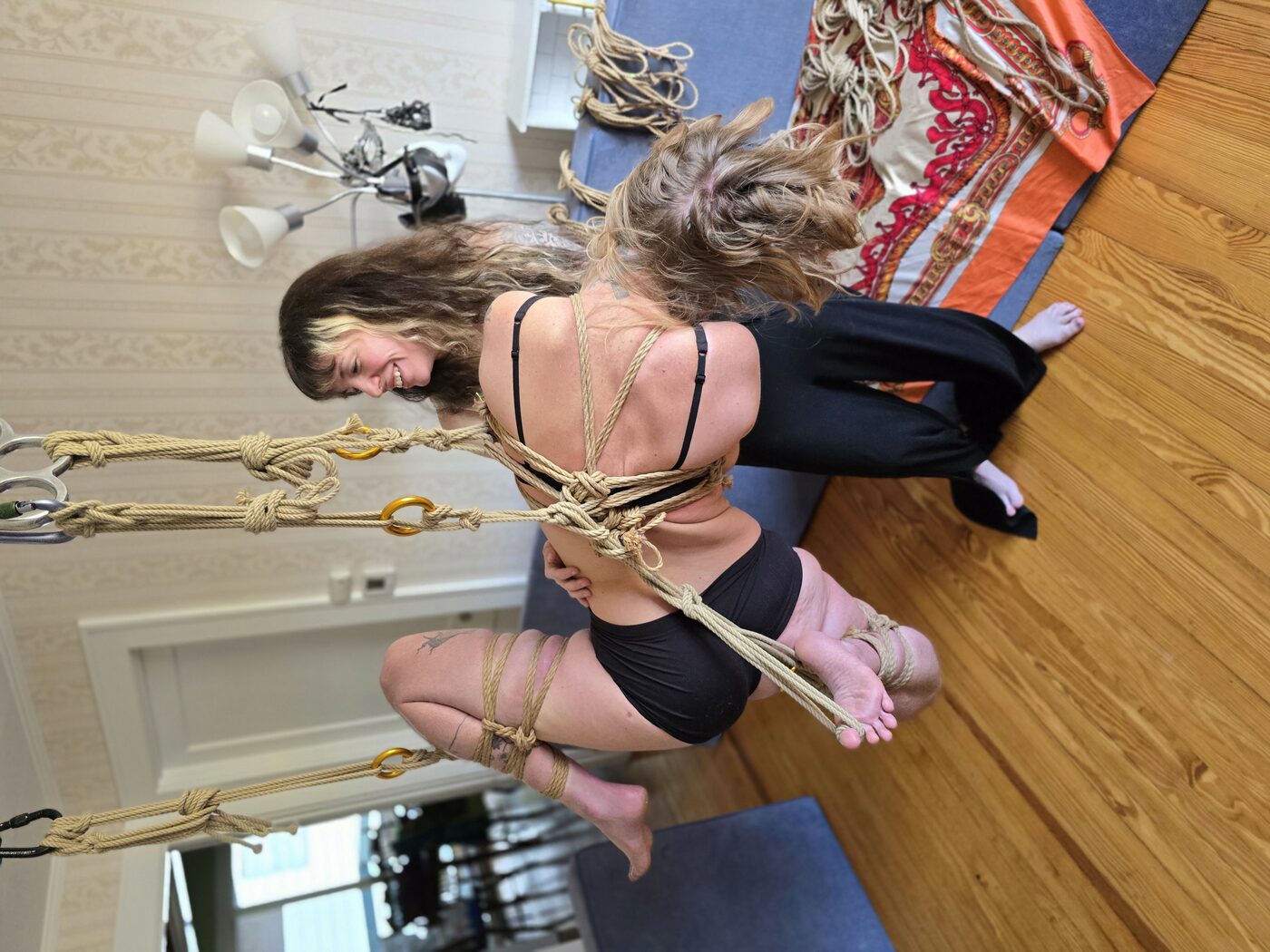
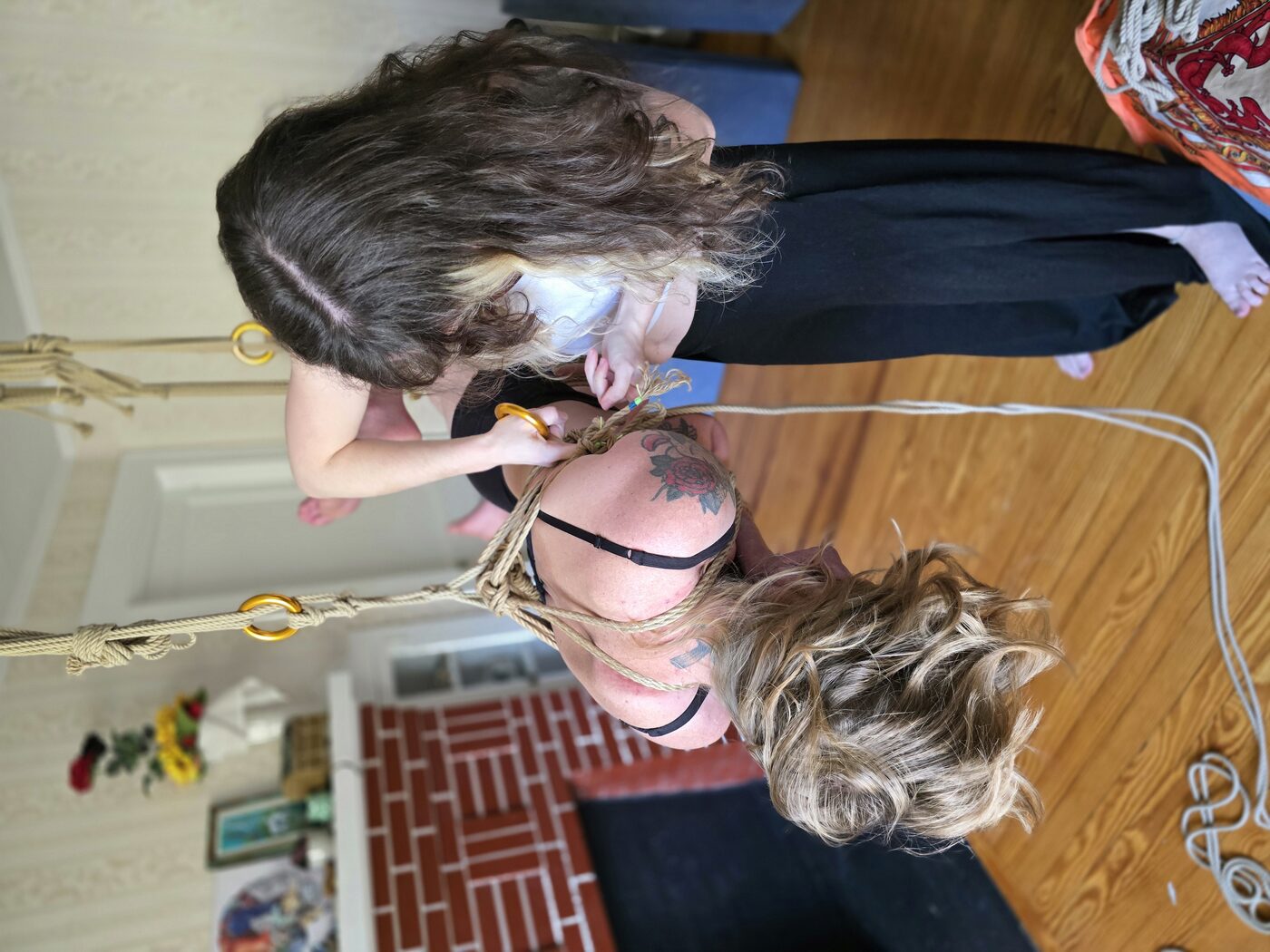
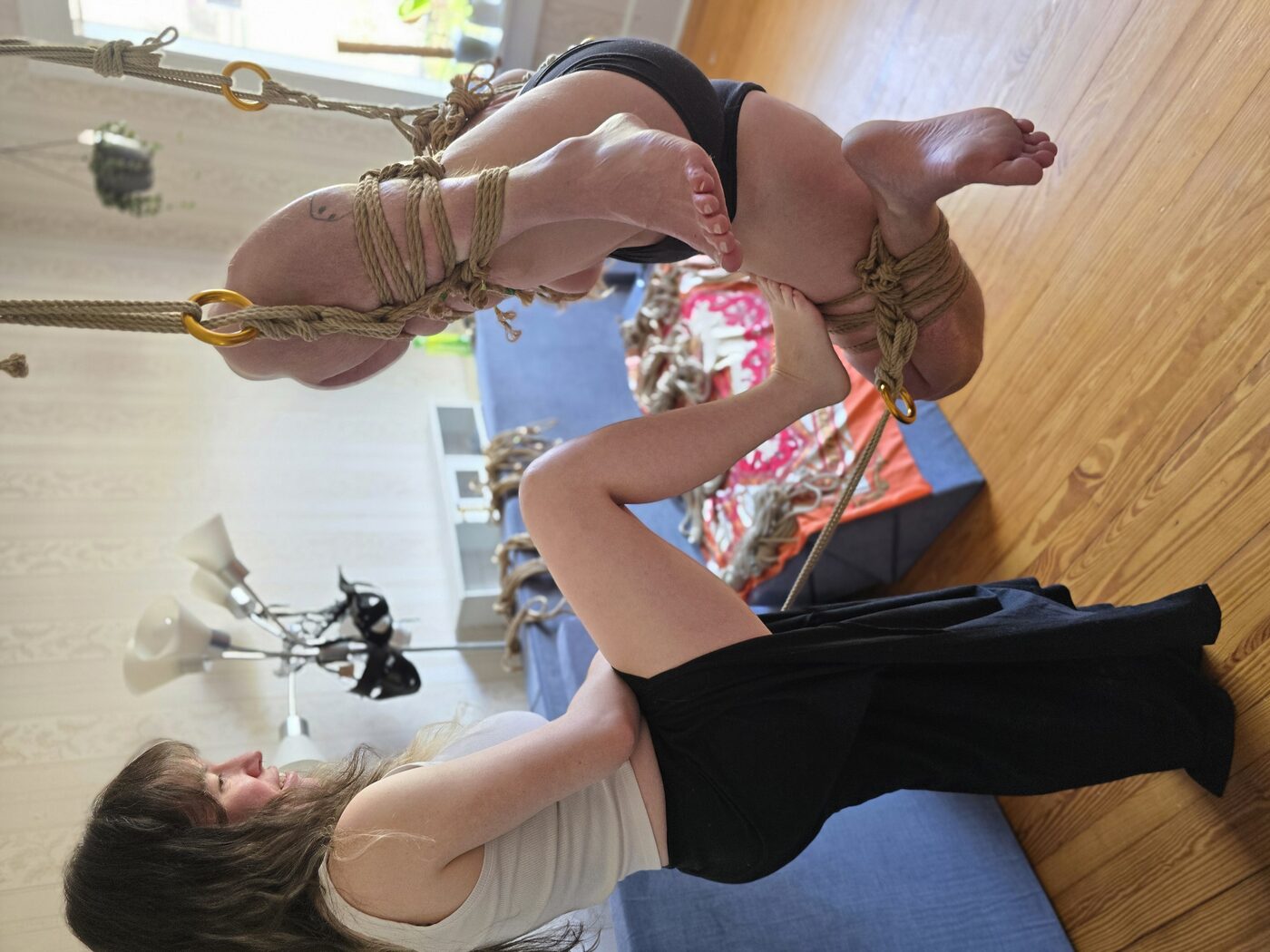
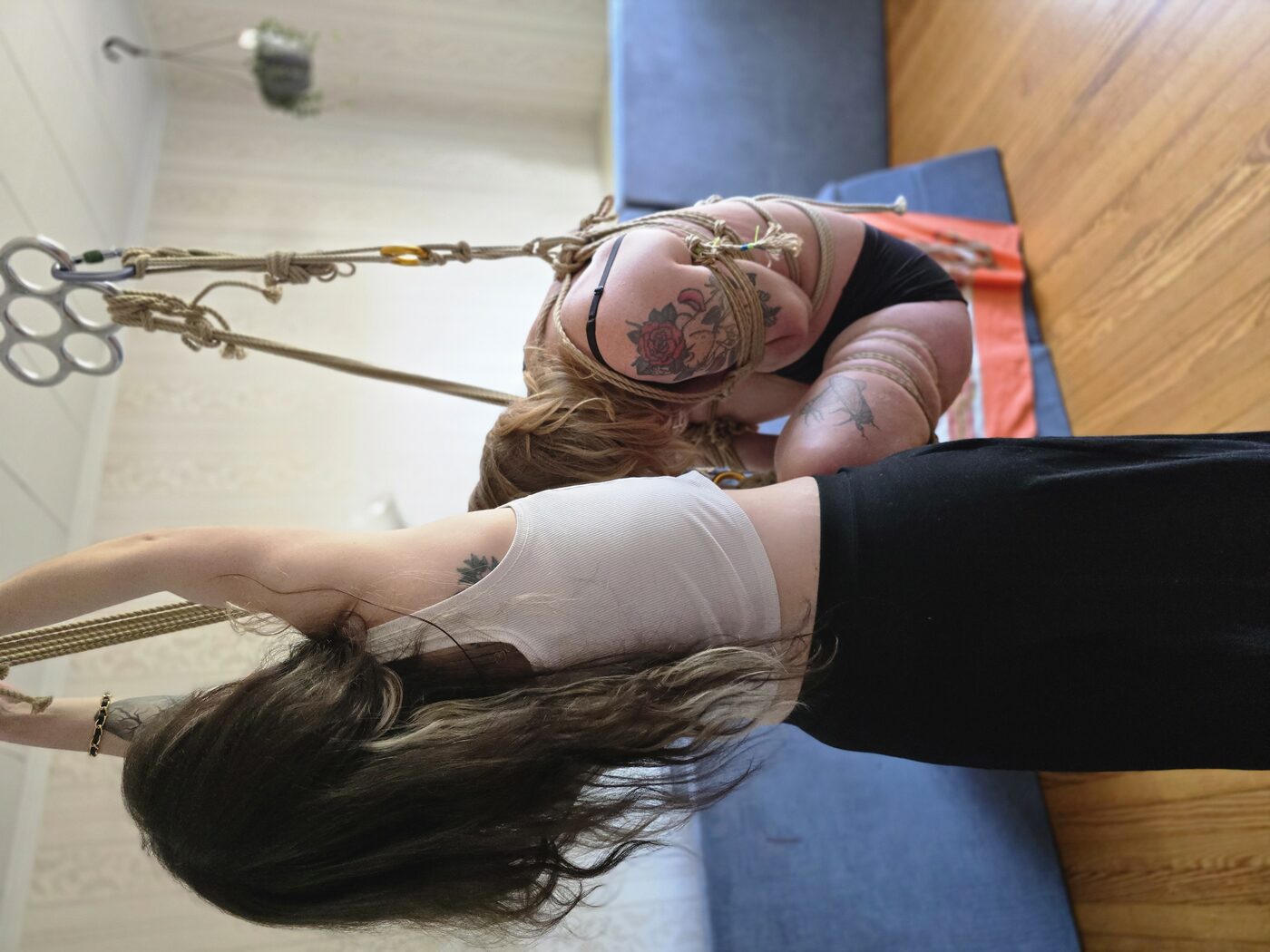
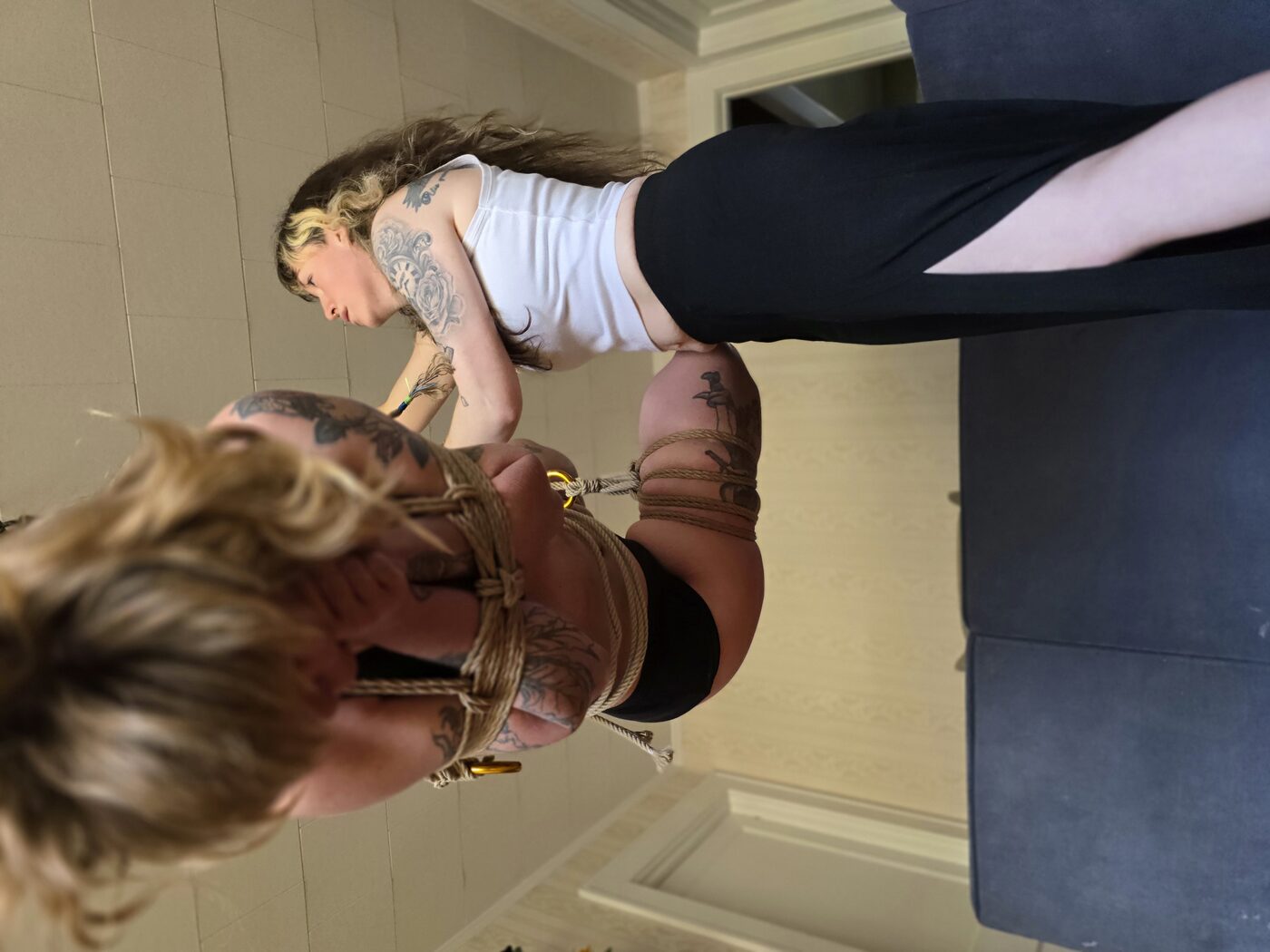
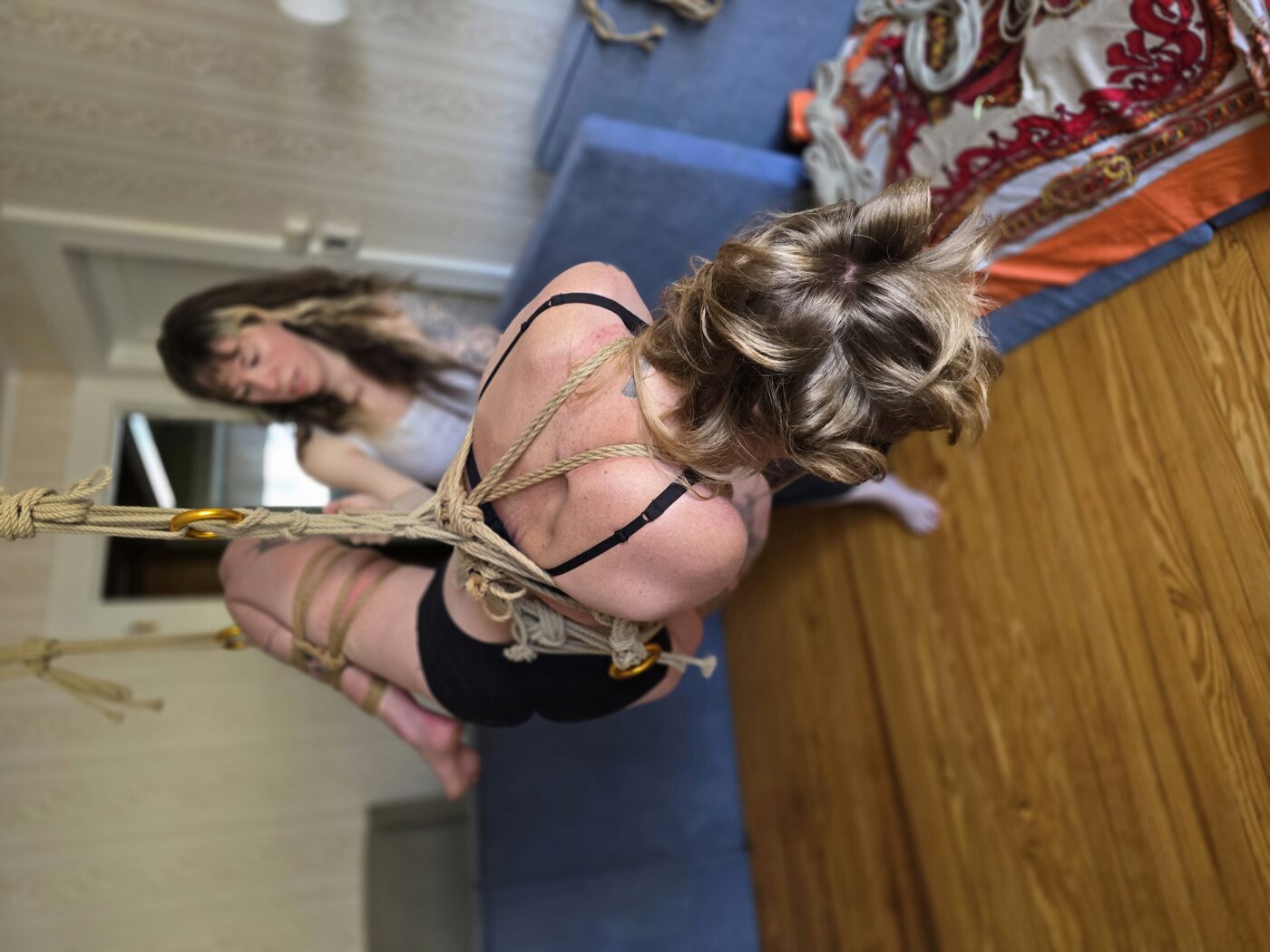
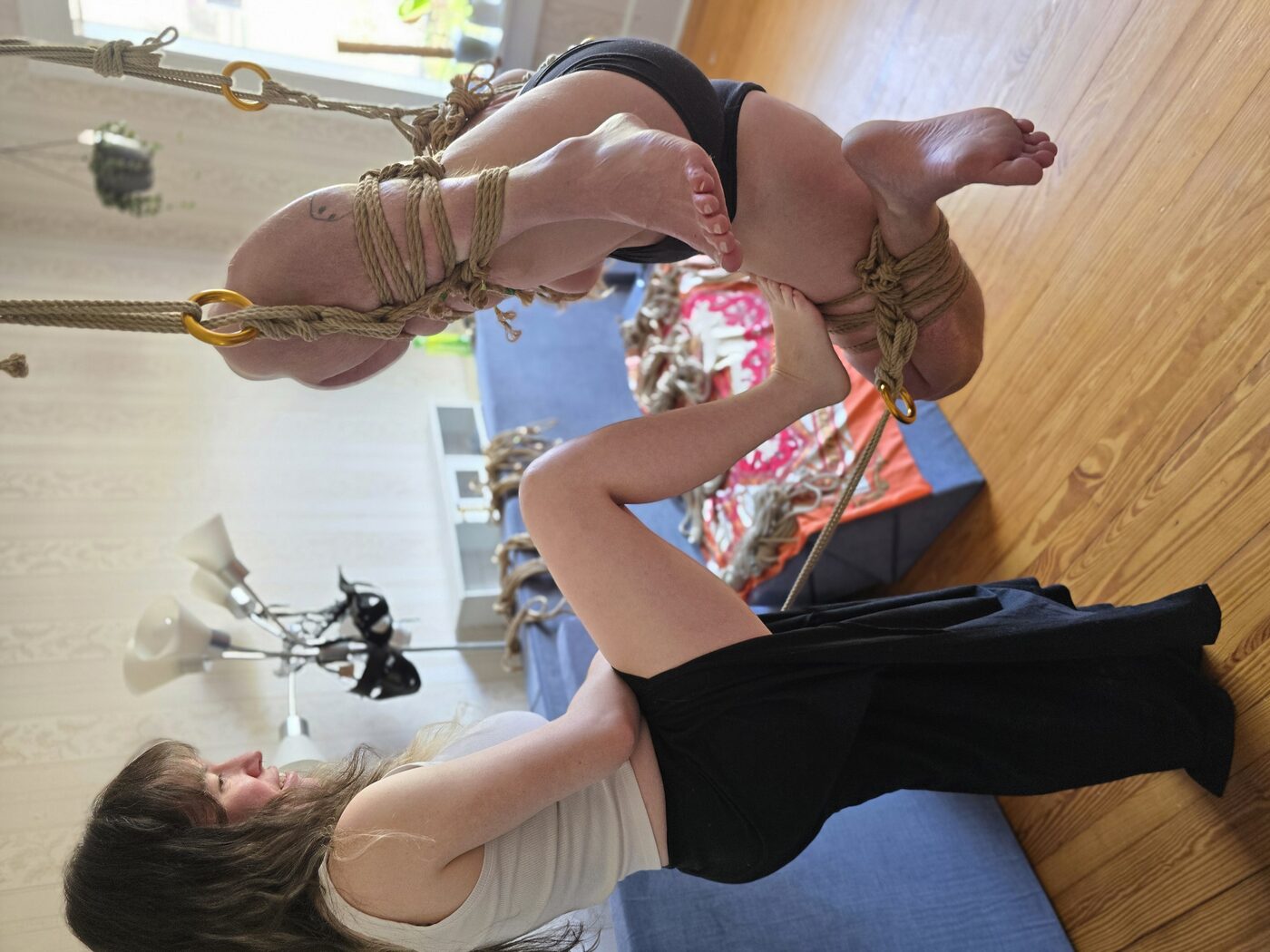
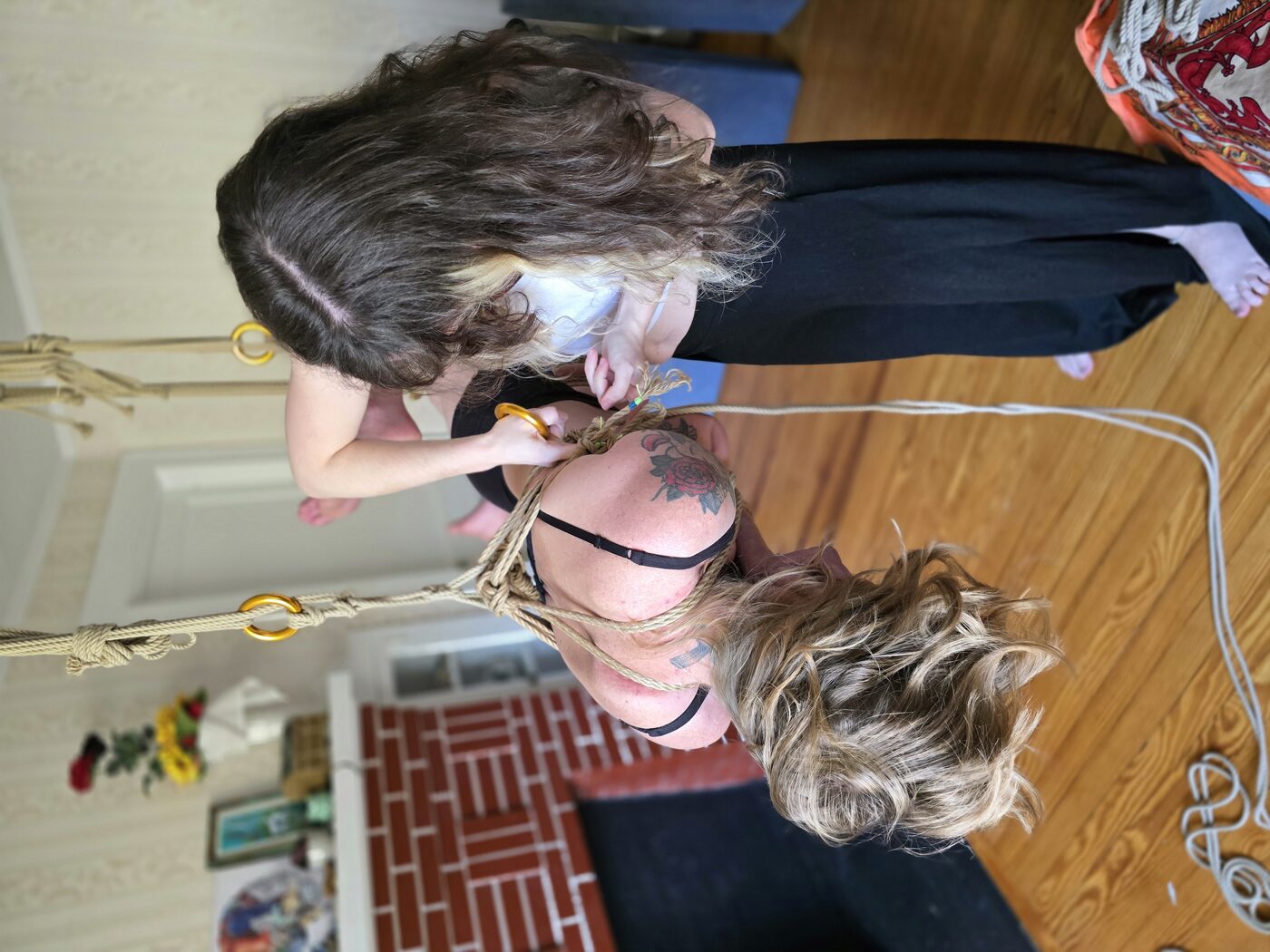
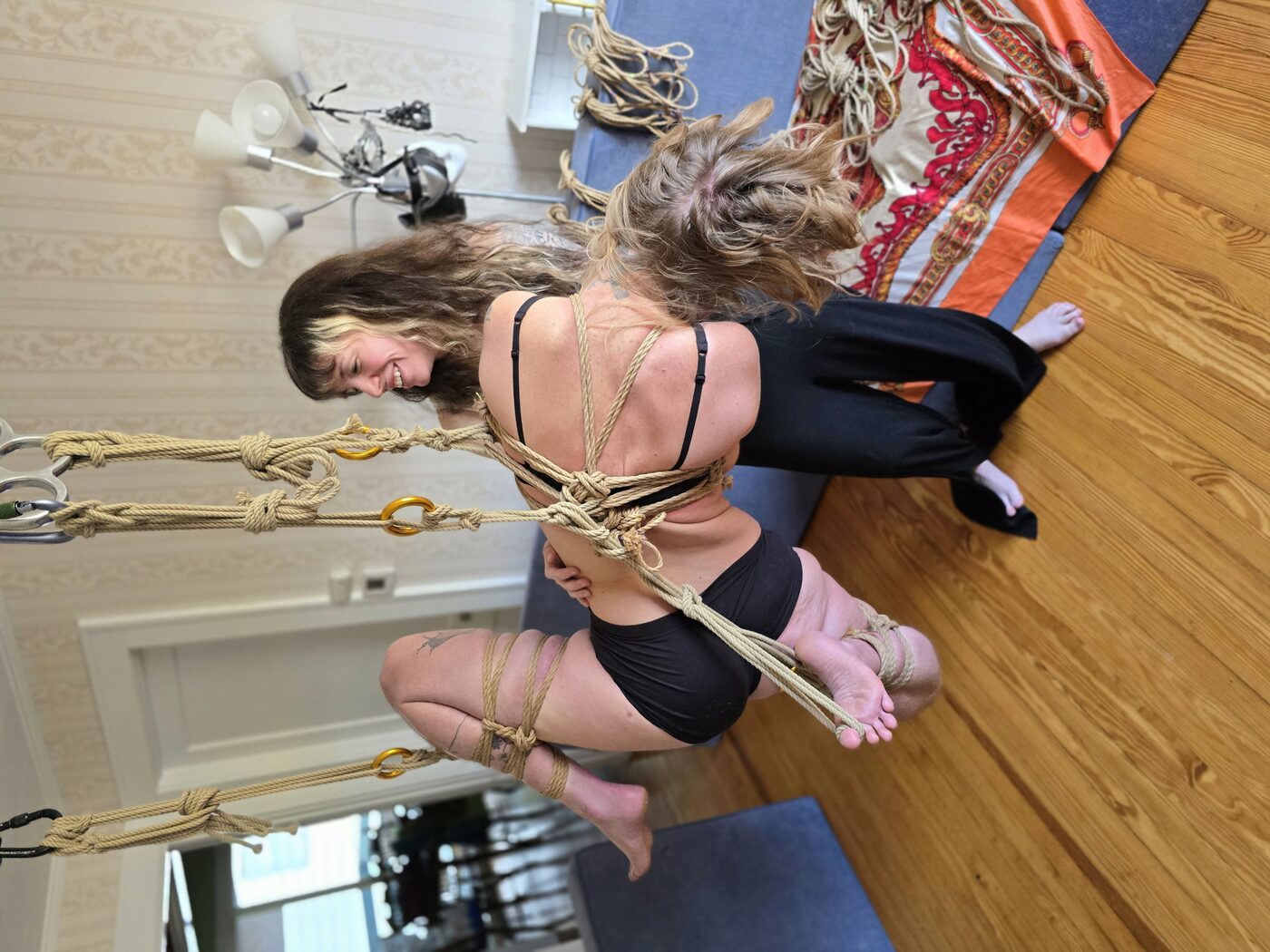
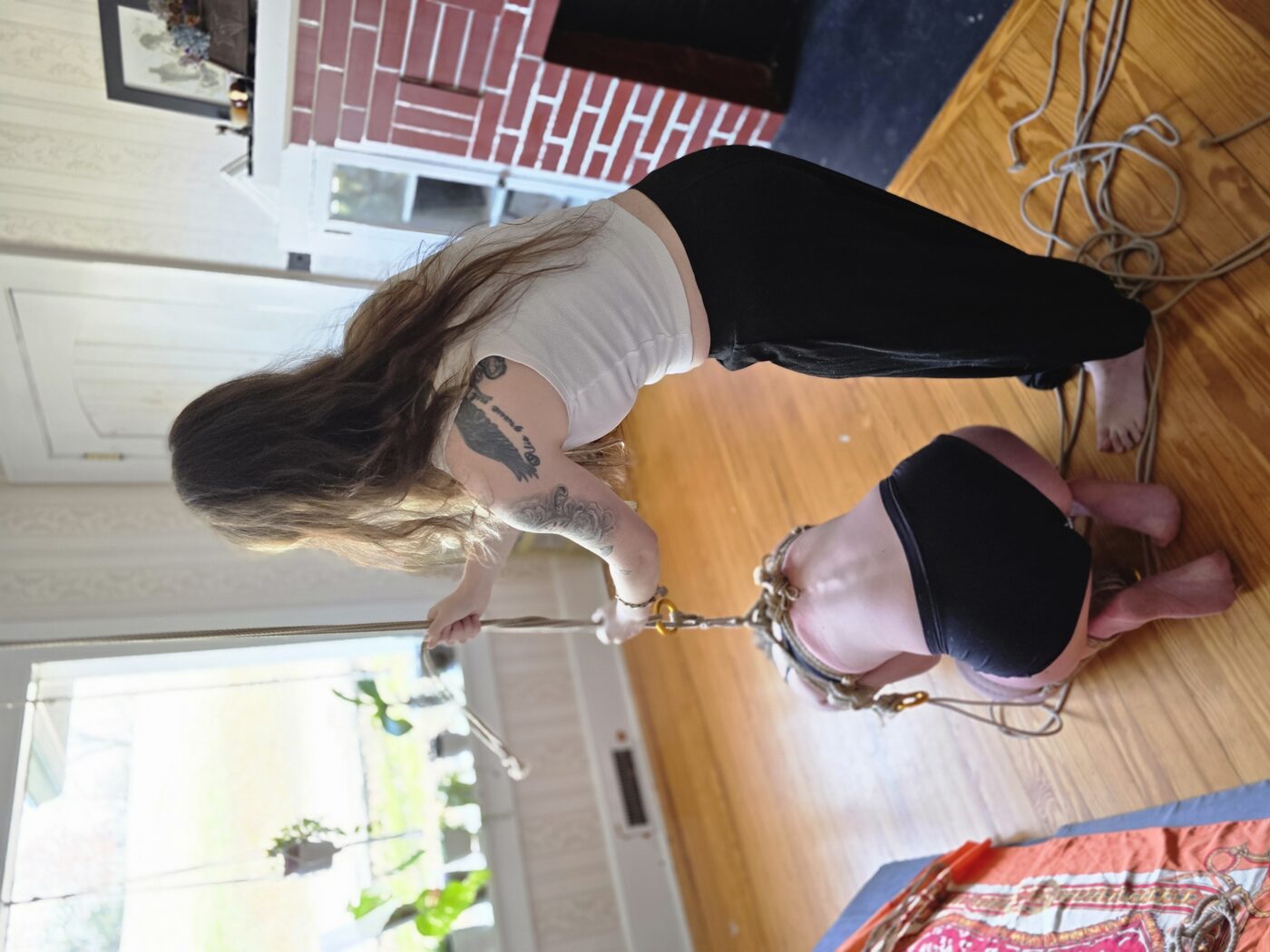
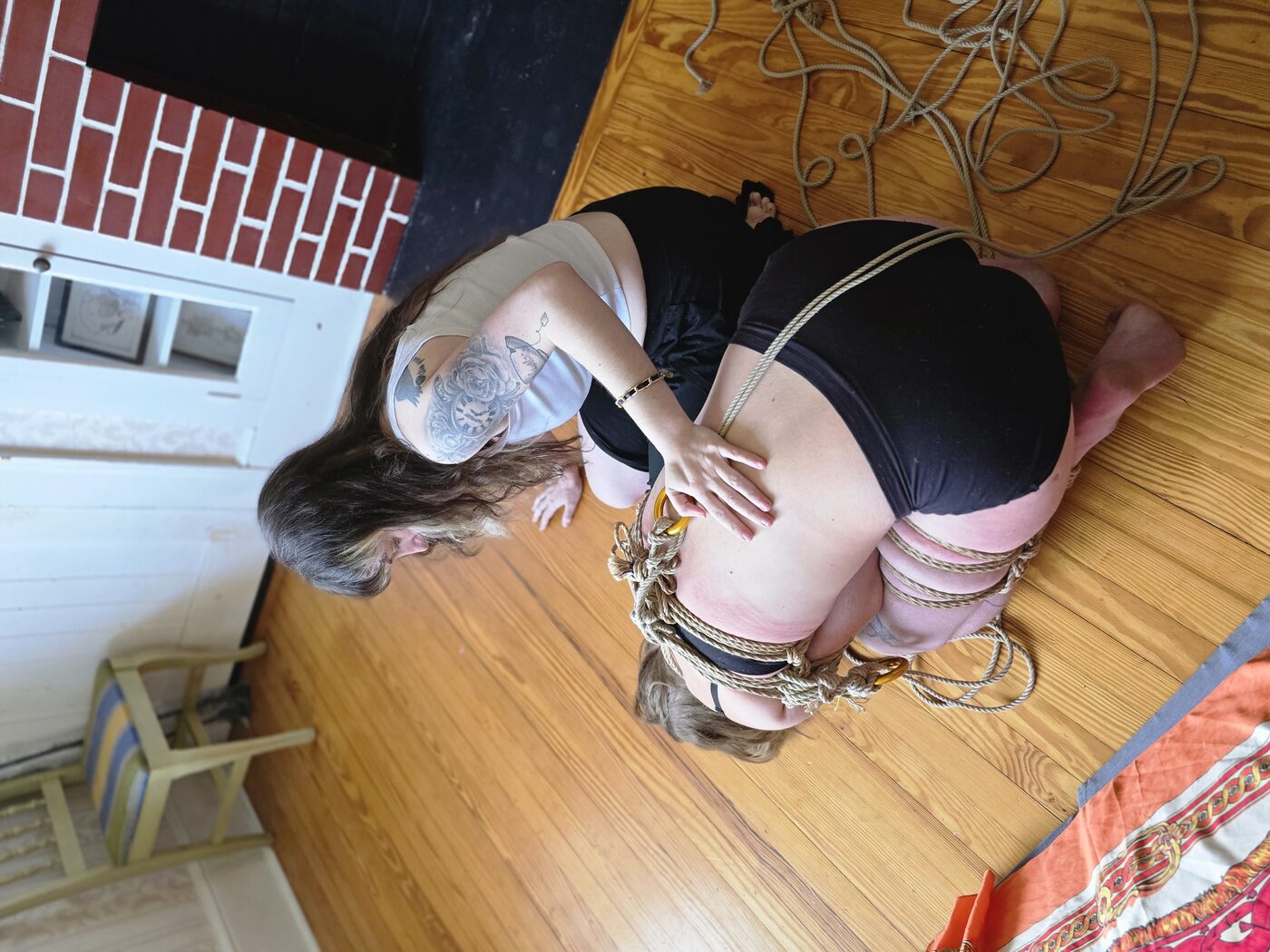
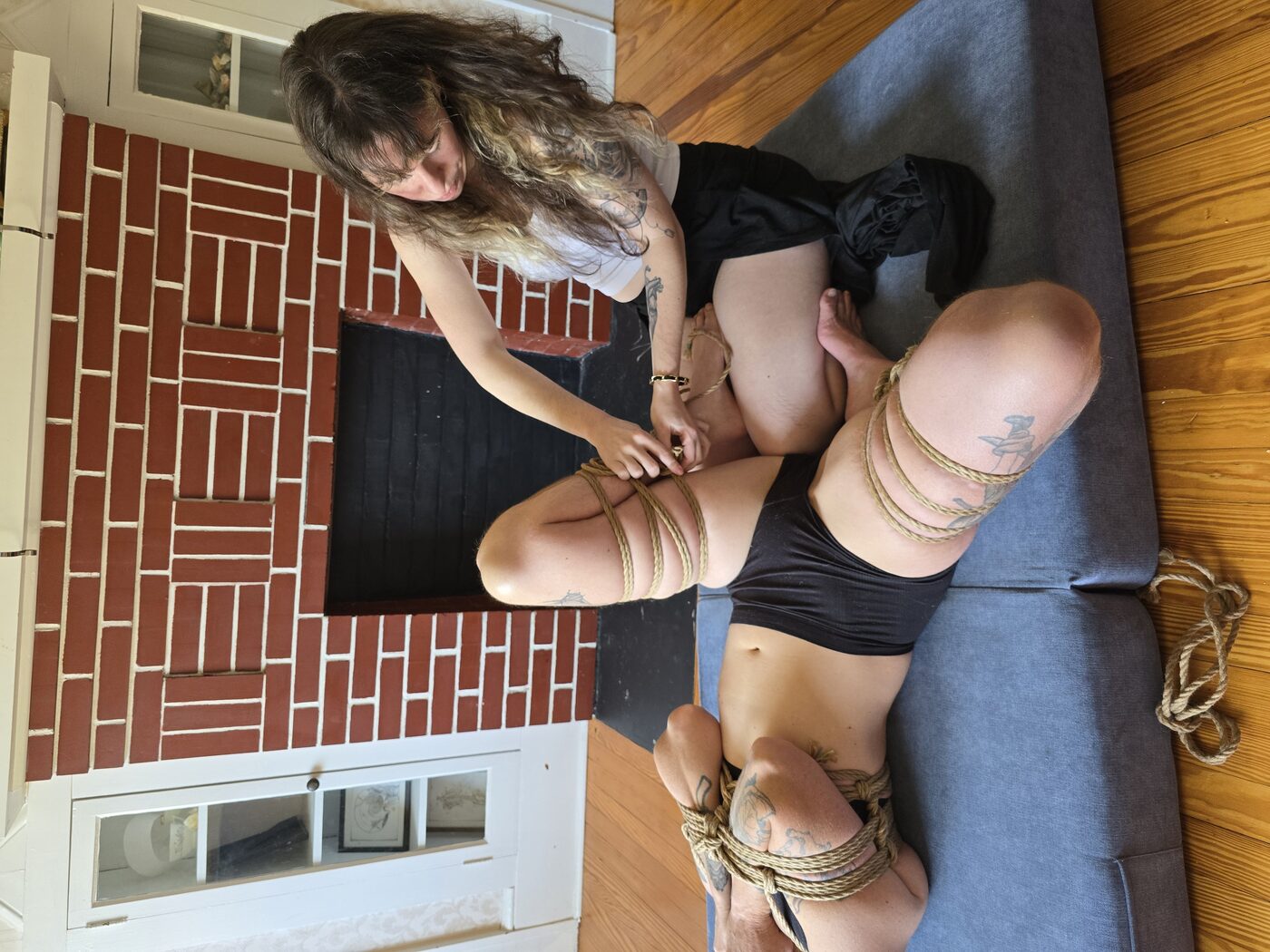
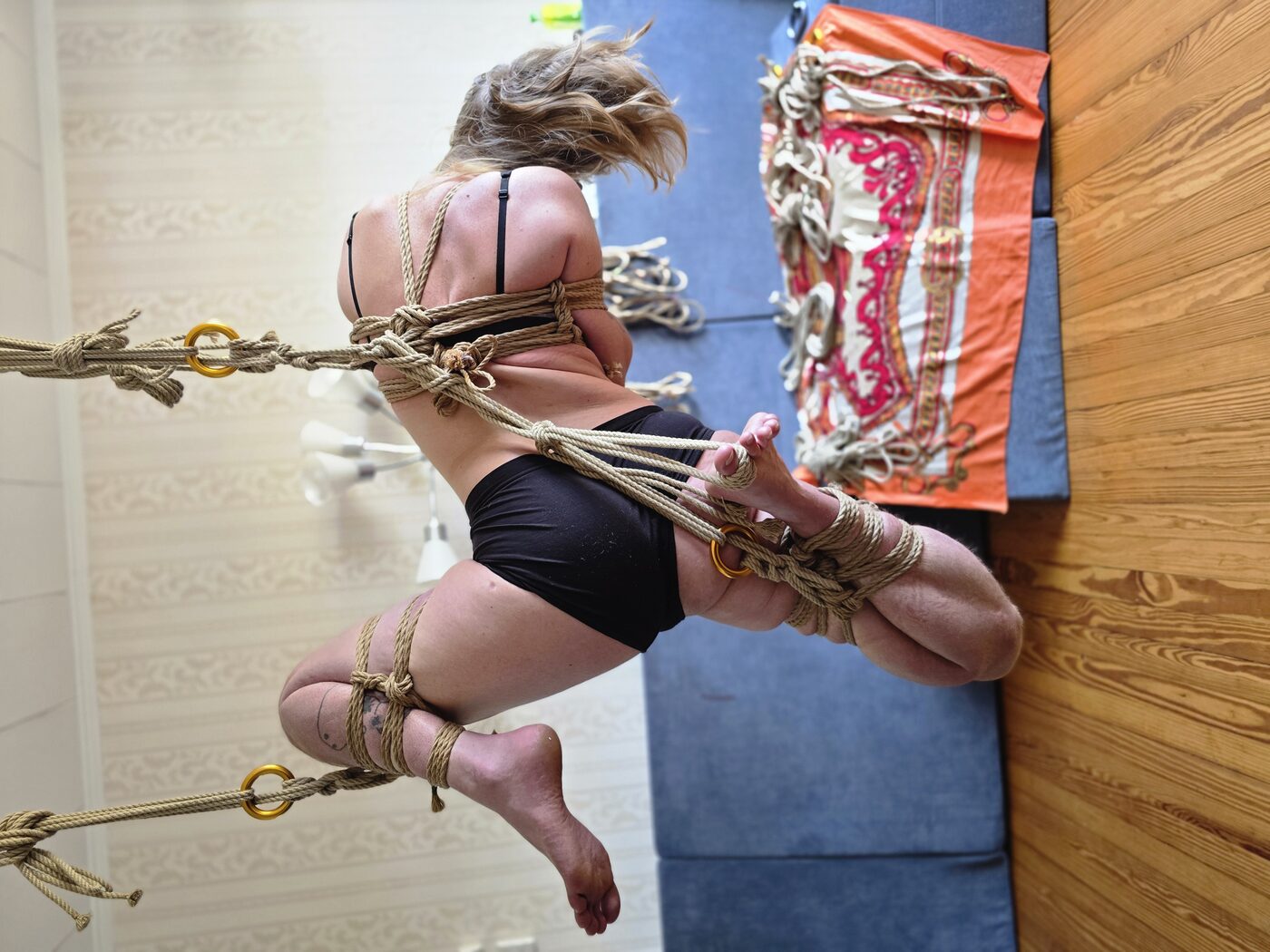
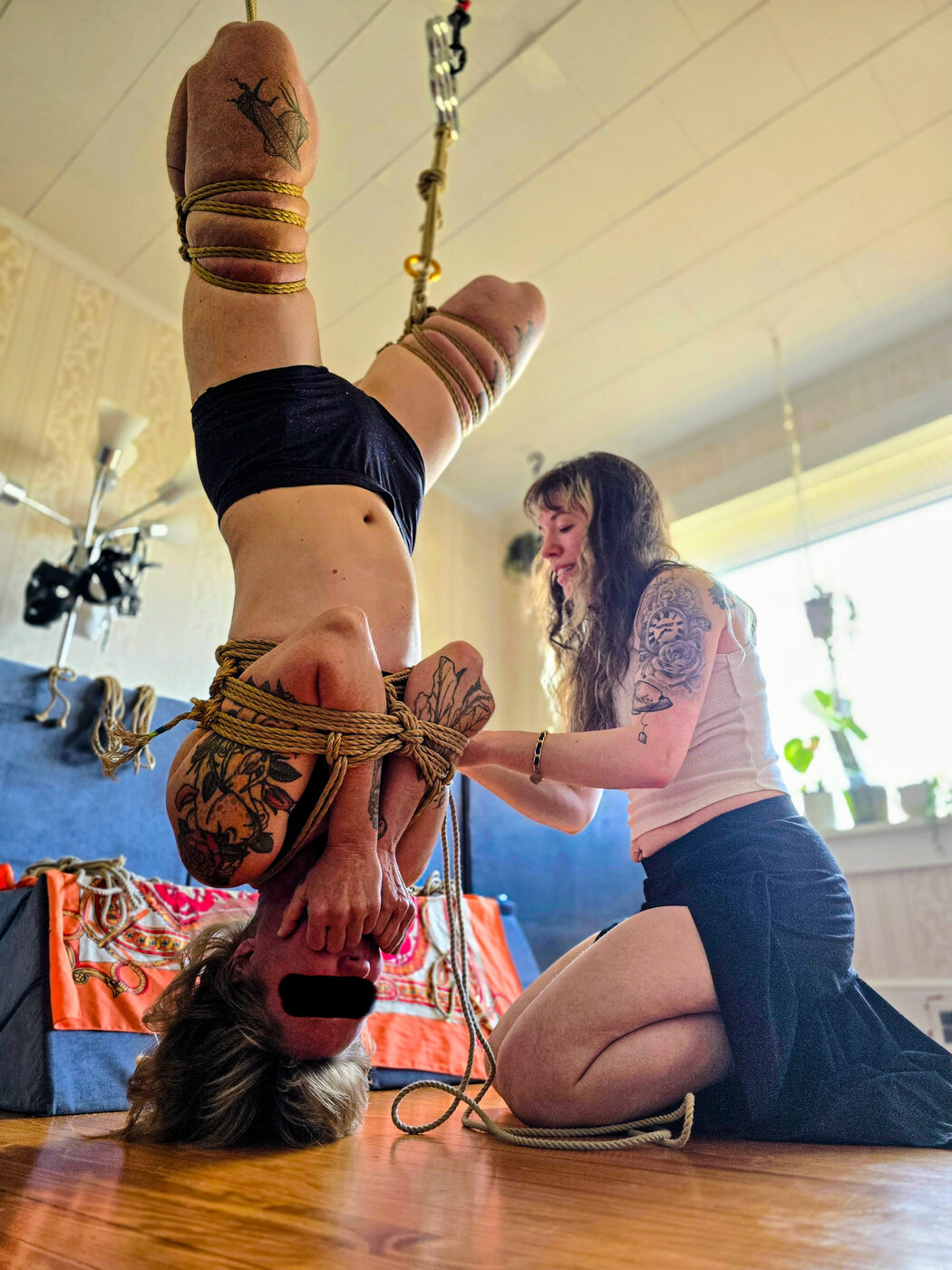
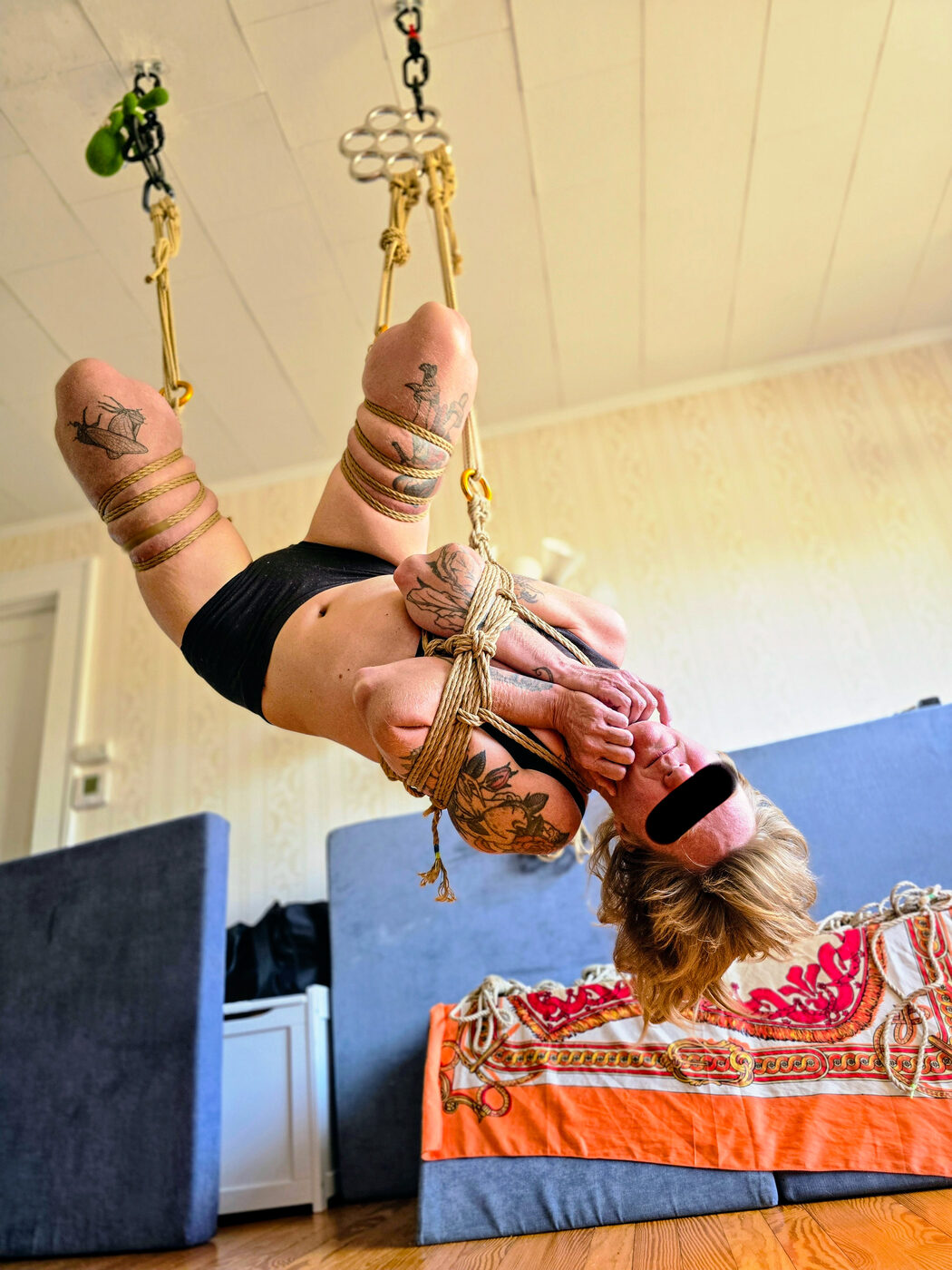
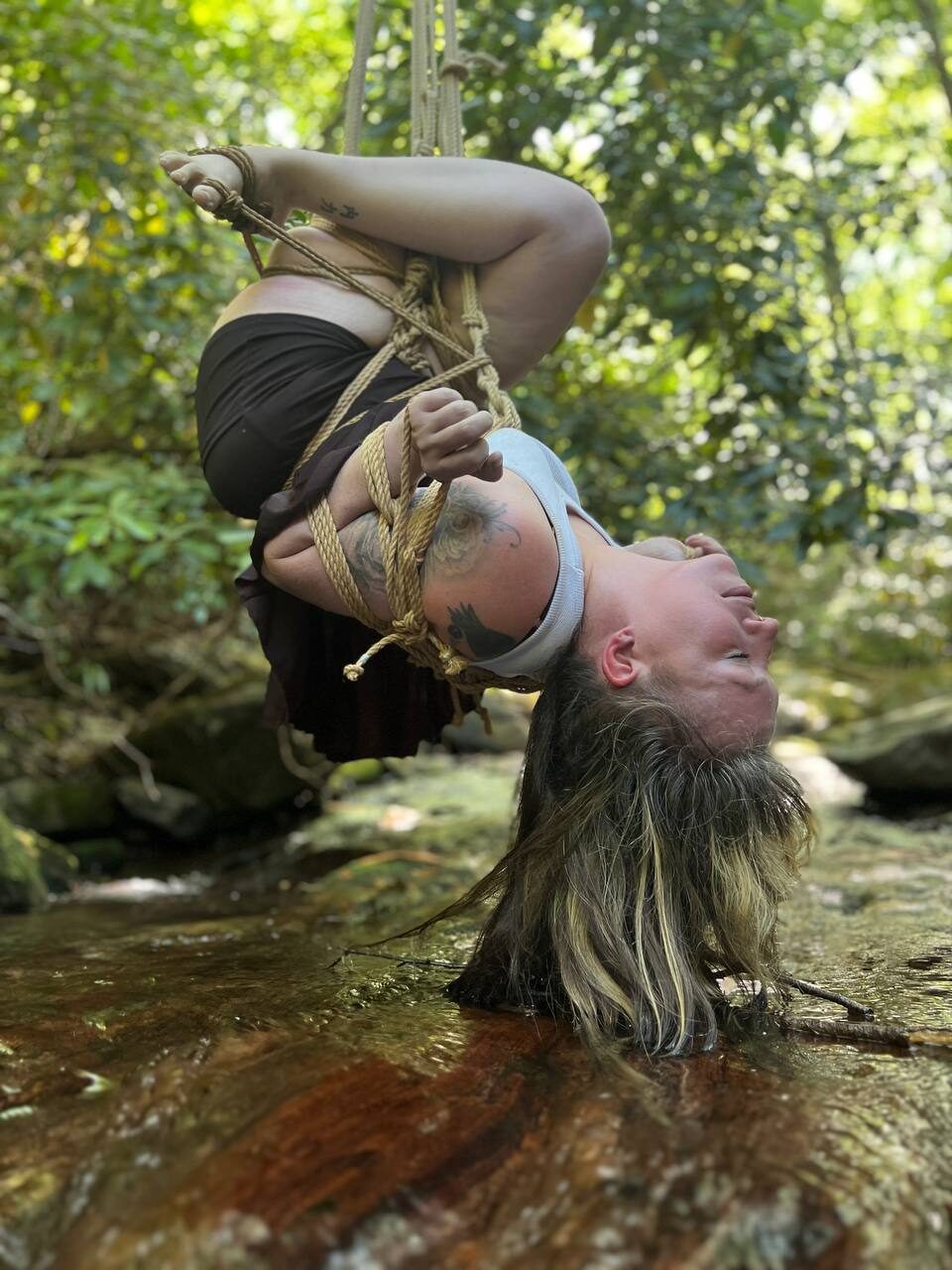
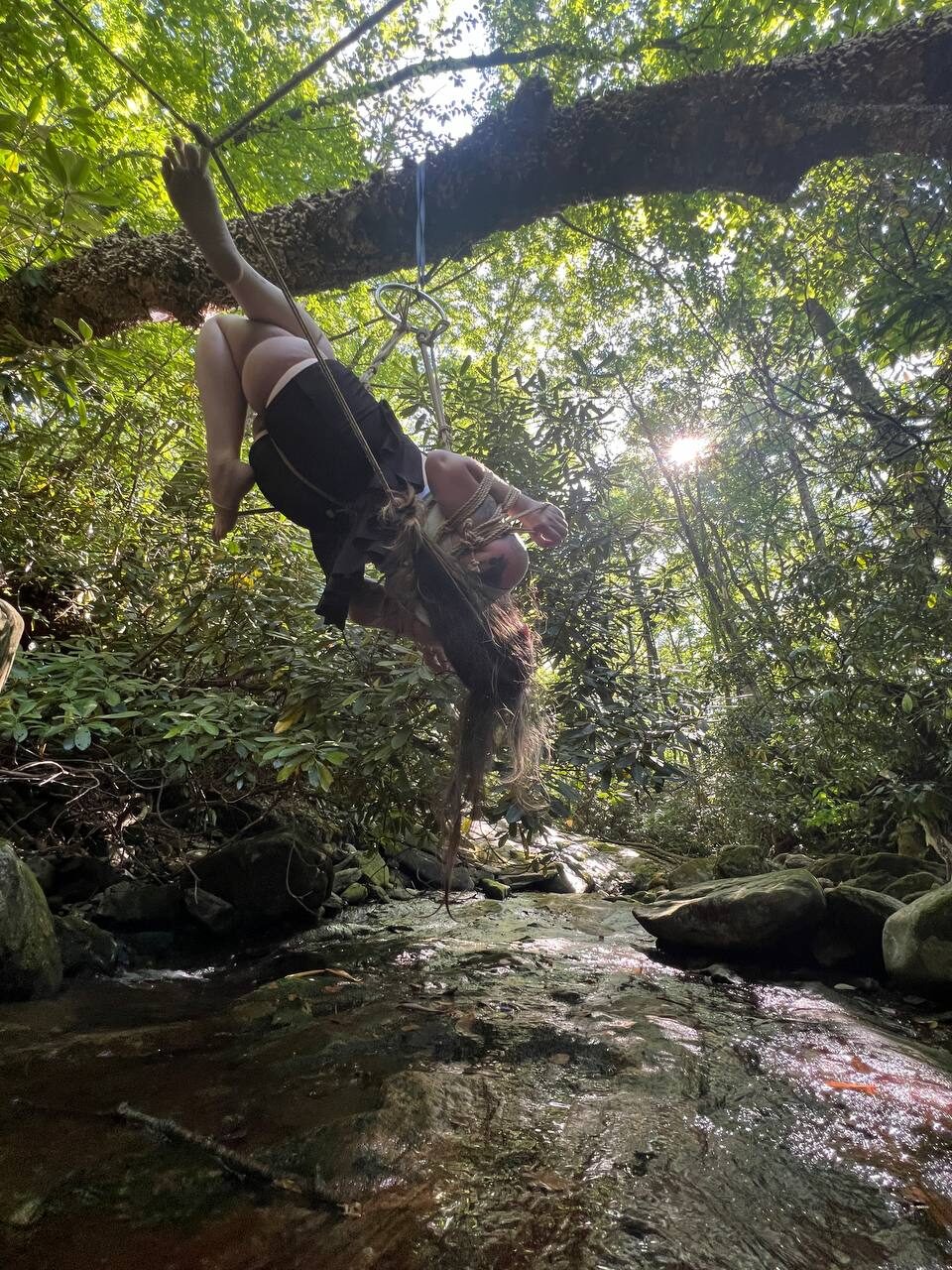
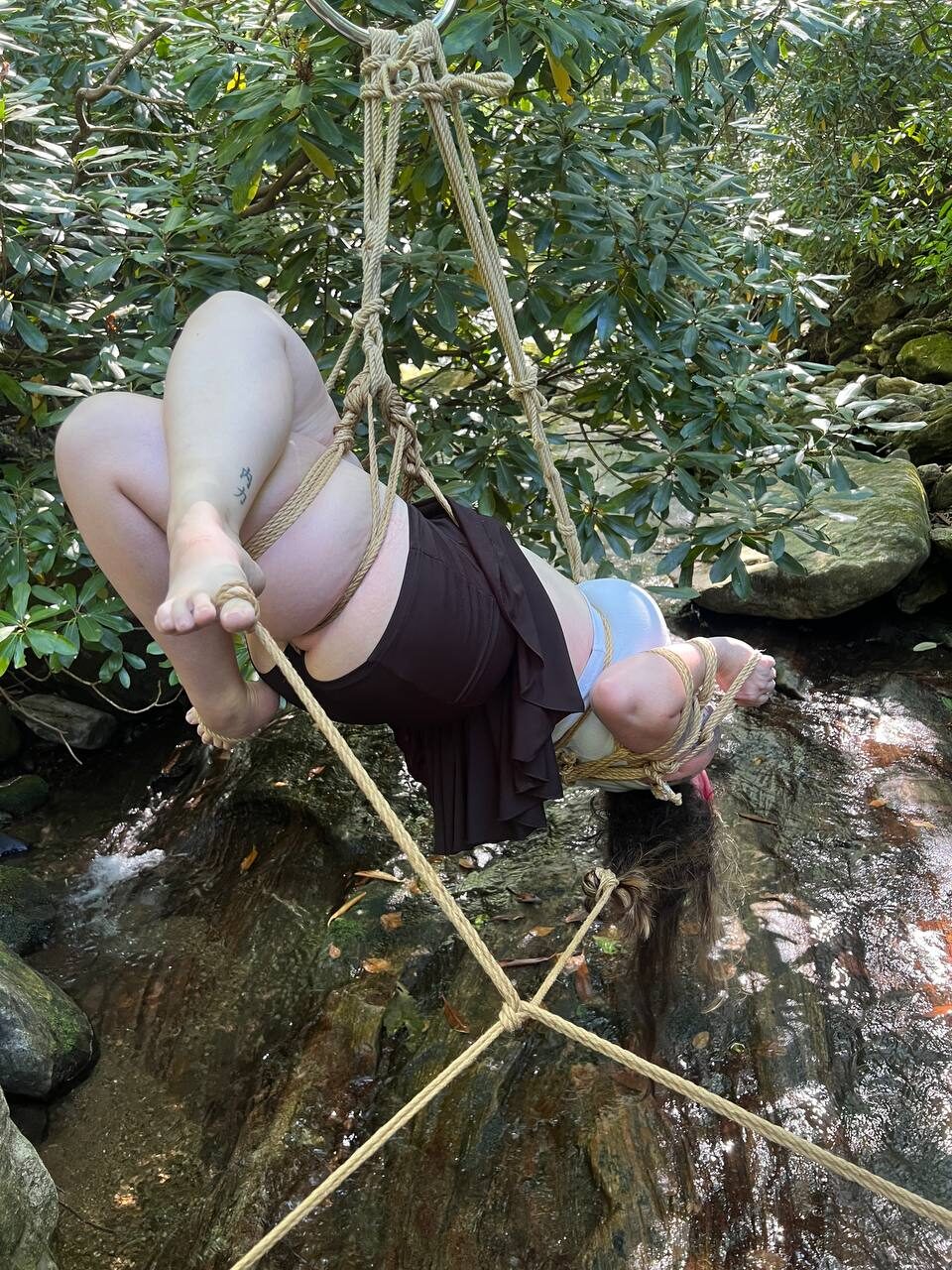
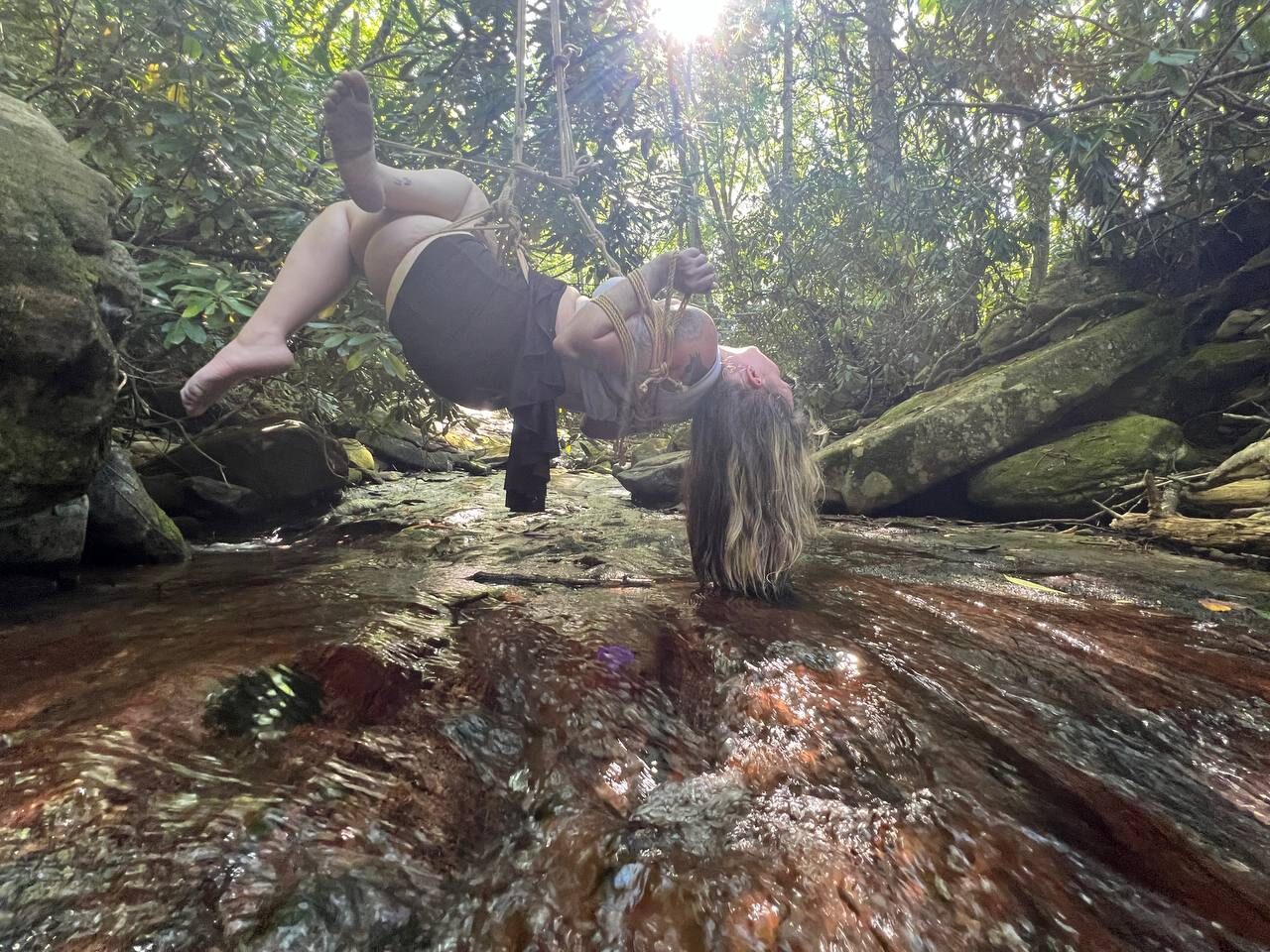
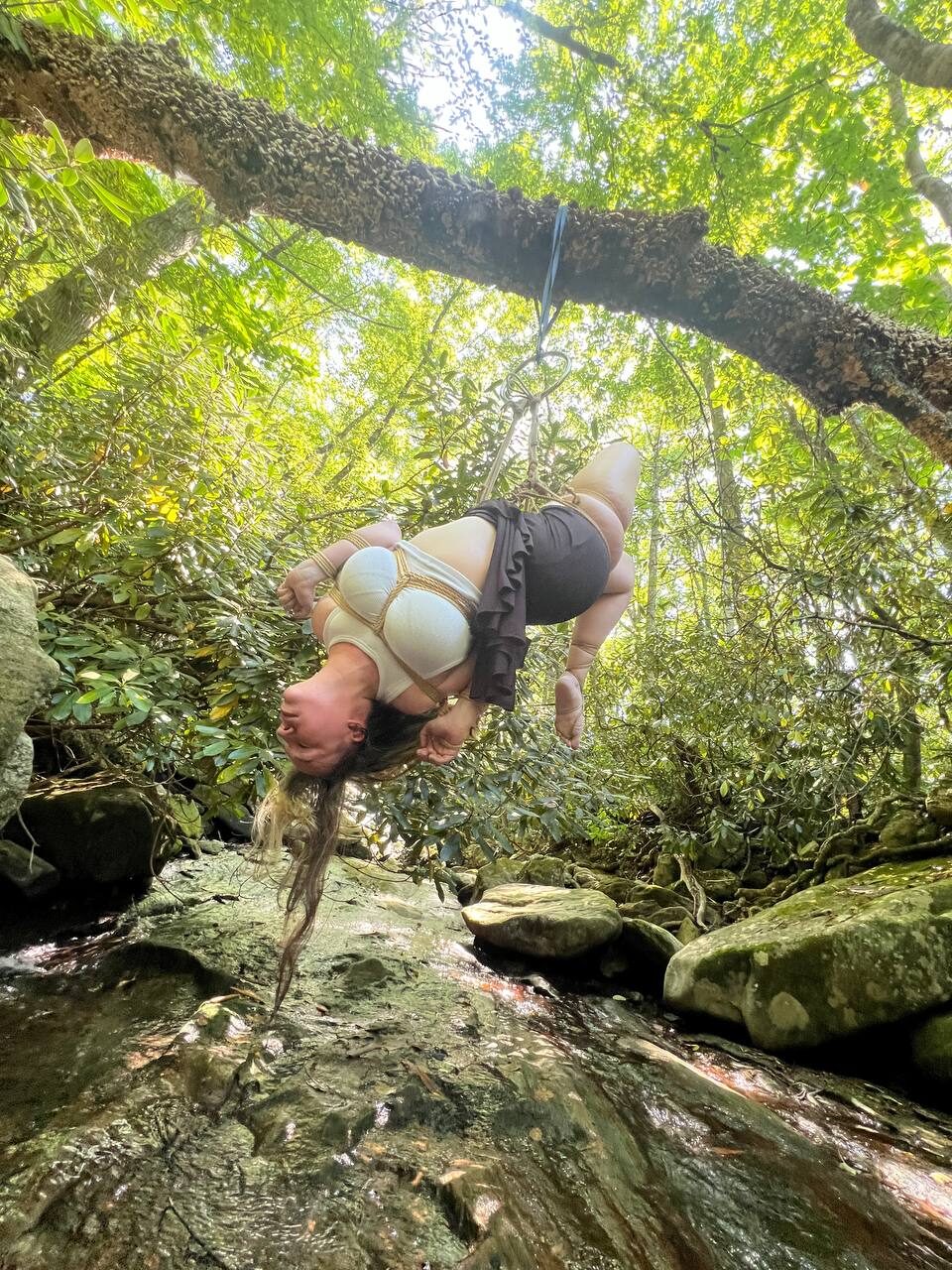
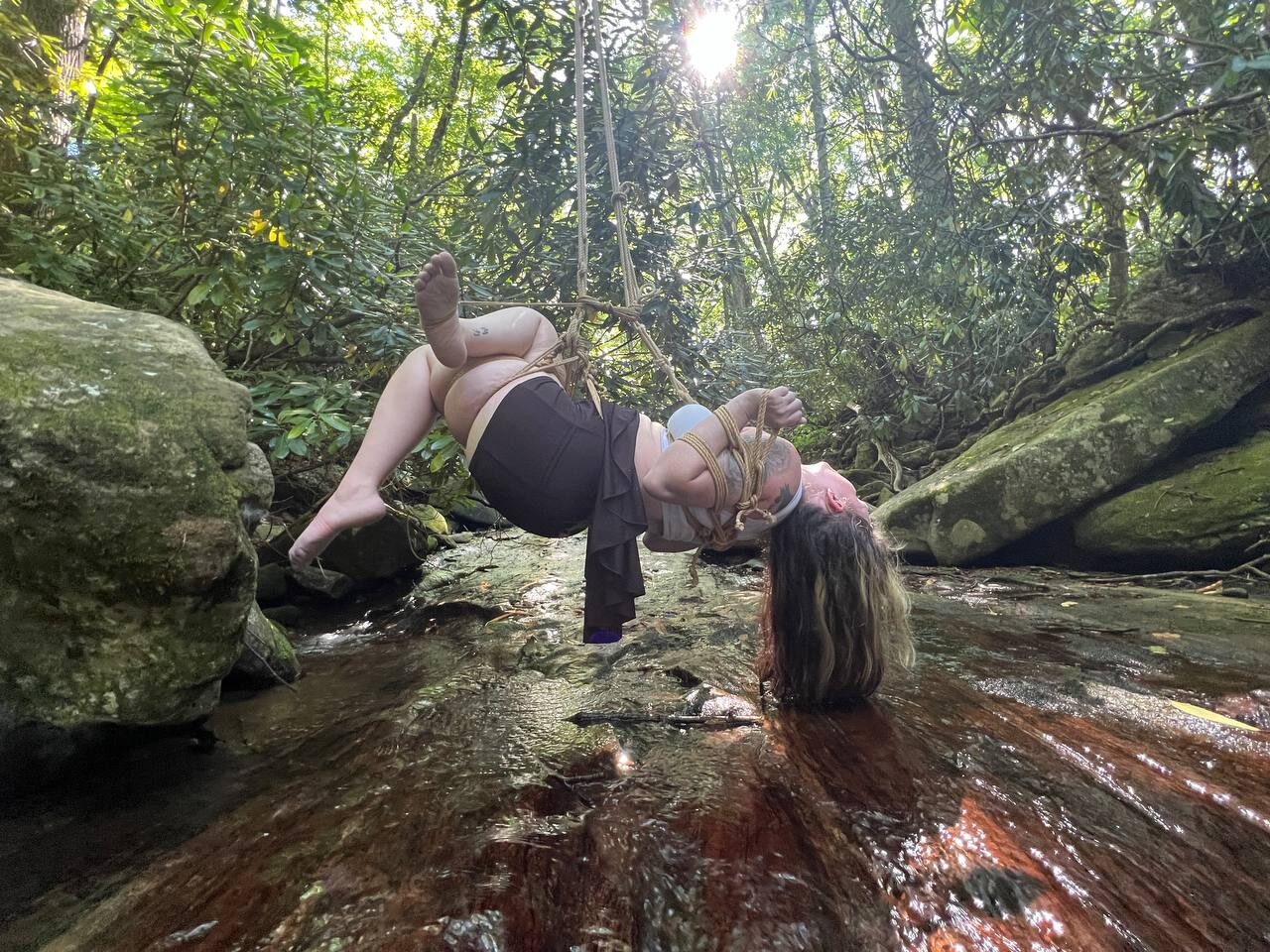
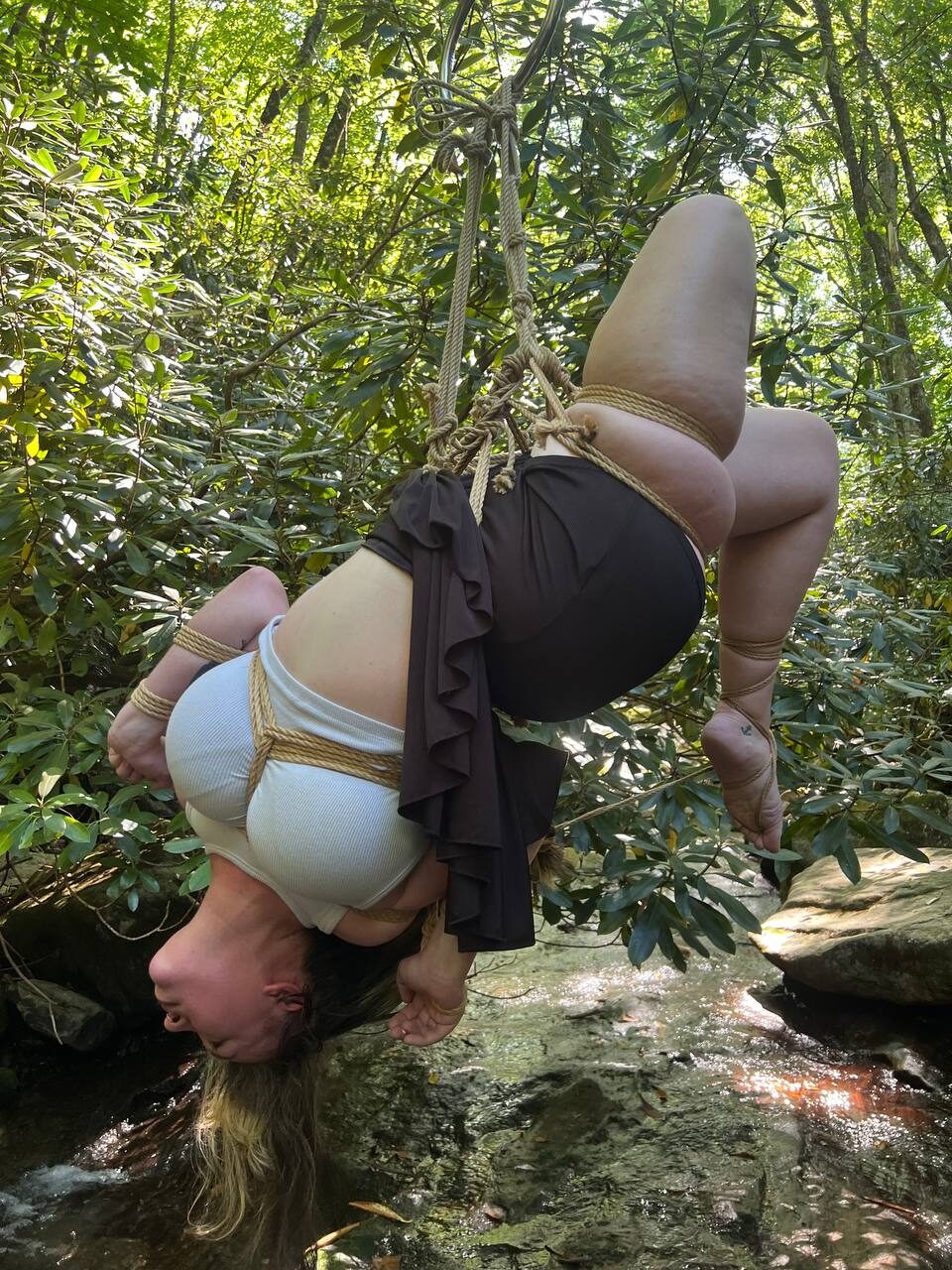
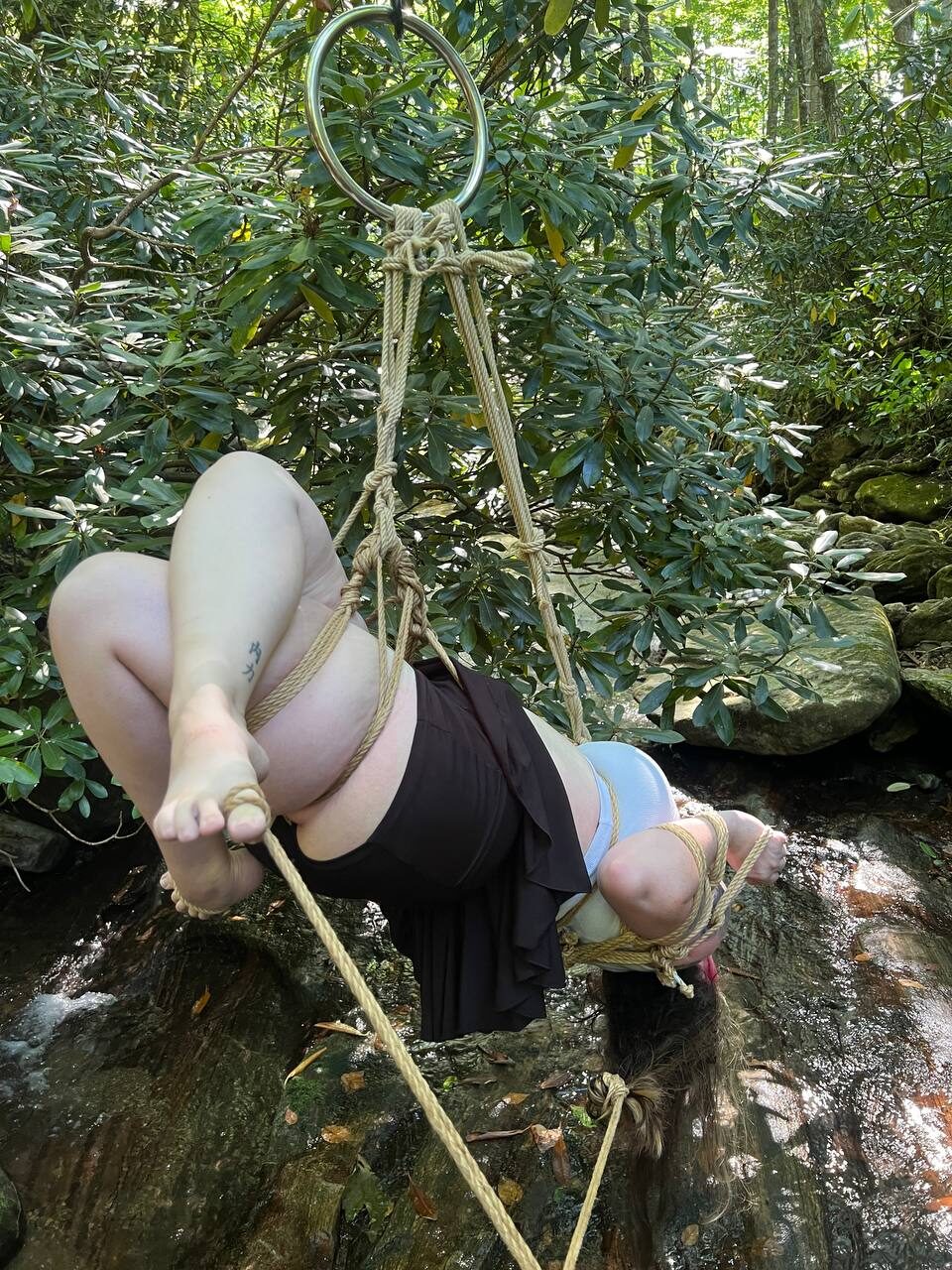
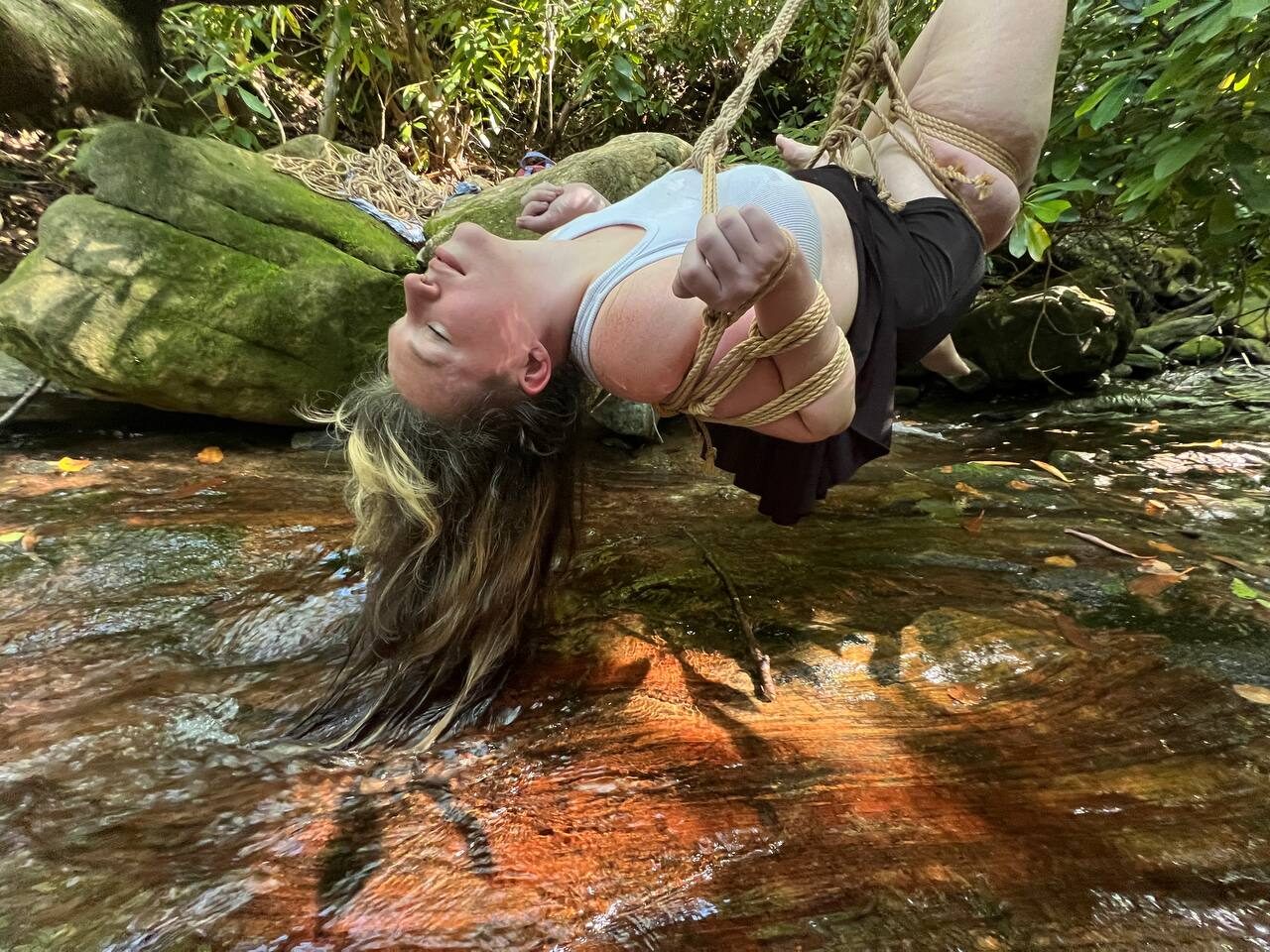
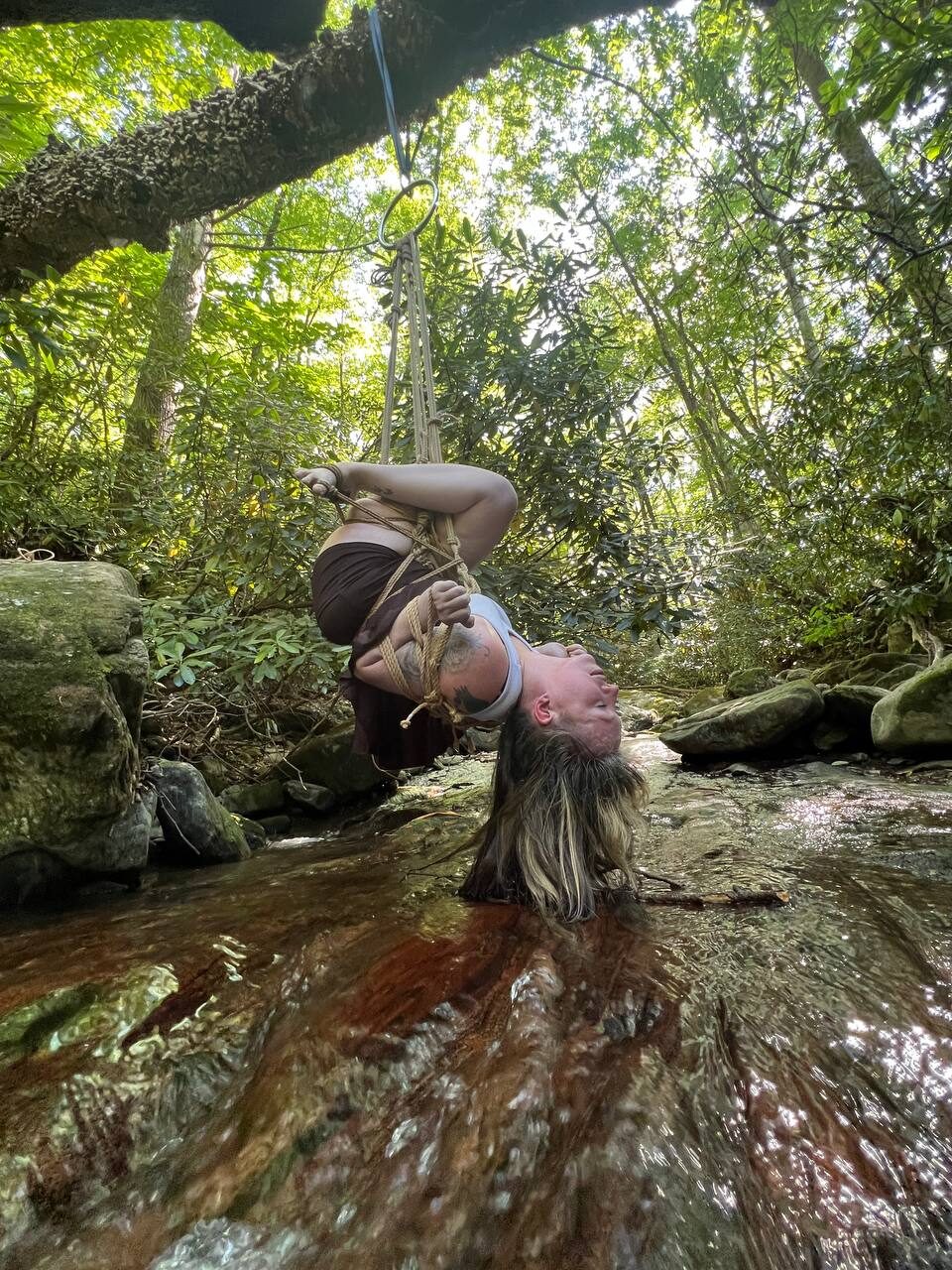
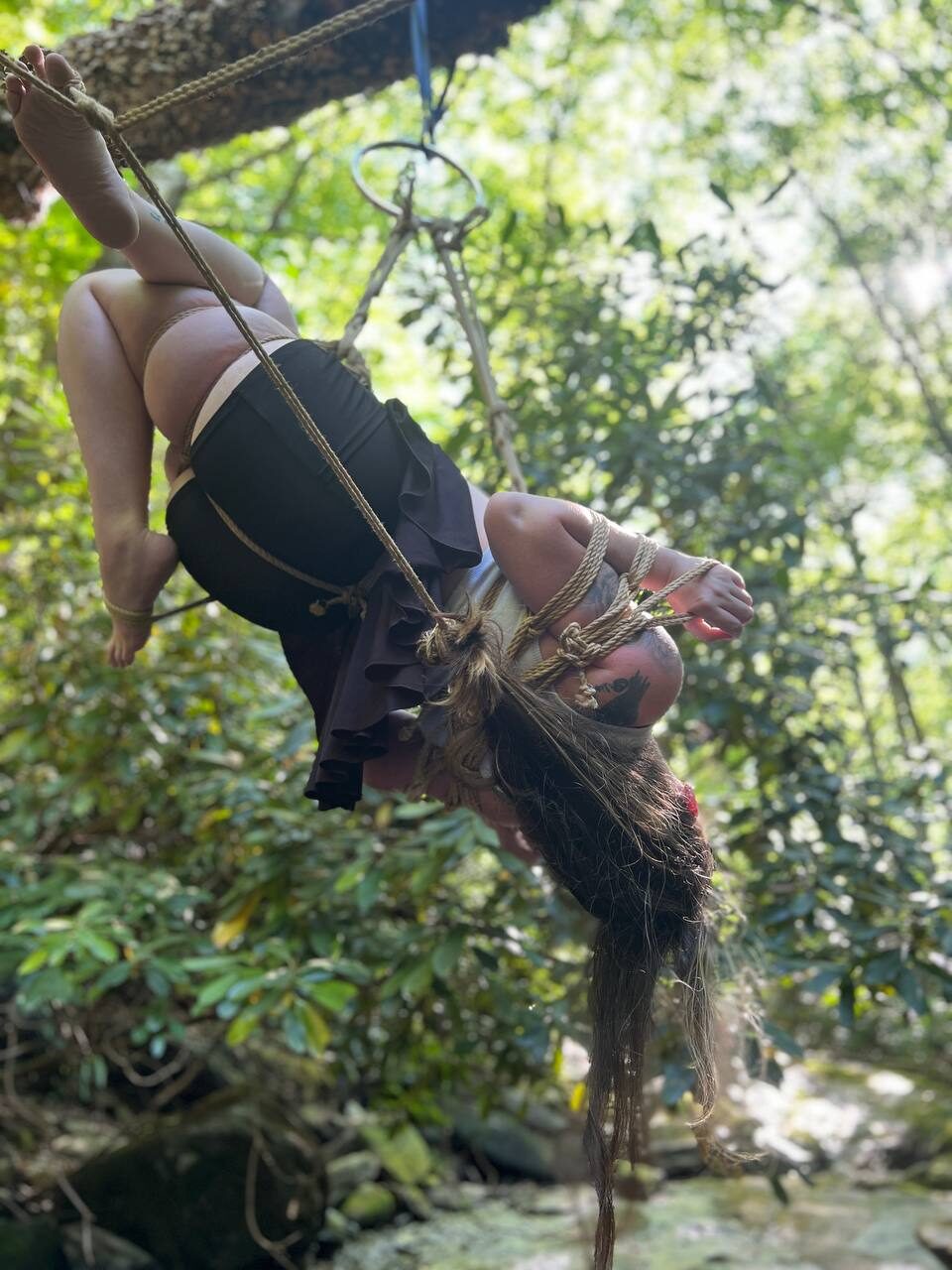
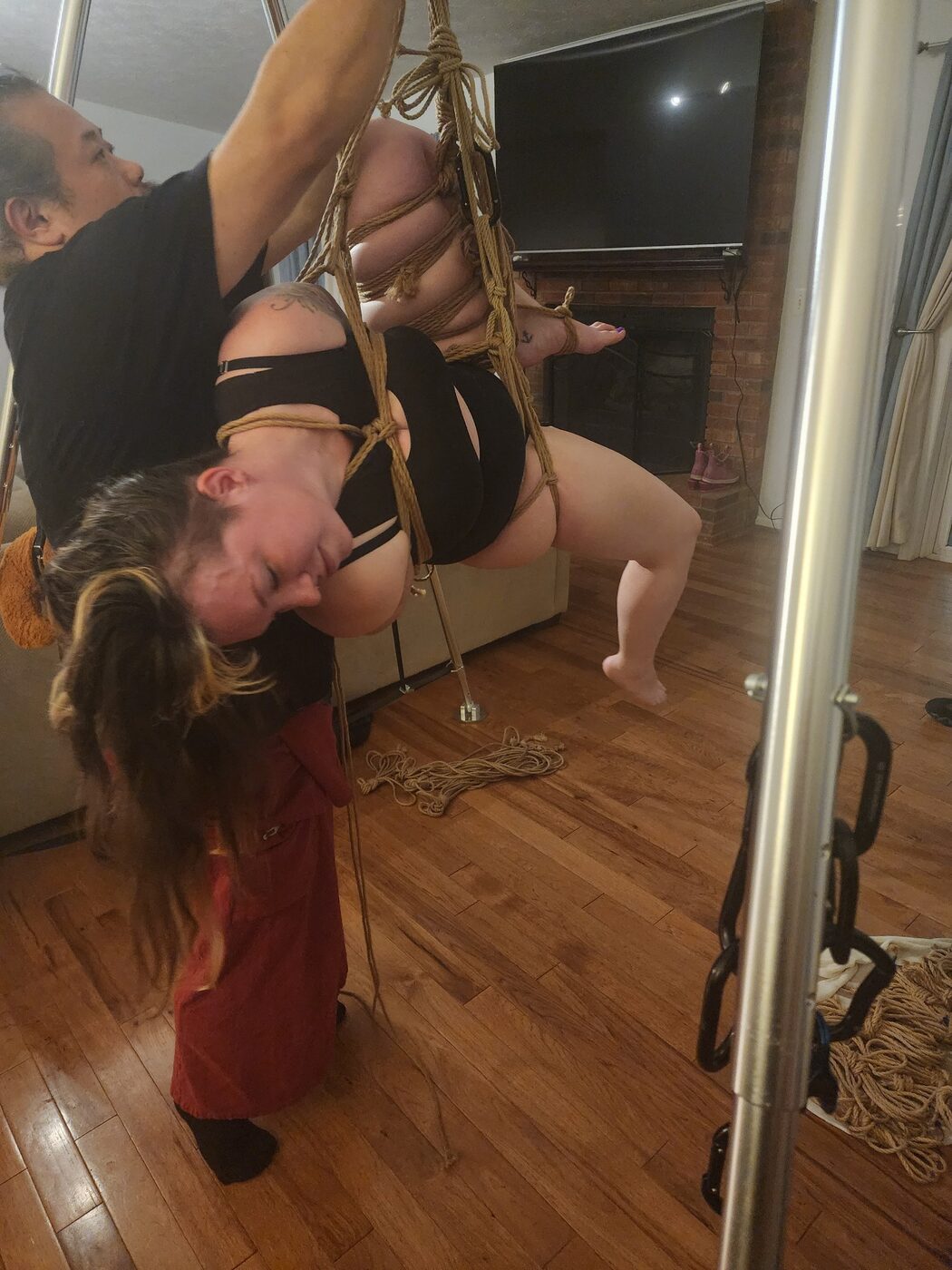
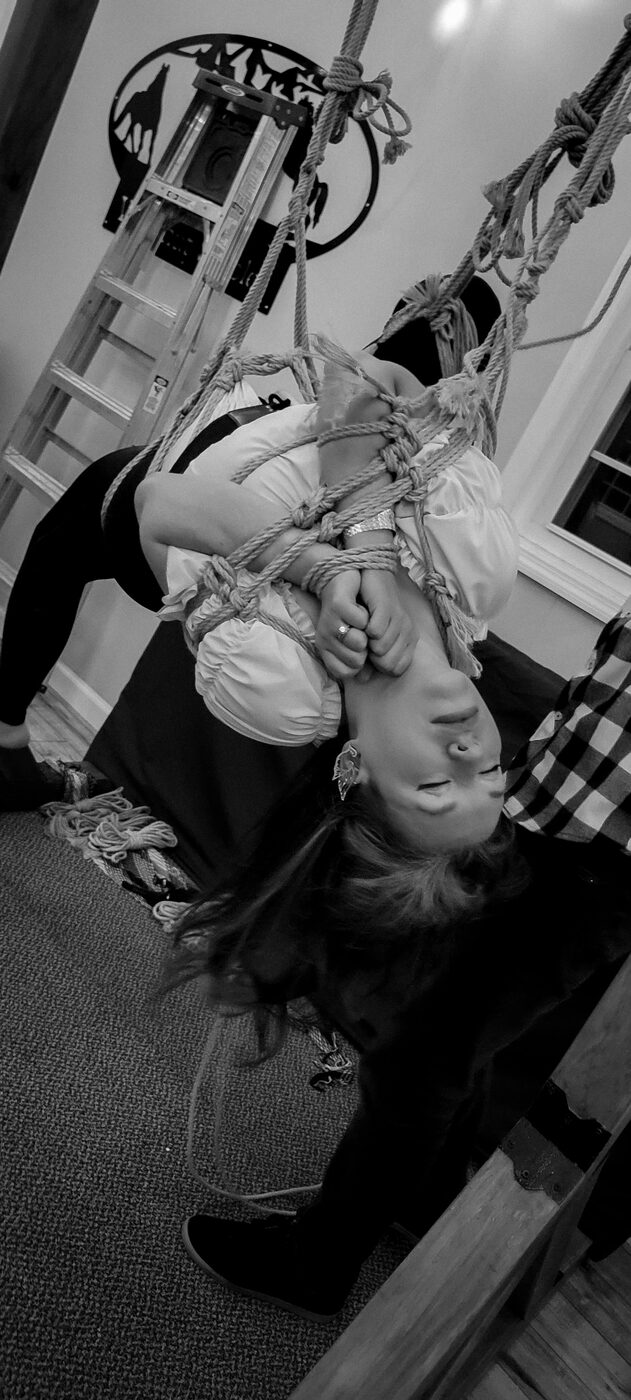
The Work in Images
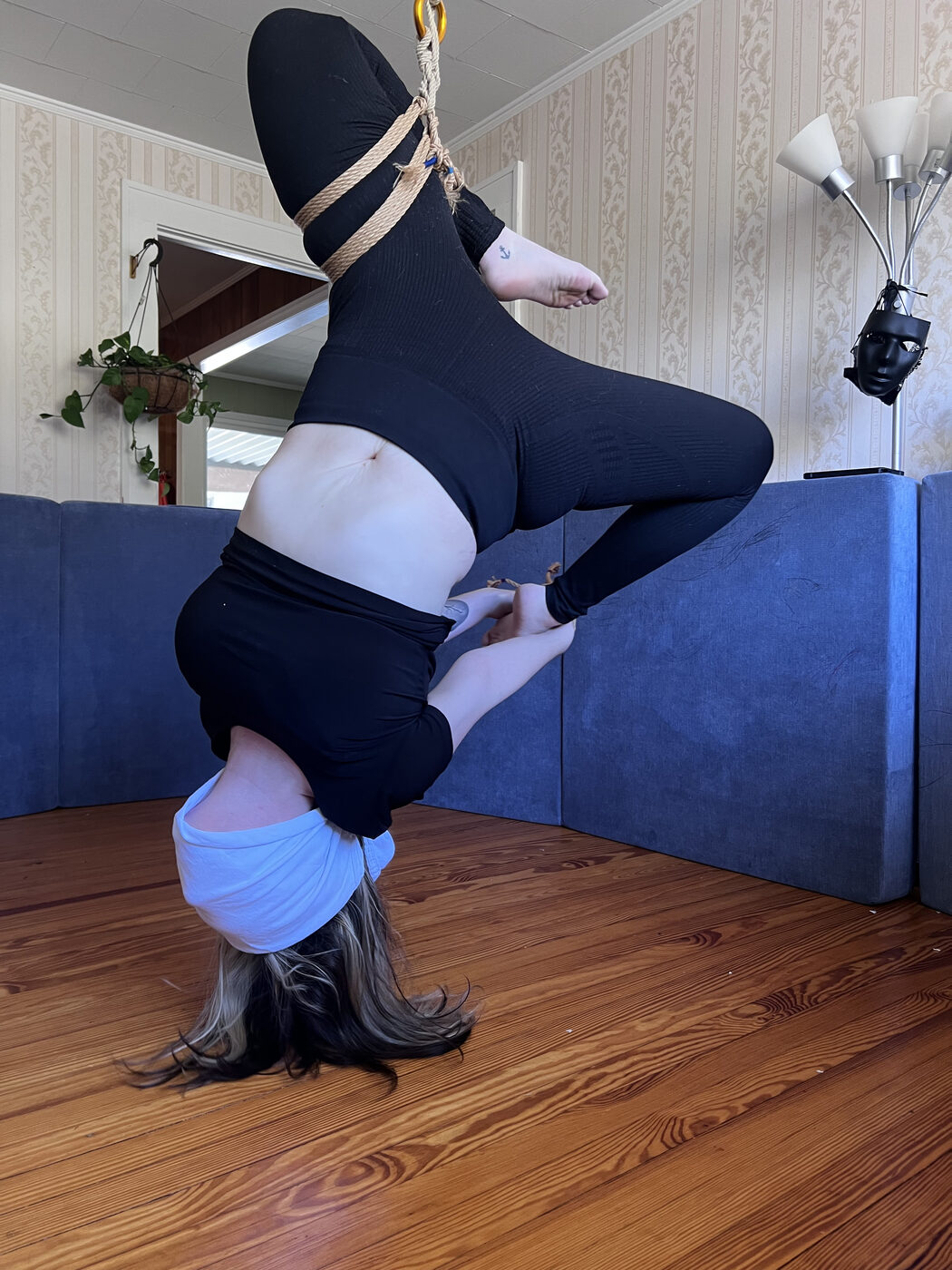
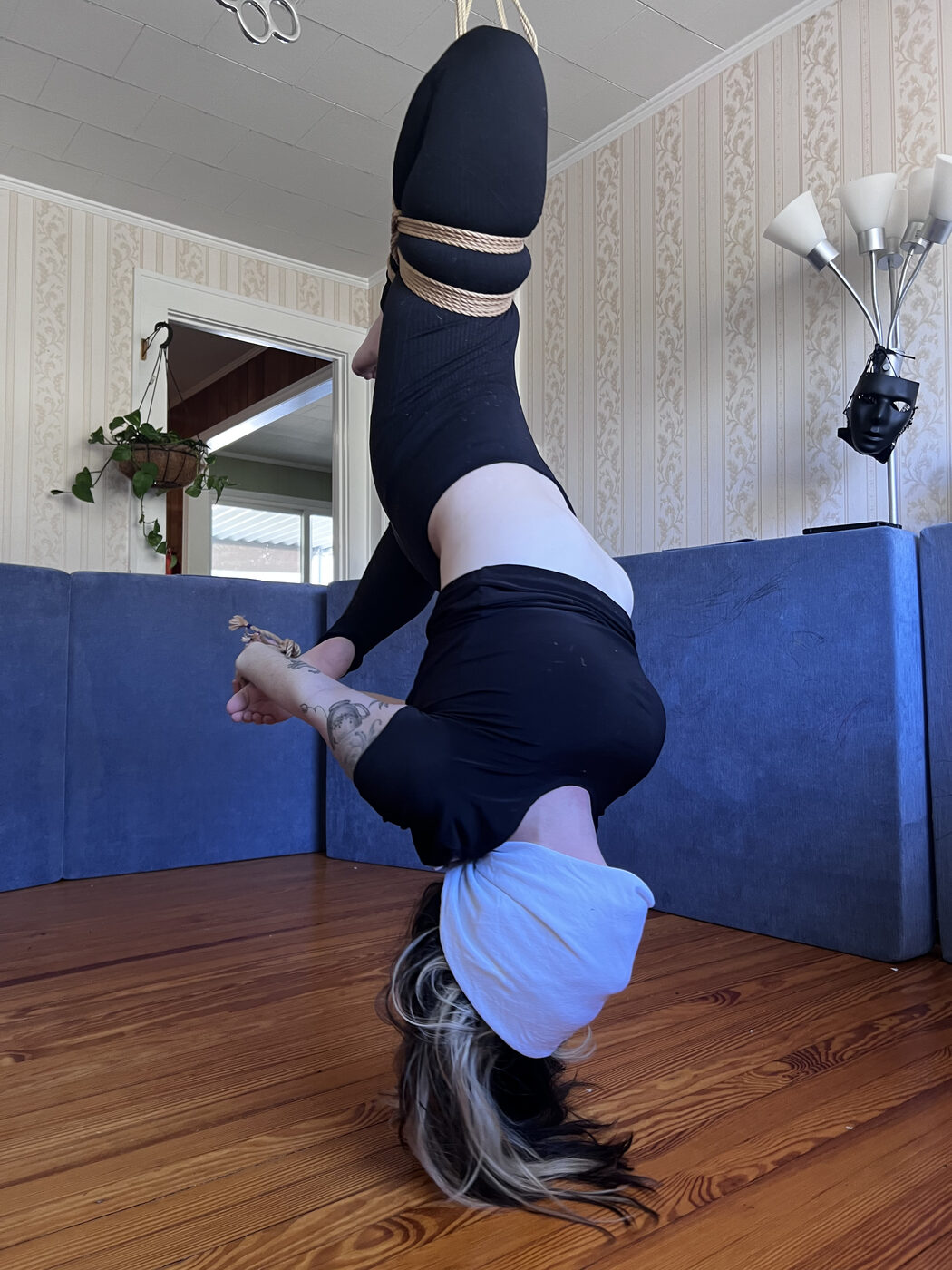
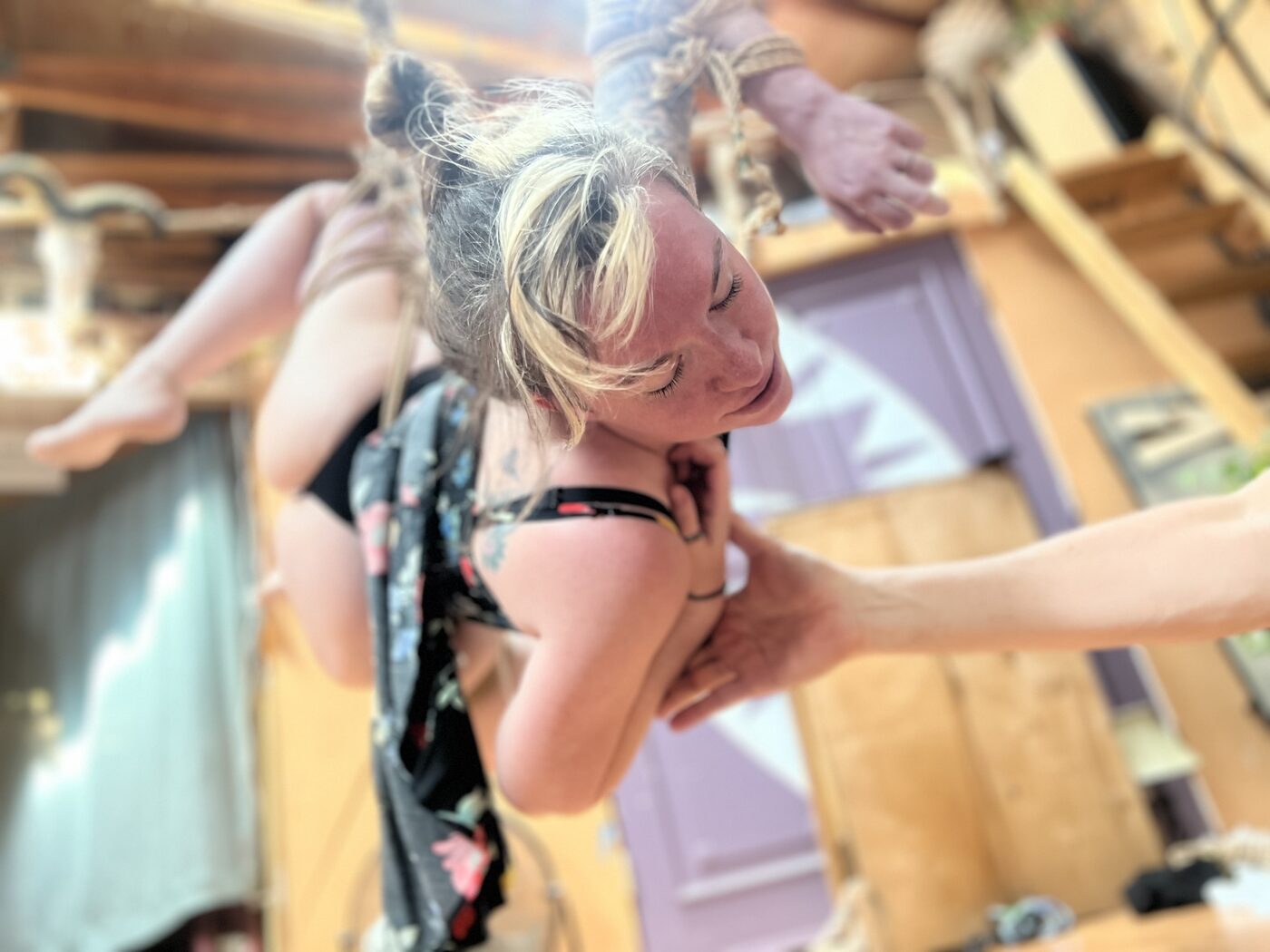
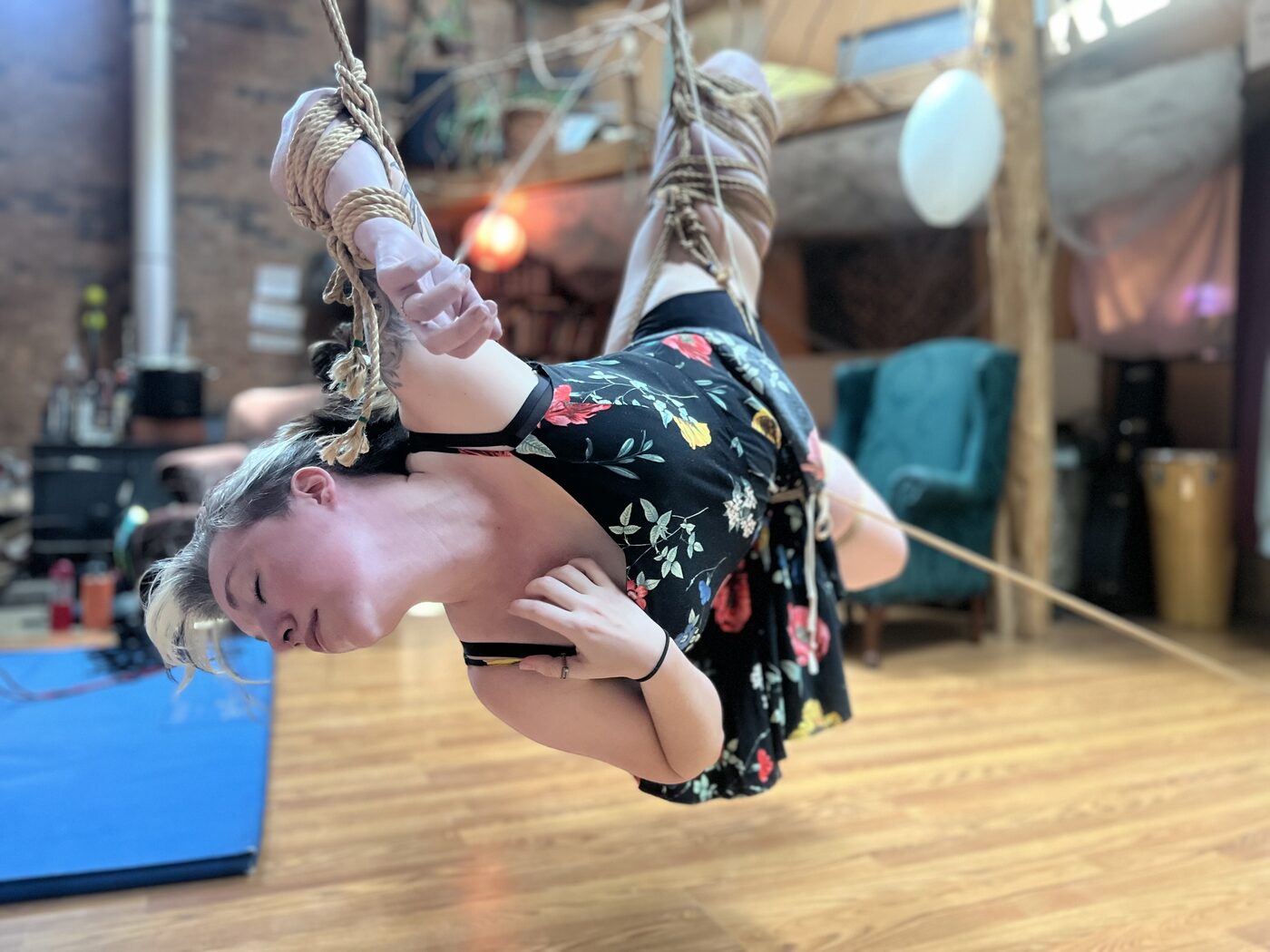
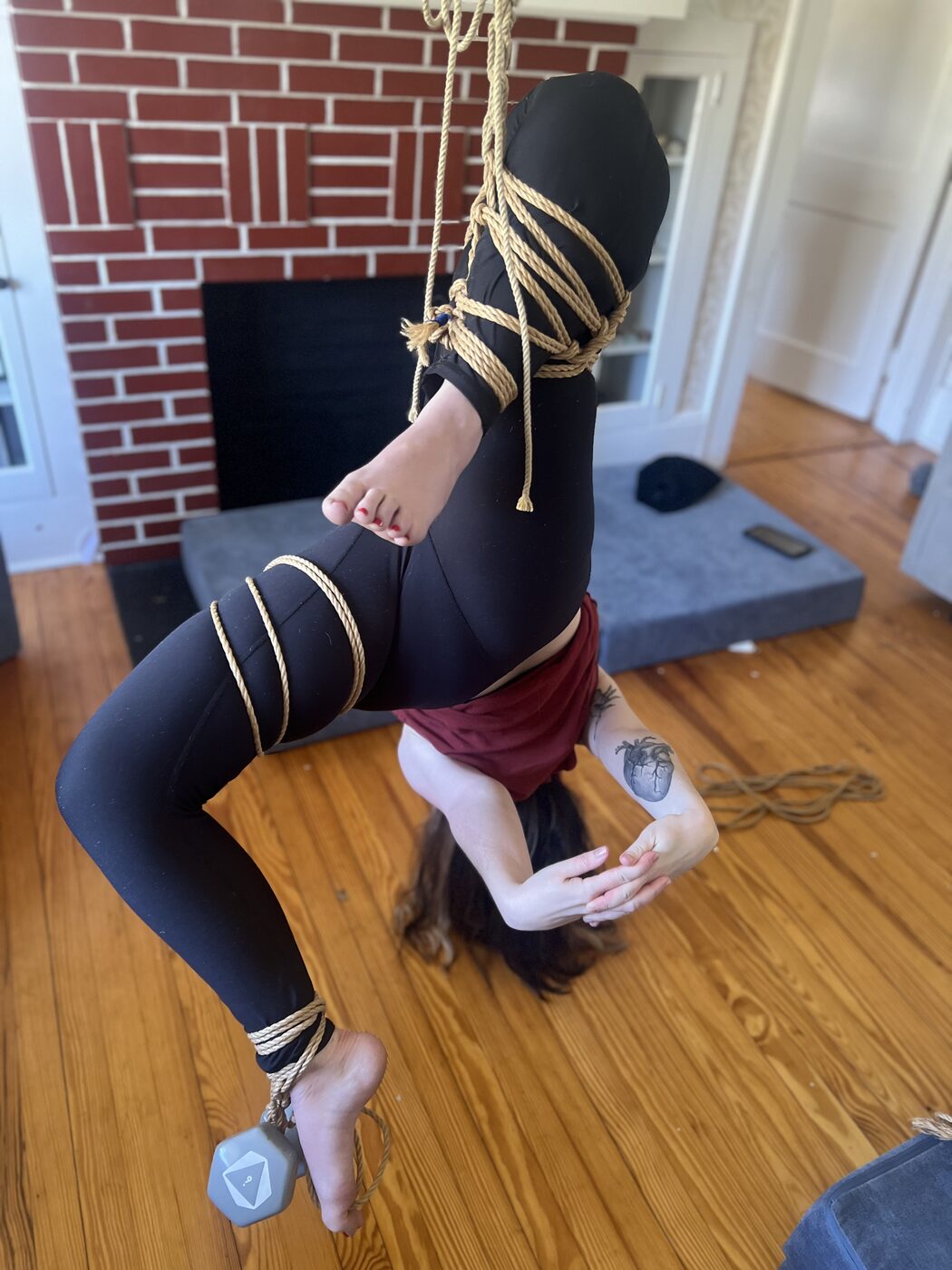
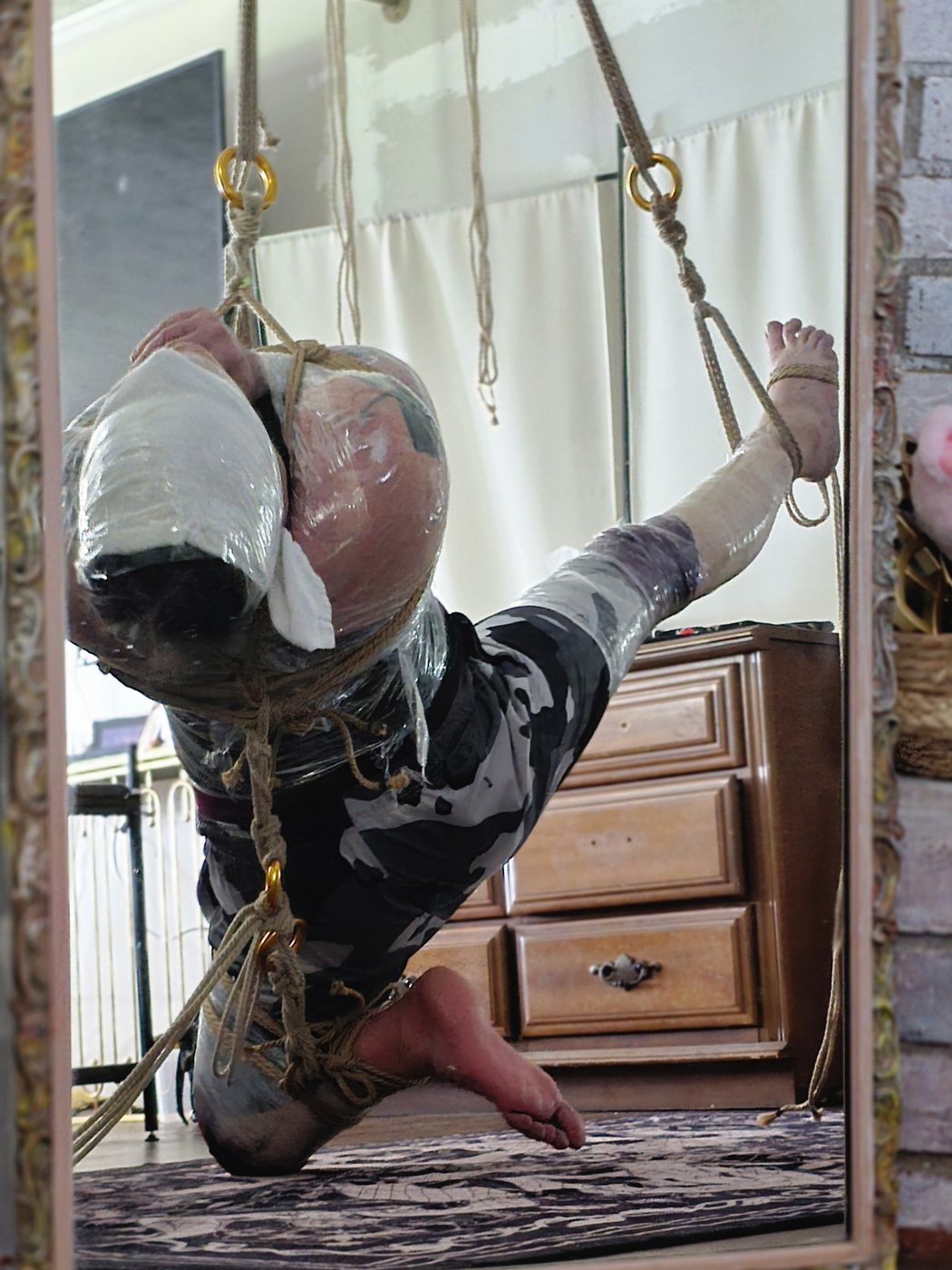
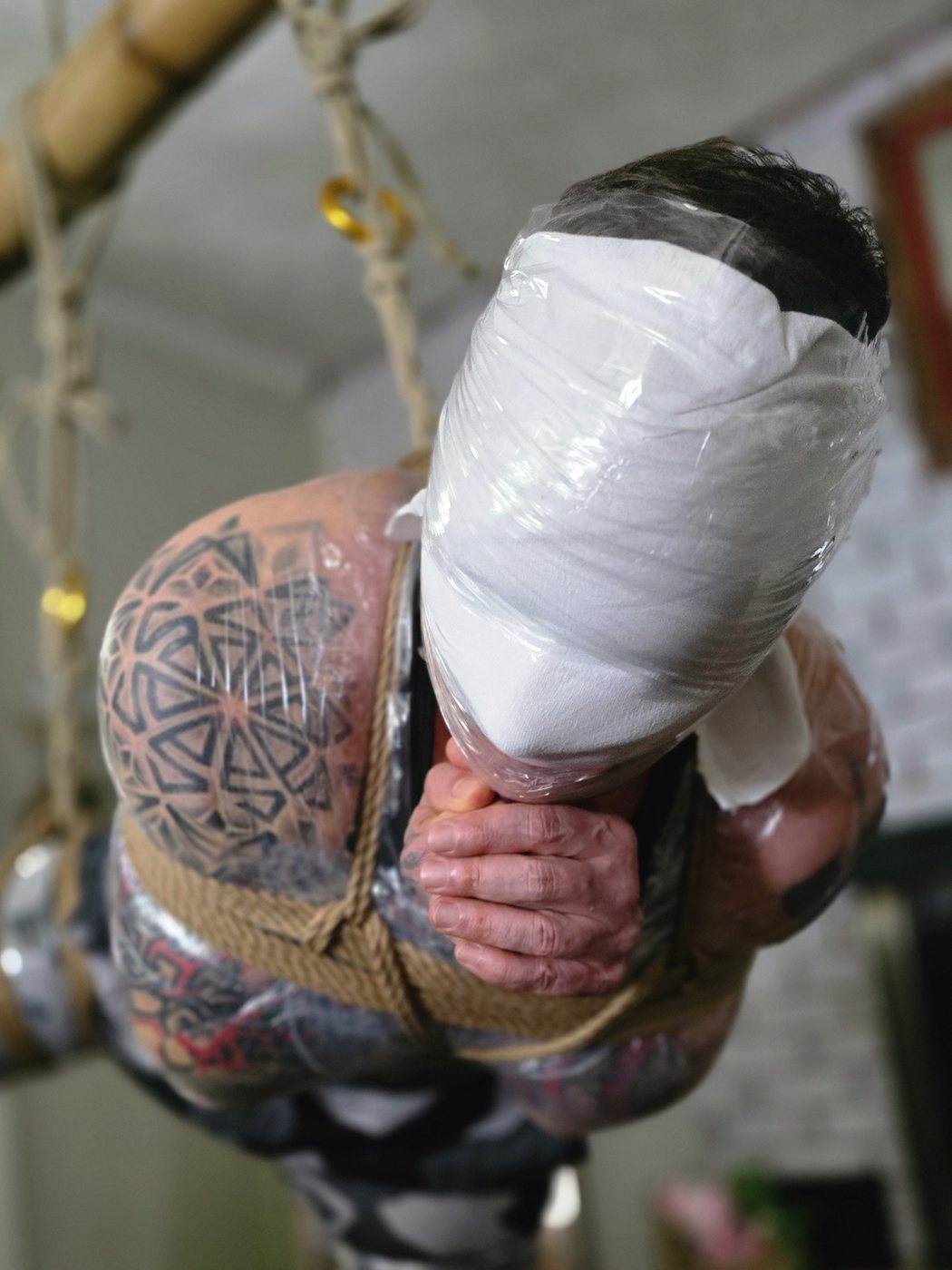
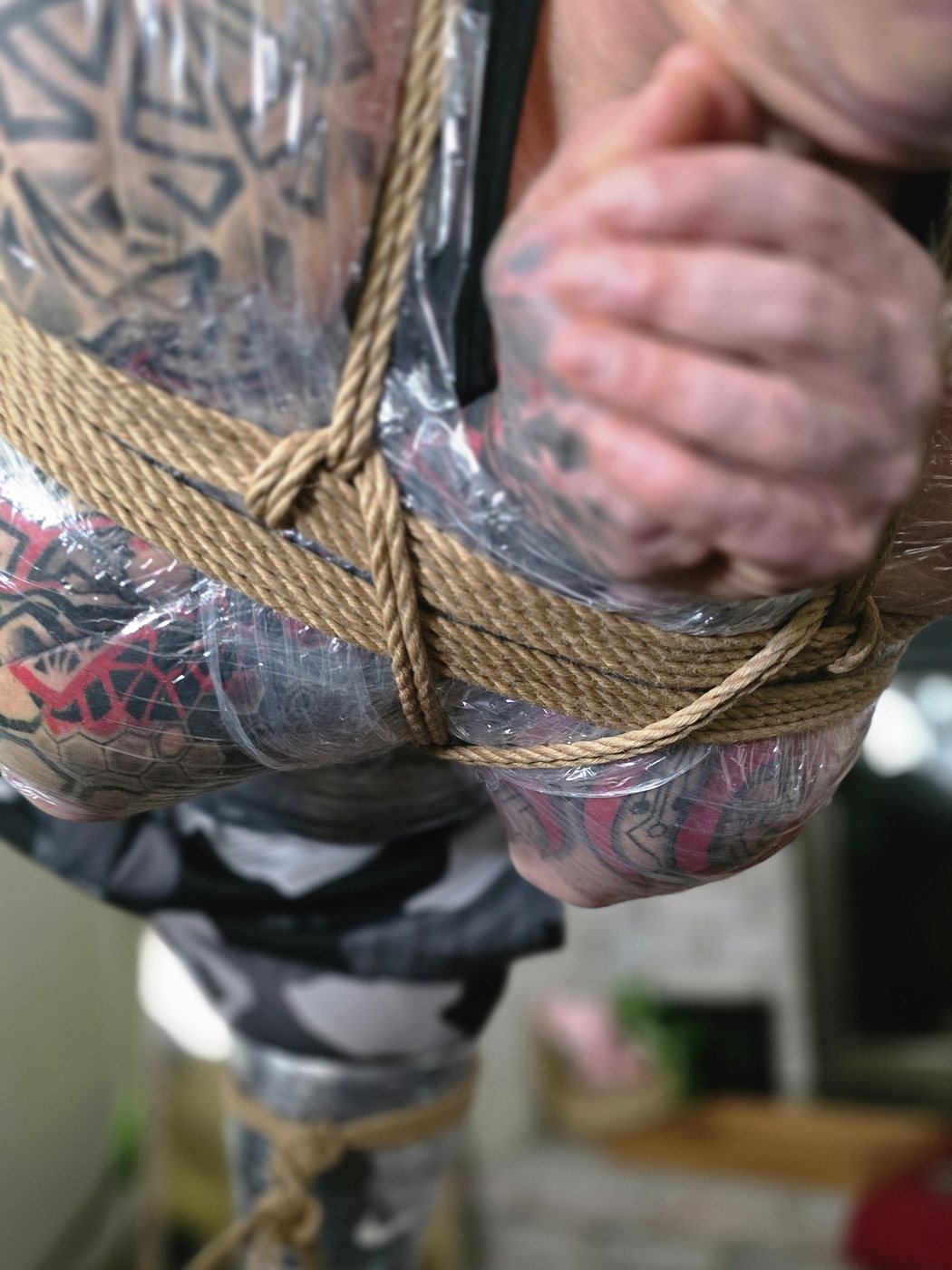
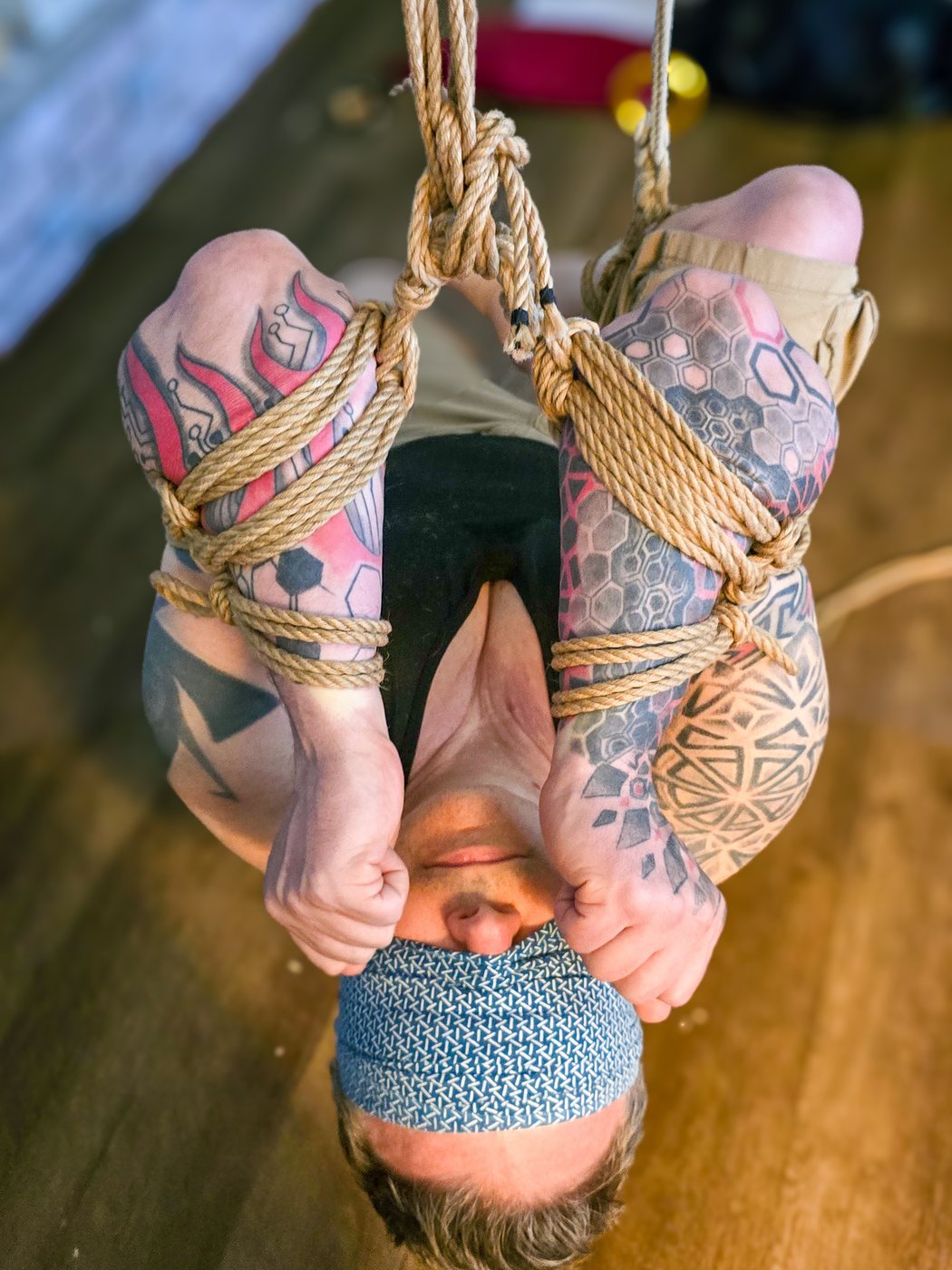
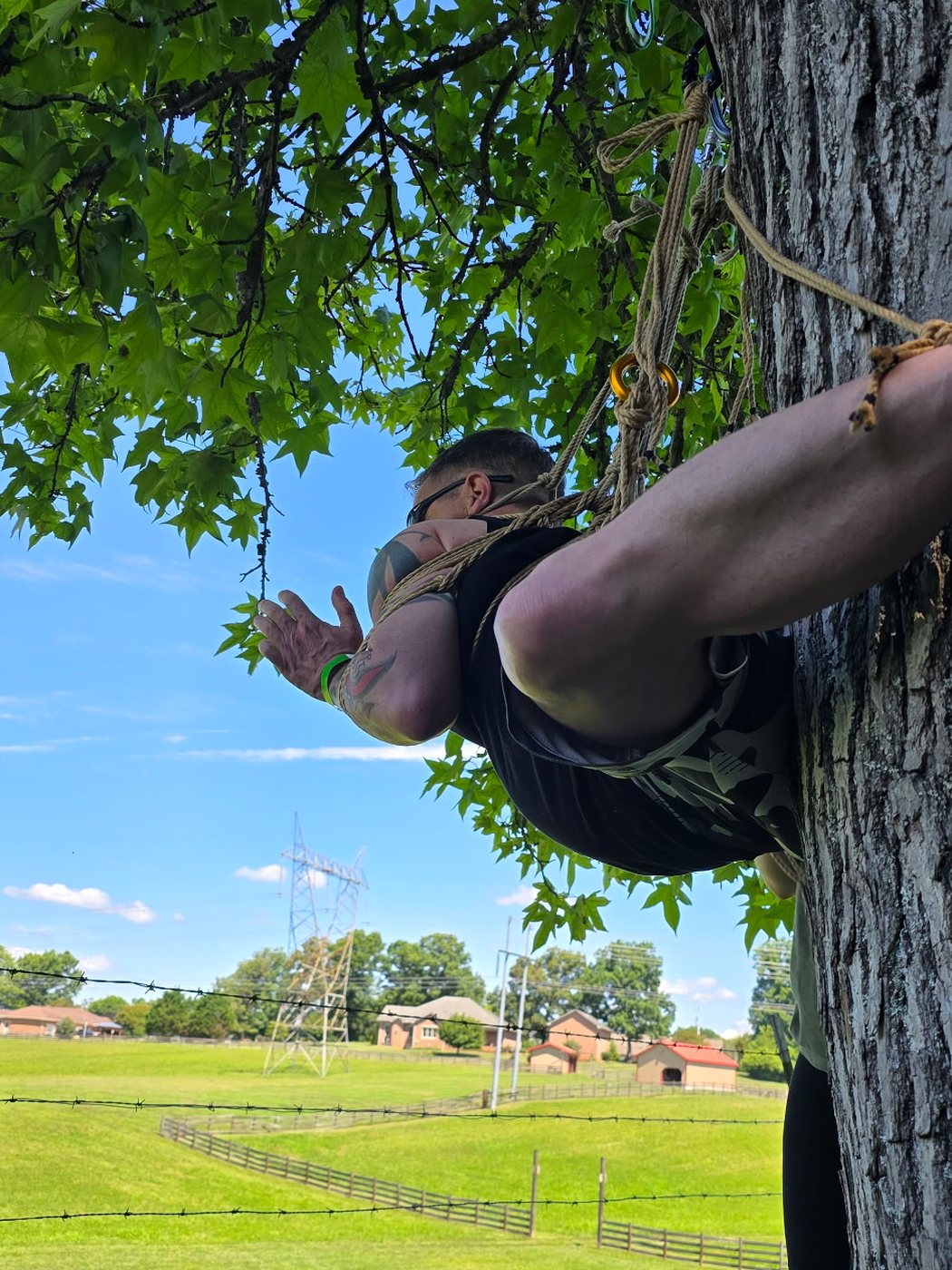
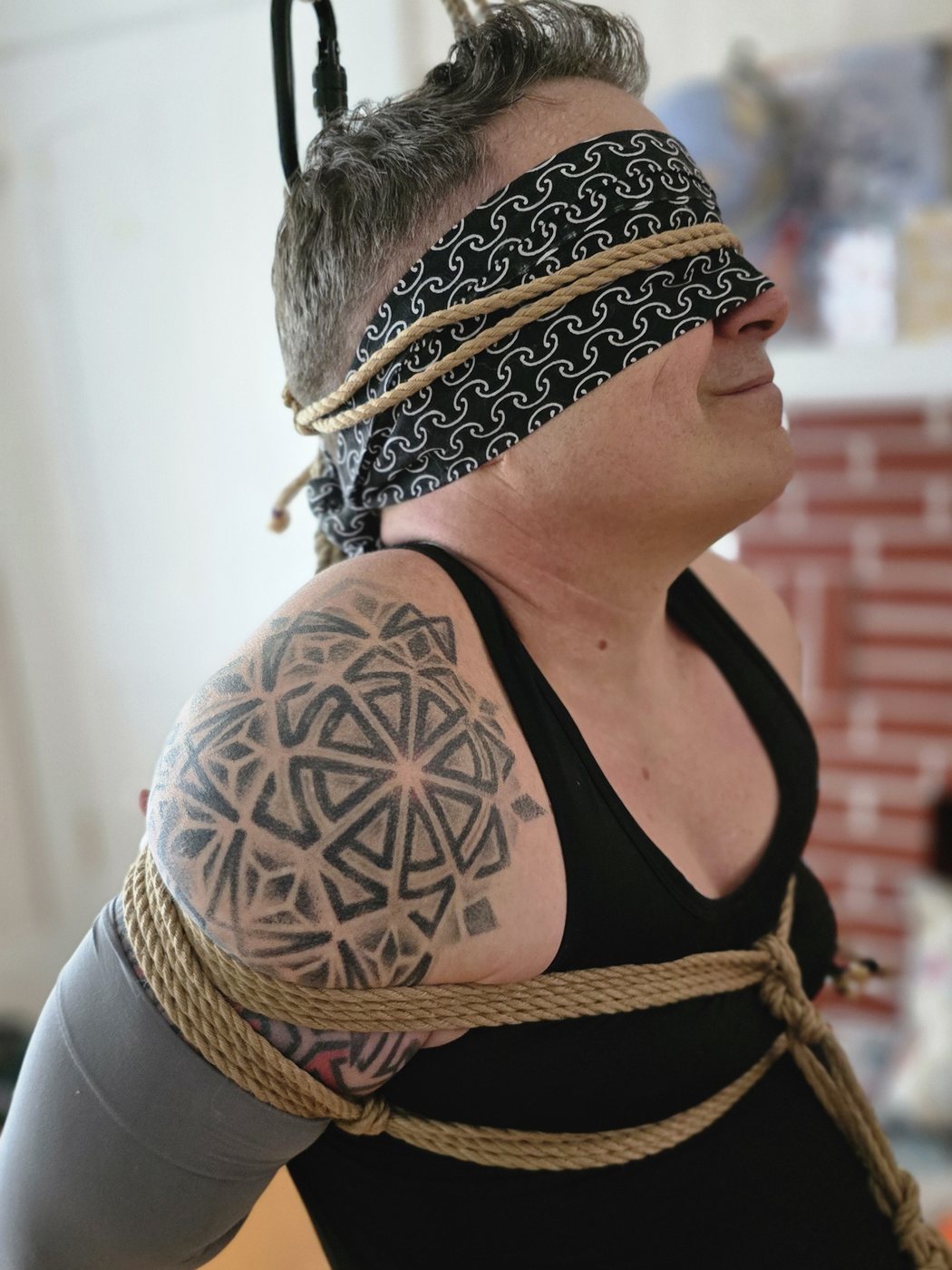
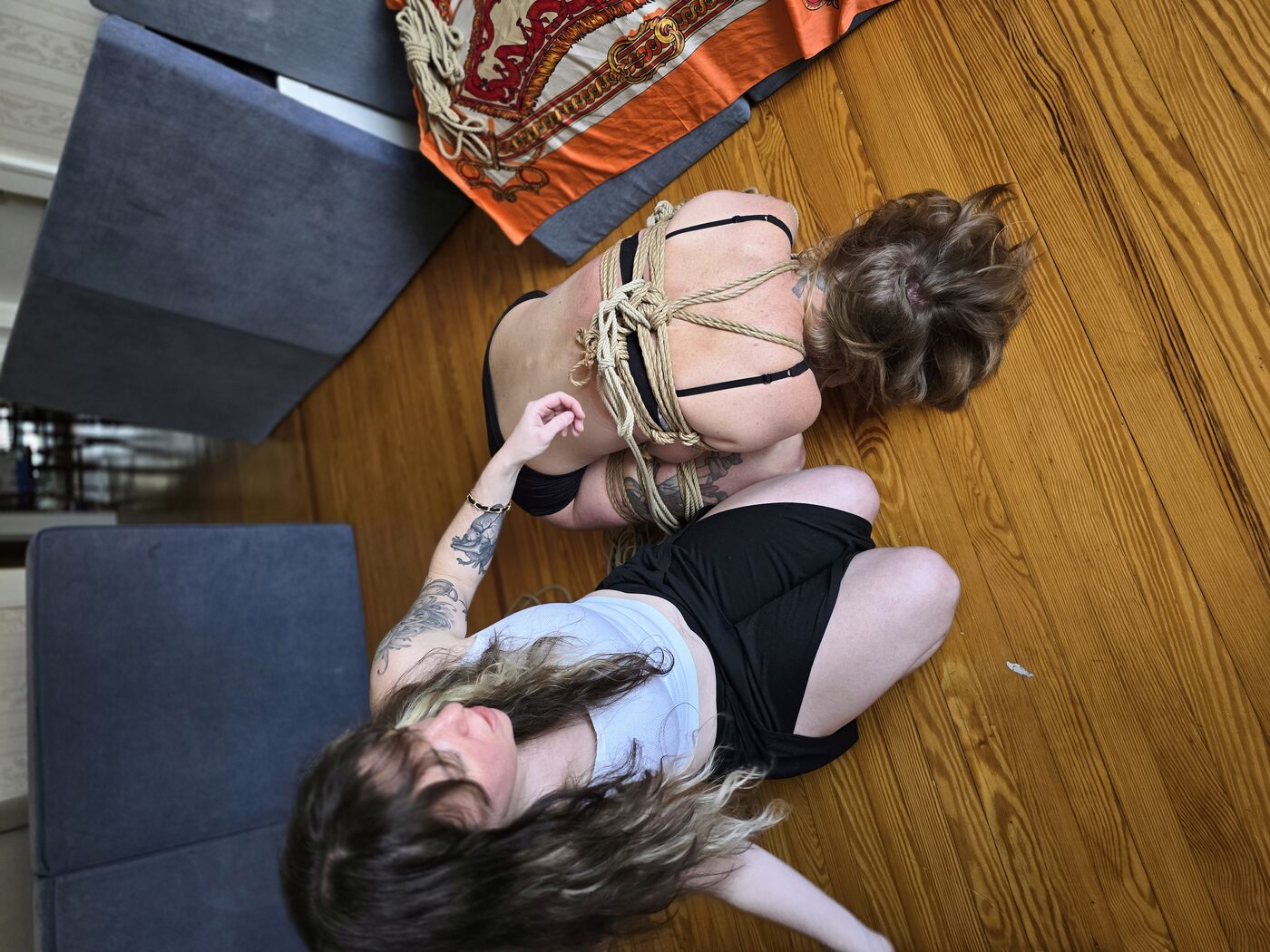
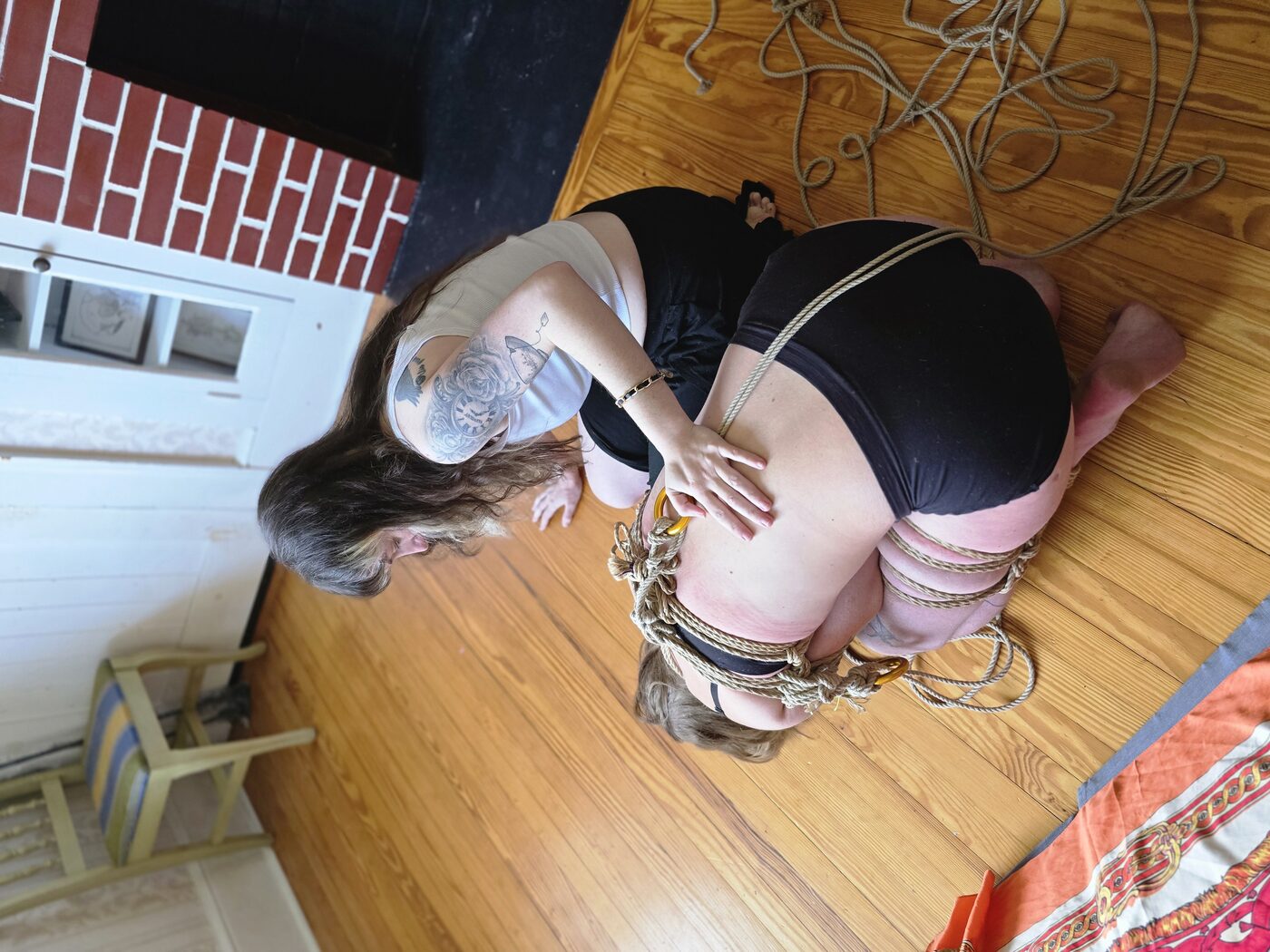
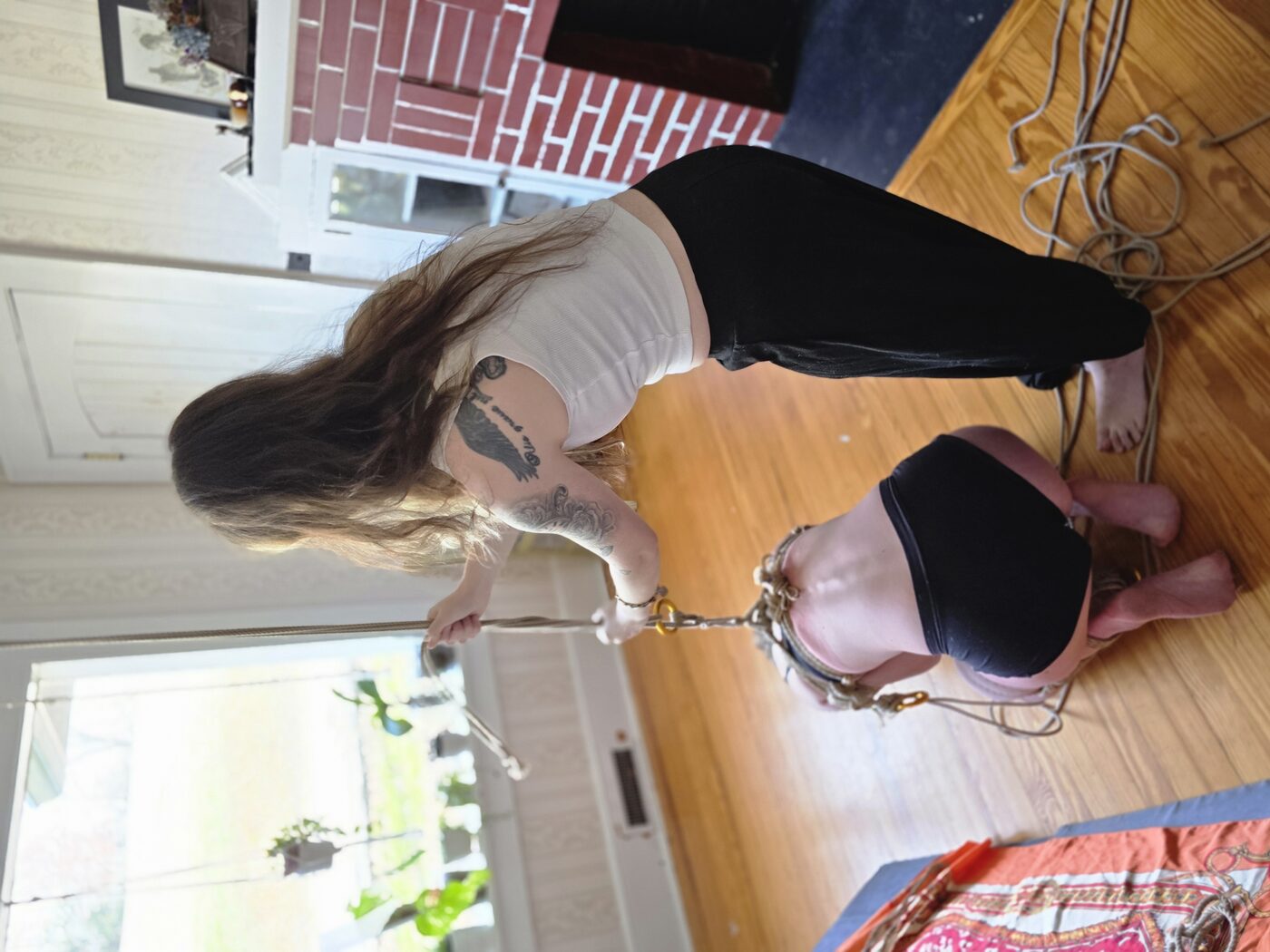
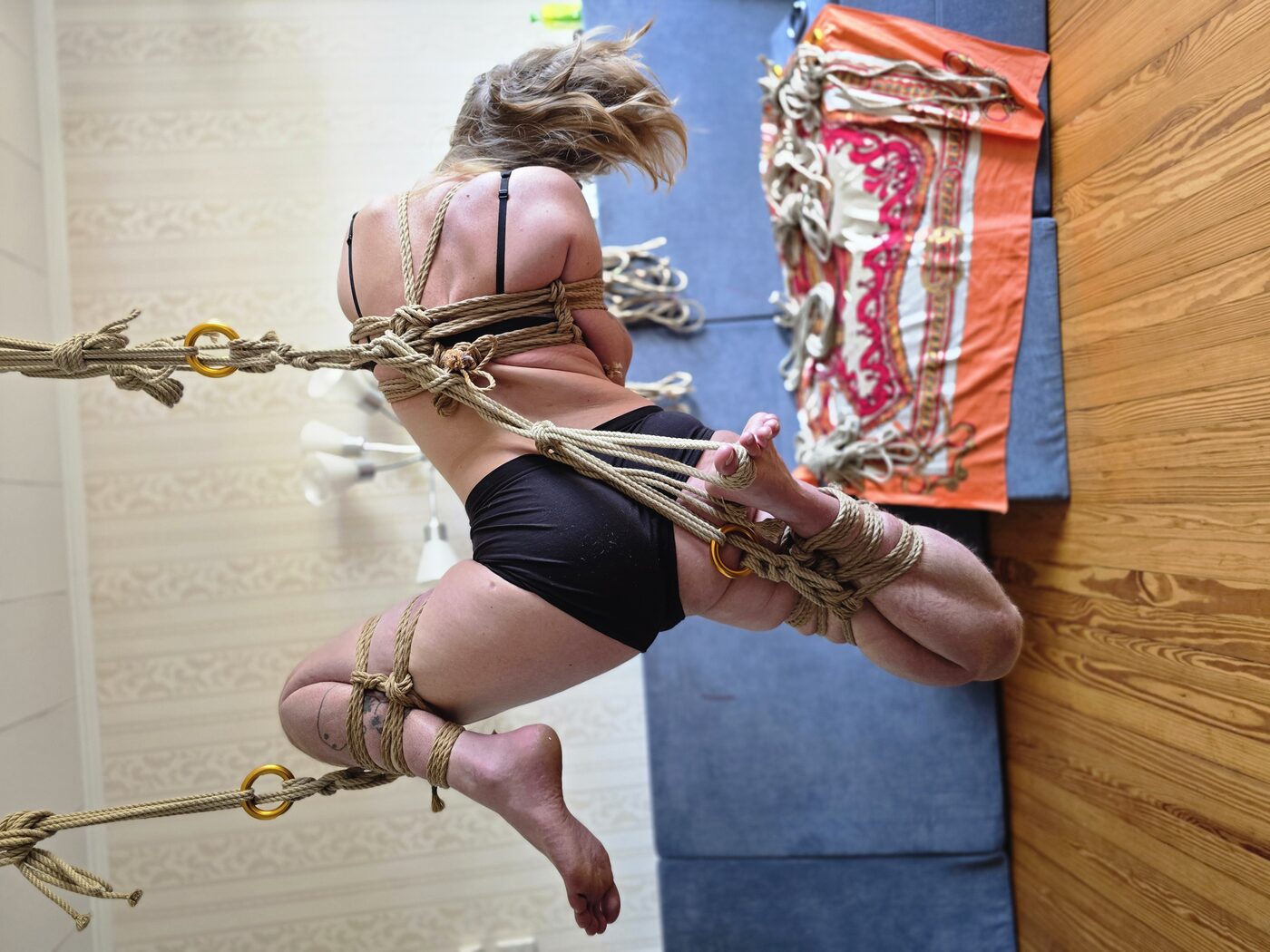
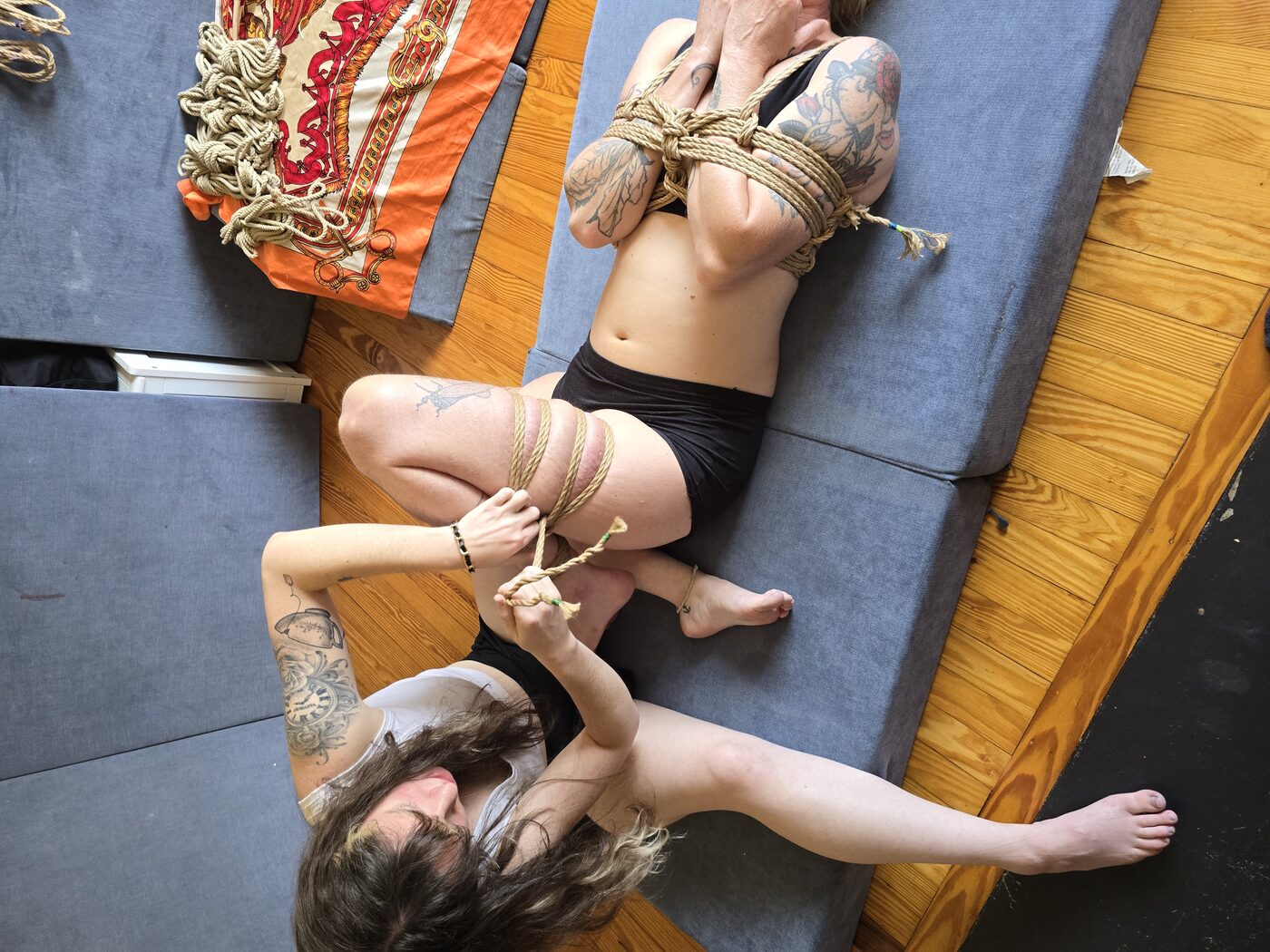
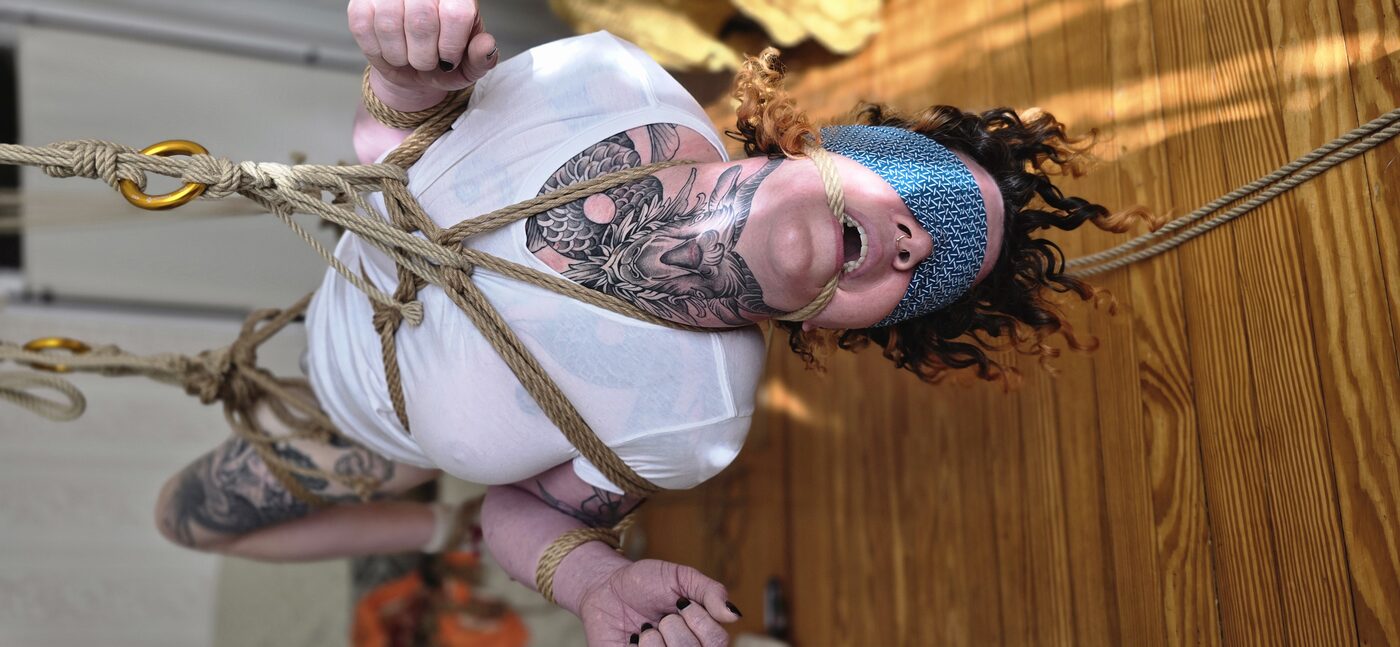
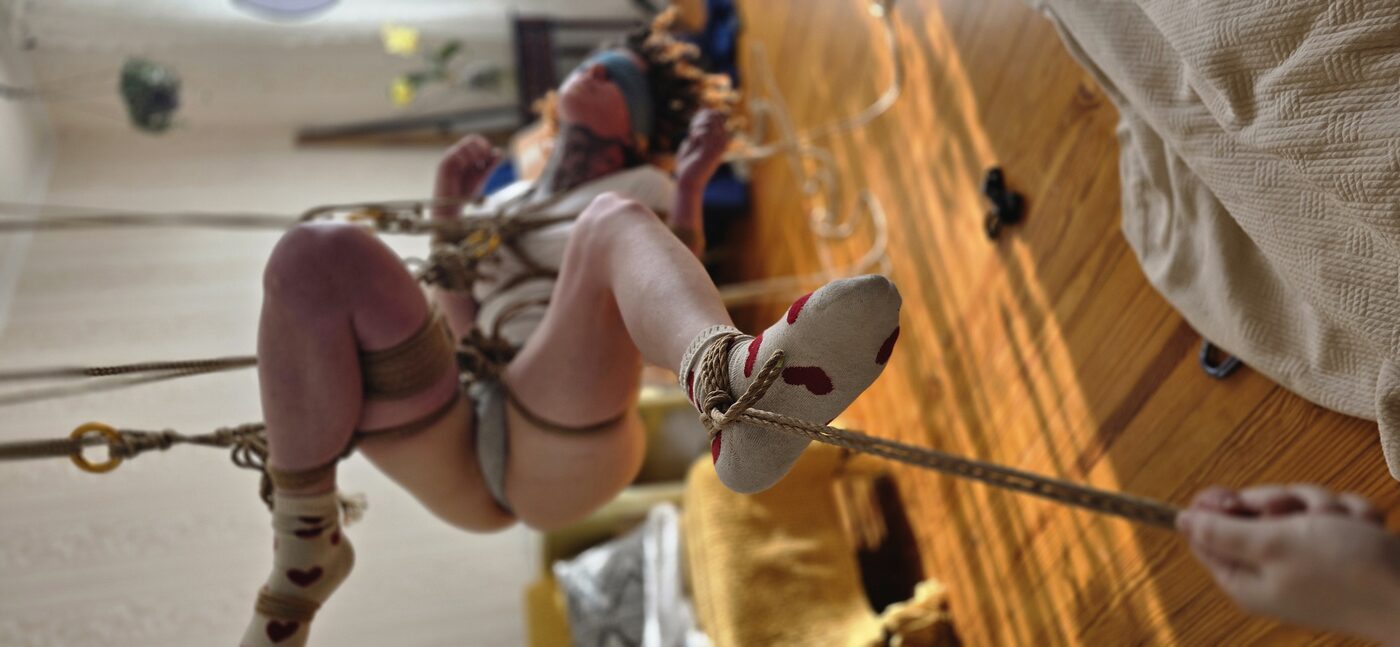
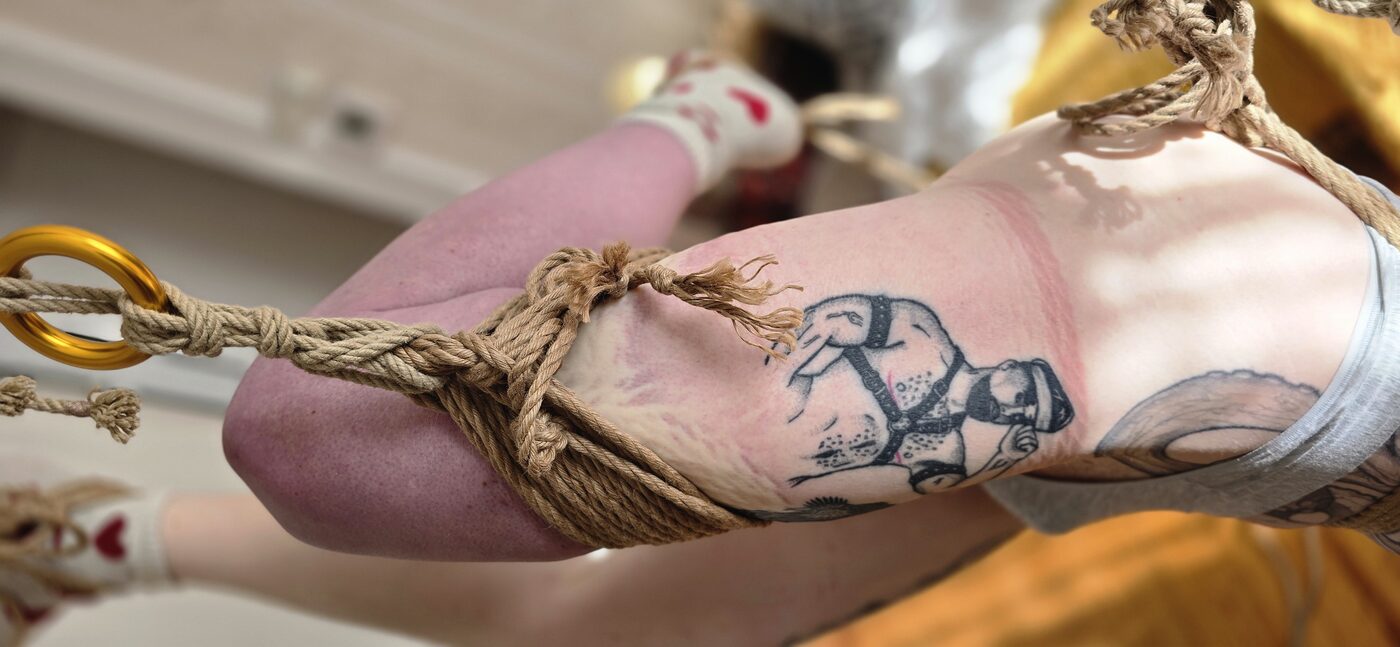
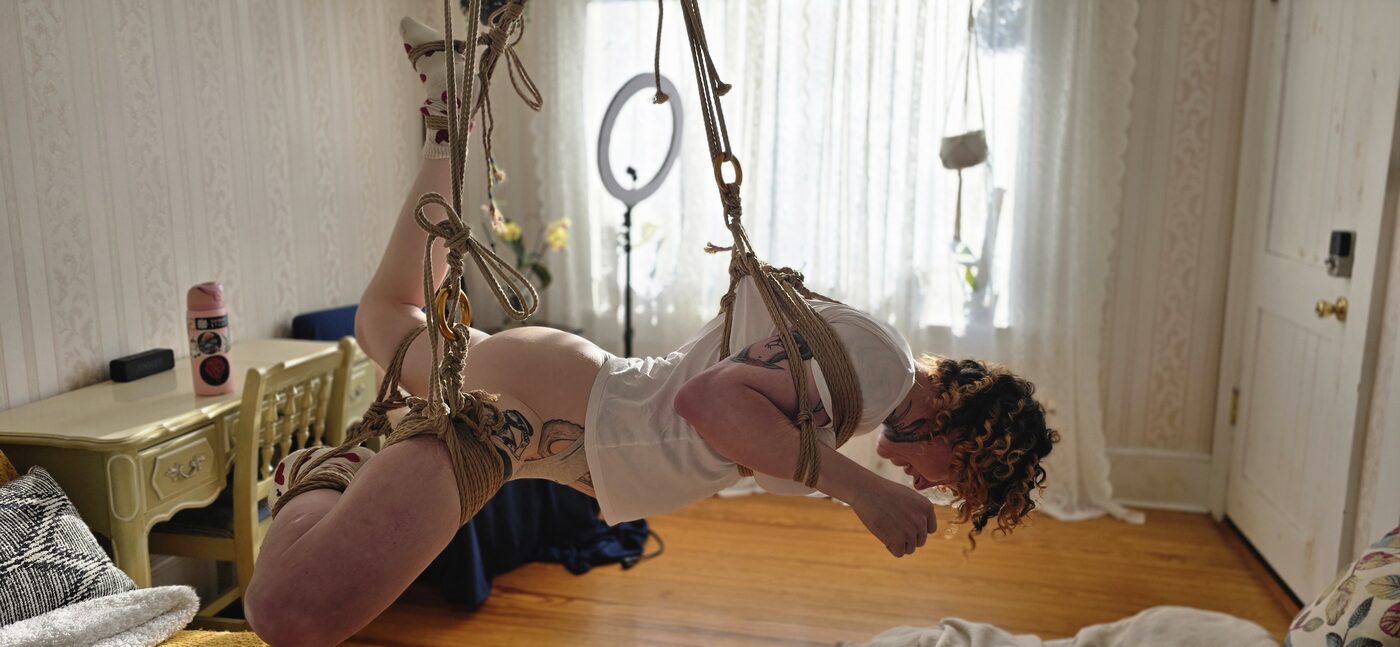
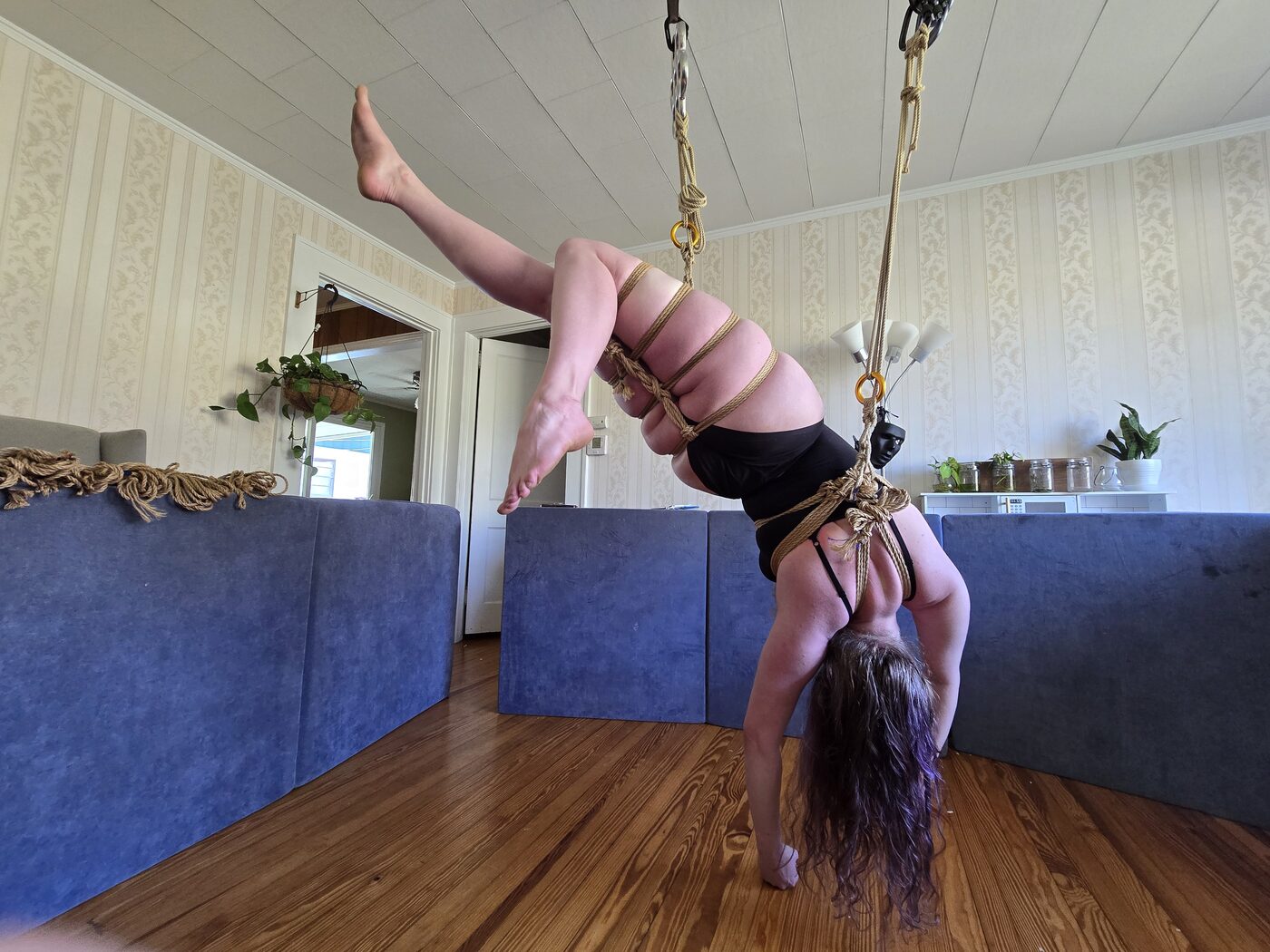
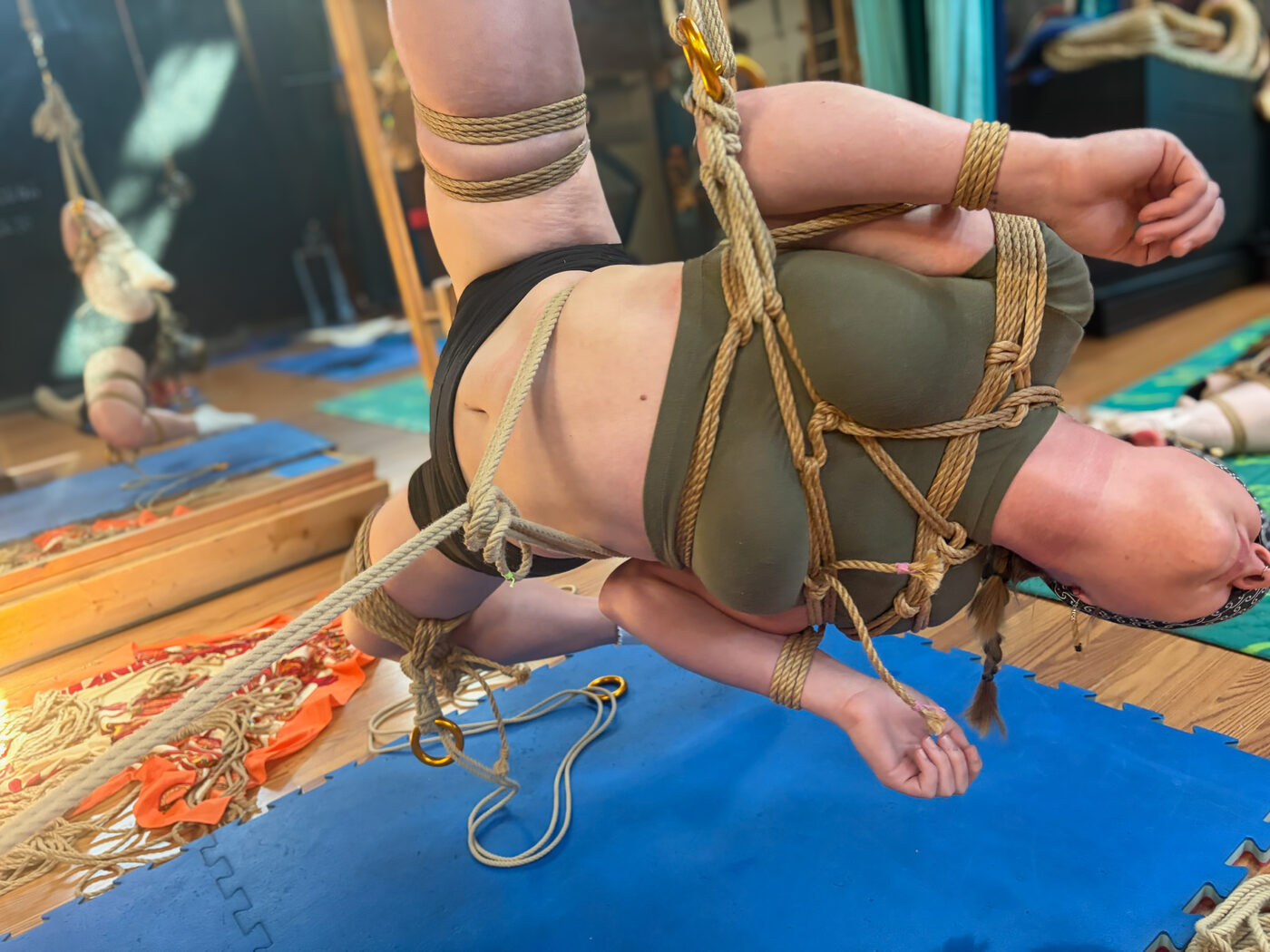
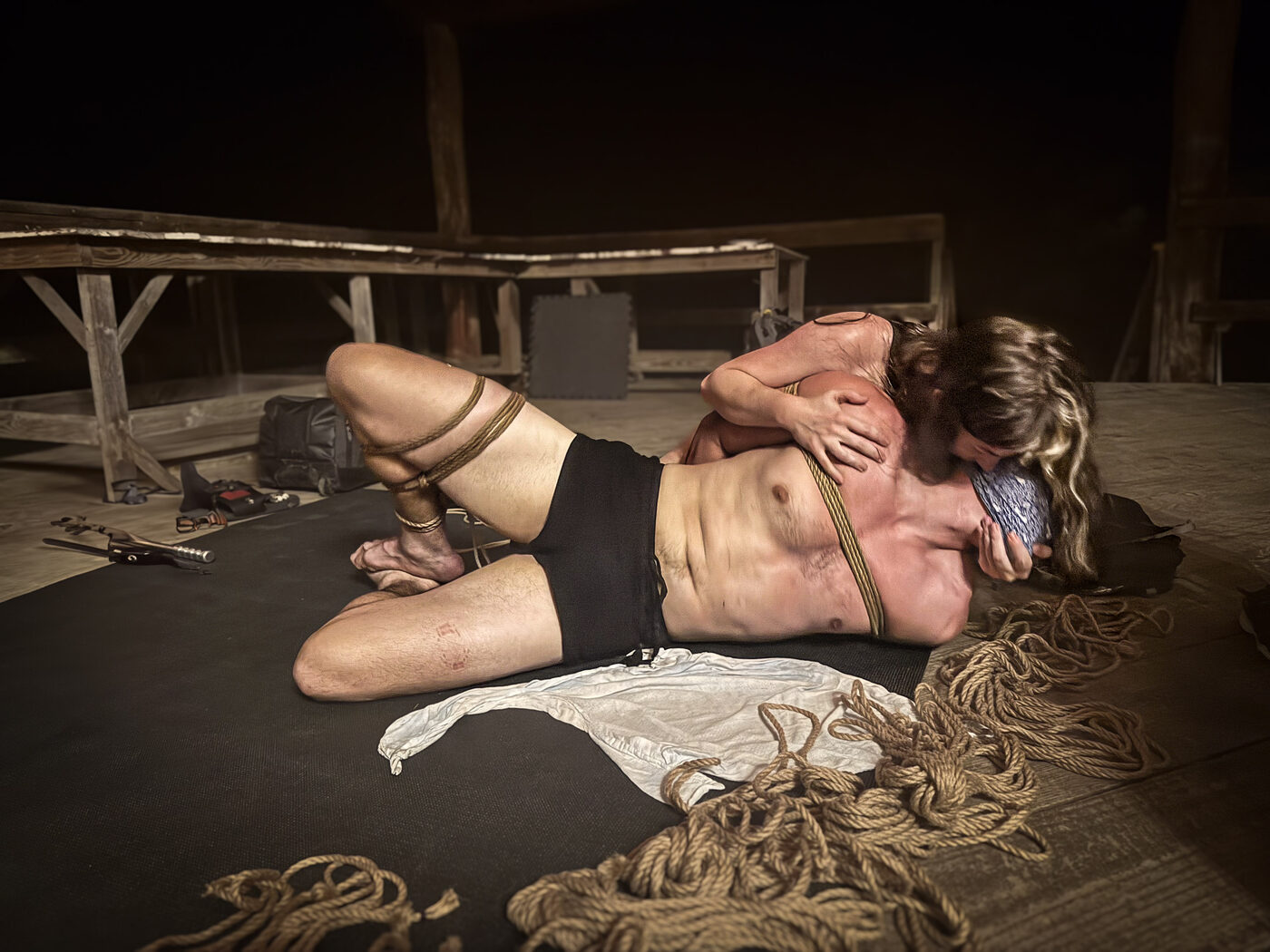
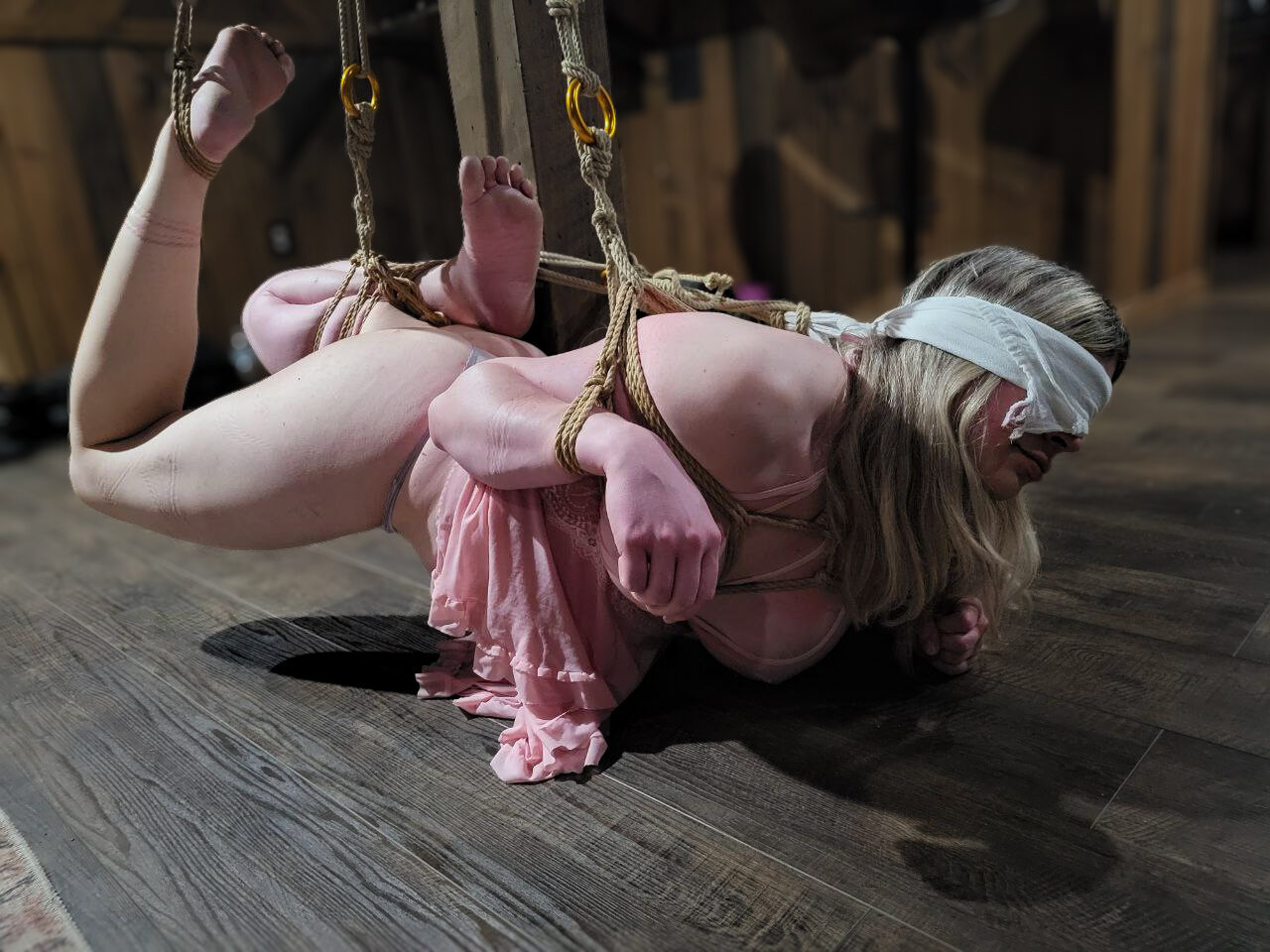
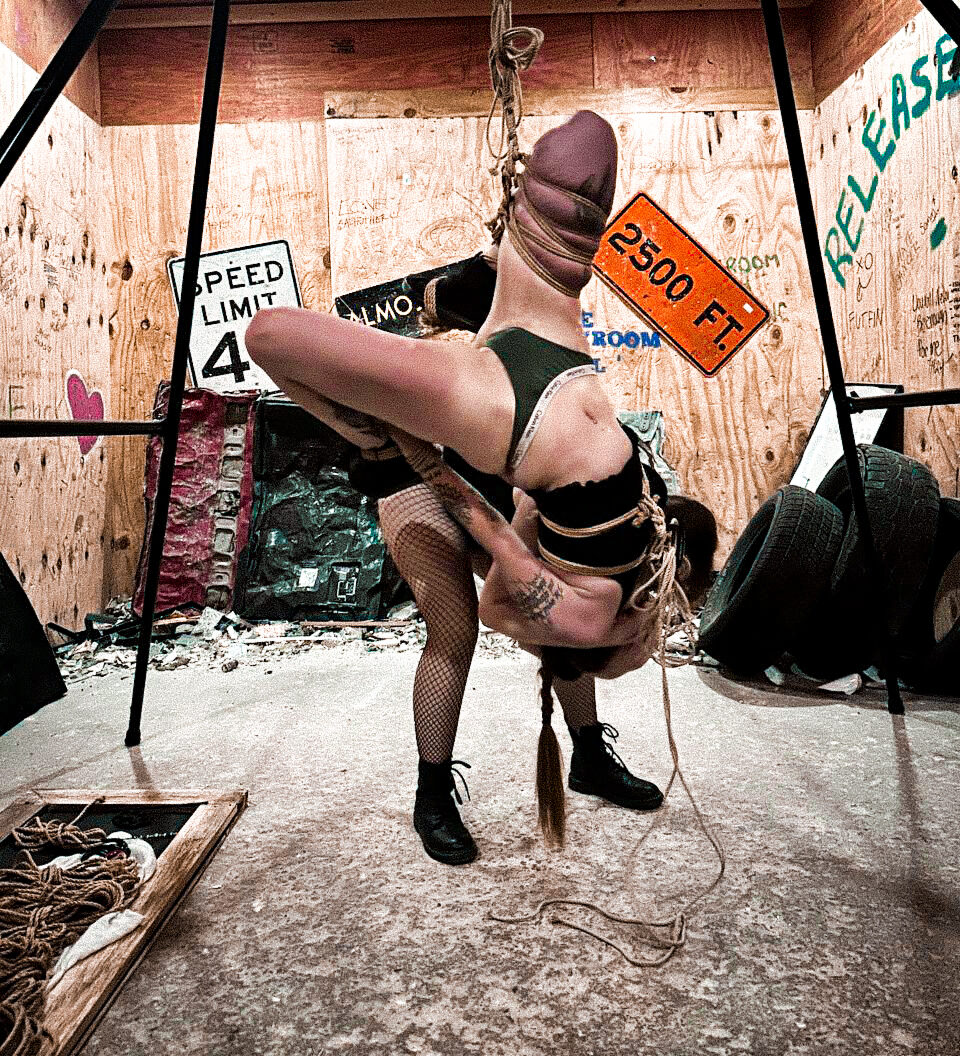
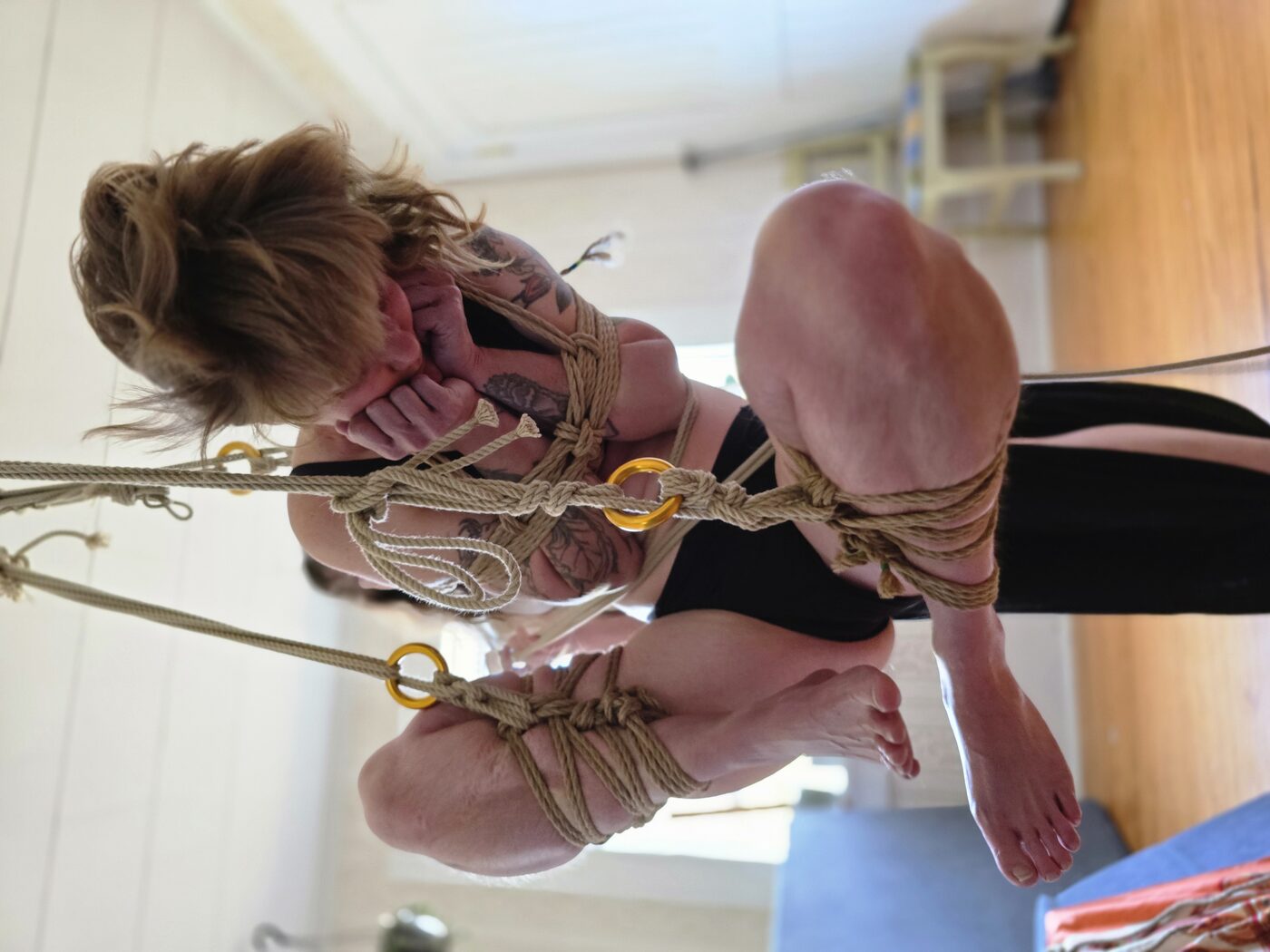
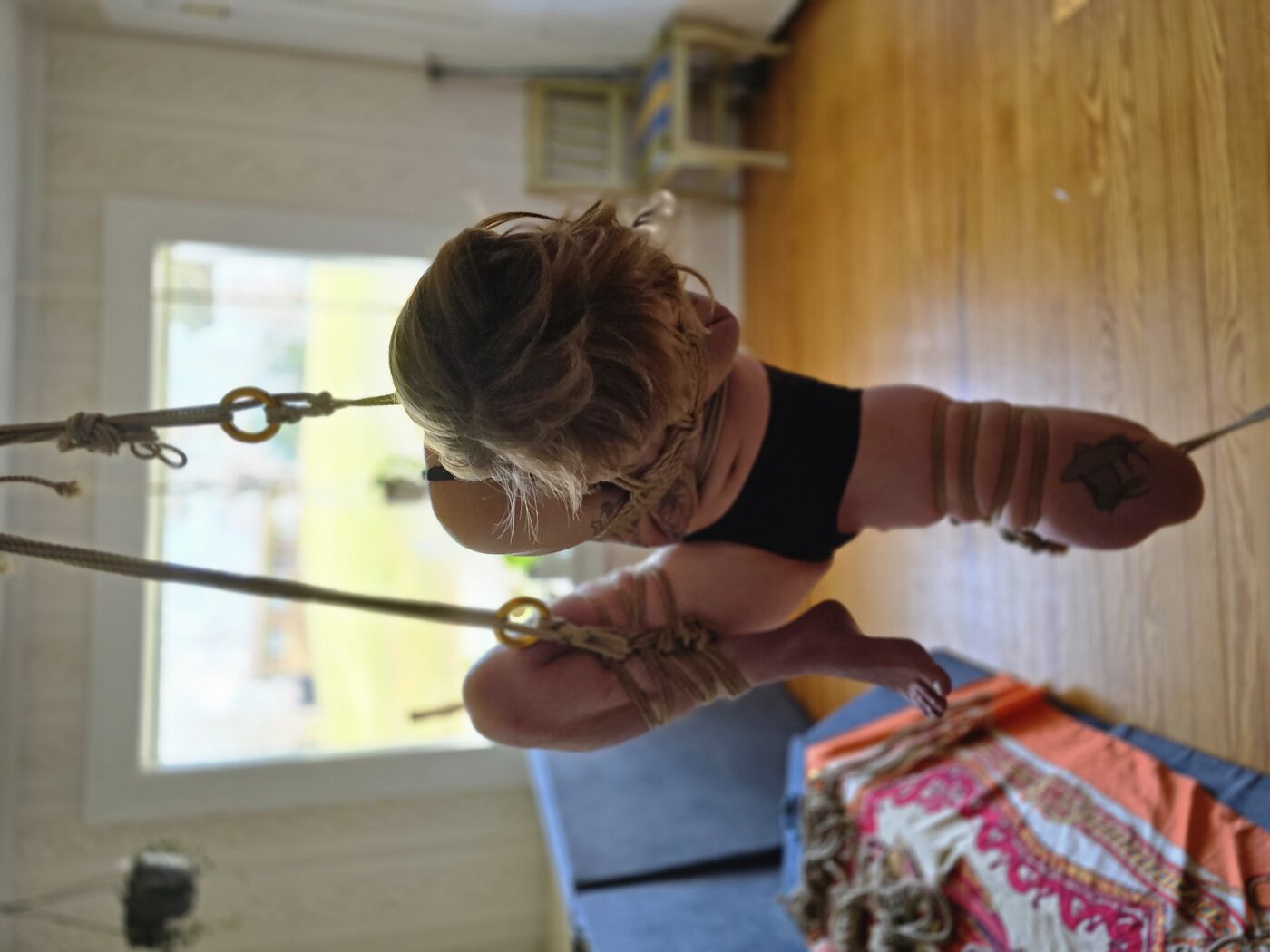
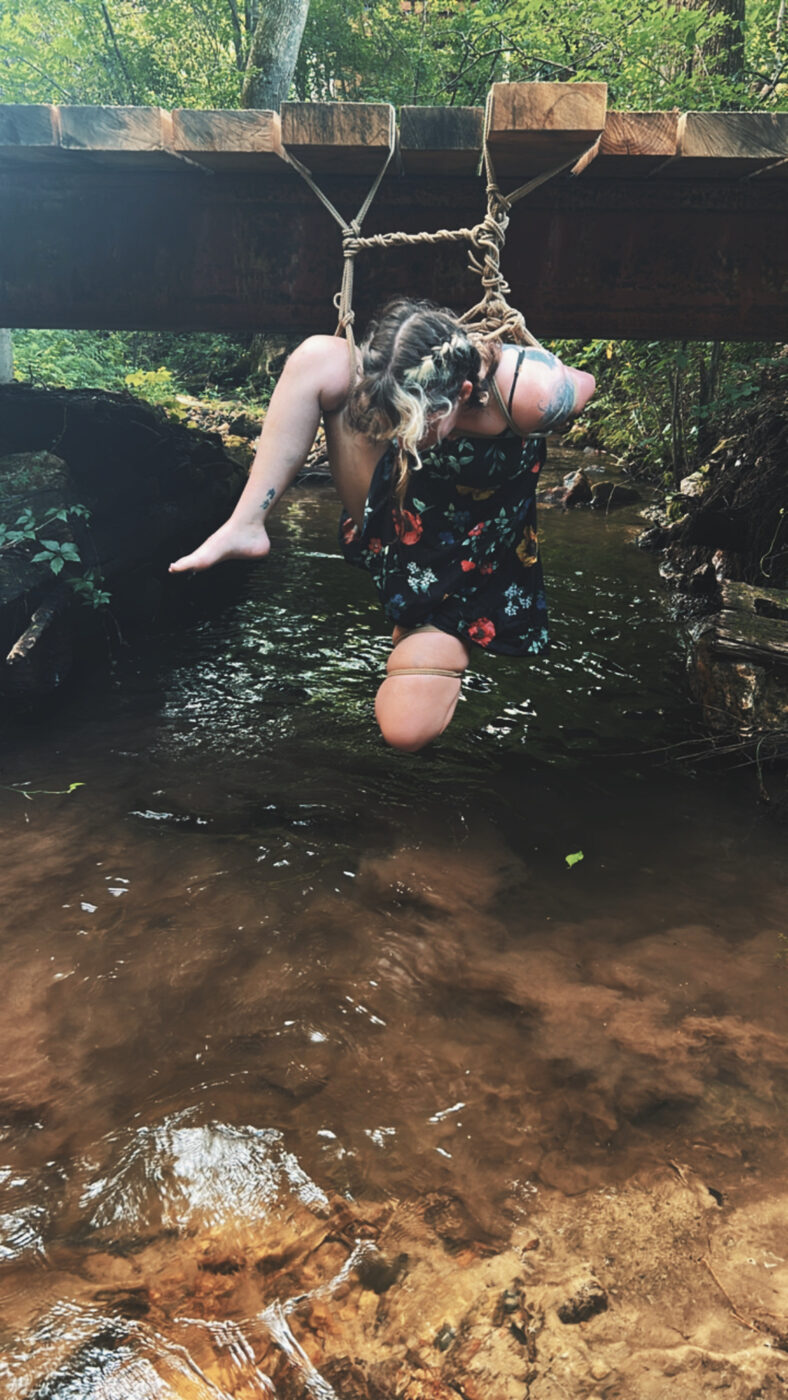
A visual record of my practice: self-suspension, topping, bottoming, and the intimate geometry of rope on bodies. Photos will be added as they are gathered.

Interested in working together?
Client Testimonials
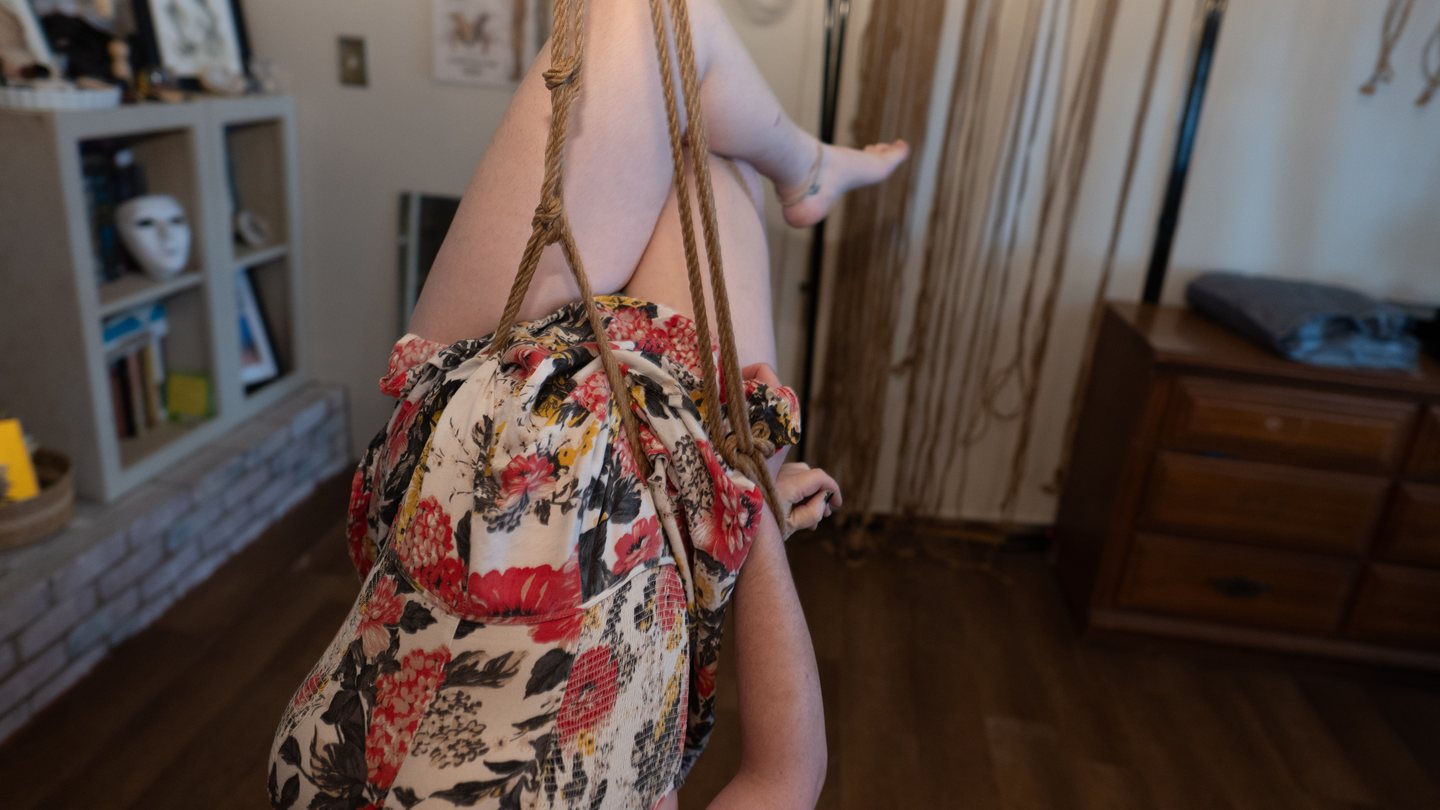
What people say after a session, a class, or a workshop. Every review here was shared with permission, under whatever name the person chose to use.
From the People I Tie With
Tell me how it went
You choose the name that appears, scene name, first name, or anonymous. Nothing is published without your say so, and nothing goes up until you have read how it will appear.
Let’s create something together
View full pricing, booking rules, and schedule your session.
Rope Resources
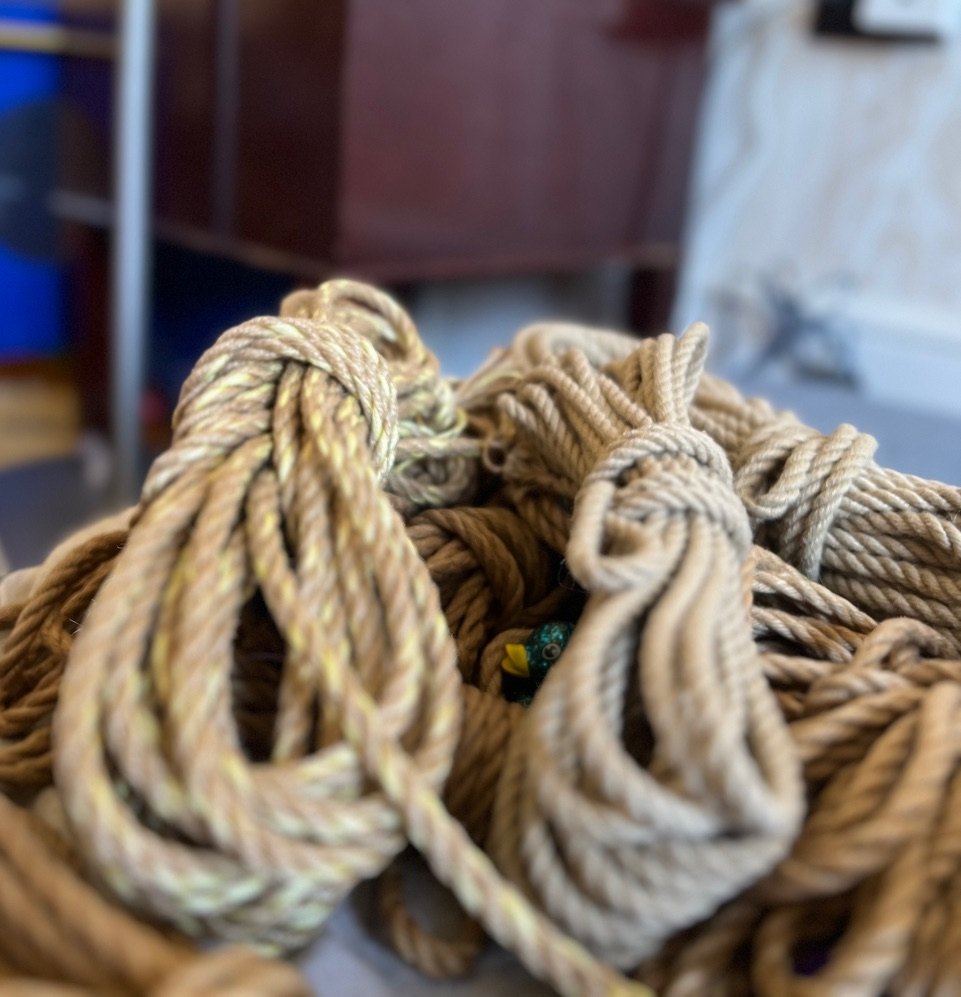
A guide to the language, concepts, and culture of rope, whether you are completely new or looking to deepen your understanding of the practice.
Shibari & the Difference Between Eastern & Western Rope
What is Shibari?
Shibari (级り) is a Japanese word meaning “to bind” or “to tie.” In the West it has become the most common term for the Japanese art of rope bondage, though practitioners in Japan more often use the term kinbaku (紛紿), meaning “tight binding” or “the beauty of tight binding.”
Shibari has roots in hojojutsu, a martial art used to restrain prisoners in feudal Japan. Over centuries it evolved into an aesthetic and erotic art form, eventually influencing rope practices worldwide.
At its heart, shibari is about more than knots. It is a physical and emotional dialogue between the person tying and the person being tied. The rope is the medium, but the connection is the art.
Eastern Style Rope
Eastern or Japanese-style rope (often called kinbaku or shibari) emphasizes aesthetics, emotional presence, and the relationship between rigger and bottom. Key characteristics include:
Natural fiber rope: traditionally jute or hemp, which have texture, bite, and warmth against skin. The friction of natural fiber is intentional and considered part of the sensation.
Asymmetry and flow: ties often have an organic, body-following quality. Symmetry is not always the goal; beauty and feeling are.
Slower, more meditative pacing: the act of tying is itself part of the experience. How the rope is placed matters as much as where.
Suspension-oriented: many traditional Japanese ties are designed with partial or full suspension in mind, though floor work is equally rich.
Western Style Rope
Western-style rope bondage developed largely in Europe and North America and tends to emphasize different values:
Synthetic rope: nylon, MFP, or similar materials are common. They are smoother, easier to clean, and often more comfortable for long wears, but lack the natural texture and bite of jute.
Symmetry and geometry: Western styles often feature more precise, geometric patterns. Decorative ties and column ties are major pillars.
BDSM integration: Western bondage developed alongside broader BDSM culture and is often used within scenes that include other power dynamics, sensation play, or restraint for restraint’s sake.
Efficiency: speed and security are often prioritized alongside aesthetics.
Neither style is superior. They are different languages. Many riggers draw from both.
Edge Play & Risk Profiles
What is Edge Play?
Edge play refers to activities that are considered higher-risk, more intense, or closer to physical or psychological limits than standard BDSM or kink practices. What counts as “edge” is relative. It depends on the individuals involved, their experience, and their personal thresholds.
In rope, edge play might include:
Suspension bondage, particularly inversions or single-point hangs that place significant load on the body.
Extended wear ties that press on nerves or restrict circulation over time.
Predicament bondage, where the bottom must hold a position or face increasing discomfort.
Breath play or other forms of physical intensity combined with rope.
Responsible edge play begins with honest conversation about risk, clear agreements, and a rigger who has the skill to manage what they are attempting. Anyone who rushes past negotiation to get to edge play is not a safe partner.
What is a Risk Profile?
A risk profile is a personal assessment of what kinds of risk you are willing to accept, aware of, and prepared for in a rope context. It is not a fixed document. It is an ongoing conversation with yourself and your partners.
Your risk profile might include:
Physical considerations: injuries, chronic conditions, surgeries, areas of the body with reduced sensation or circulation issues, medications that affect bruising or blood pressure, hypermobility or joint instability.
Psychological considerations: trauma history, triggers, mental health context, how you respond to physical intensity or helplessness, your relationship with pain.
Experience level: what your body is conditioned for. A person who has never been in suspension has a different risk profile than someone with years of practice, even if they feel equally enthusiastic.
Nerve vulnerability: some people are more prone to nerve compression injuries than others. Understanding your own body’s signals is essential.
I ask all new clients to review nerve safety materials before our first session precisely because understanding risk is the foundation of genuine consent.
Negotiation, Consent Profiles & Vetting
What is Negotiation?
Negotiation is the conversation that happens before a scene or session, ideally well before, not in the moment when adrenaline and excitement are already running high. It is how two or more people align on what they want, what they are willing to do, and what is off the table entirely.
Good negotiation covers:
Desires and goals: What are you hoping to experience? What draws you to this?
Hard limits: Things that are absolutely not up for discussion. No means no, always.
Soft limits: Things you are uncertain about or willing to approach carefully with the right person and right conditions.
Physical information: Health history, injuries, nerve vulnerabilities, medications.
Safe words and signals: How will you communicate during the scene, especially if verbal communication is difficult?
Aftercare needs: What do you need when the scene ends?
What is a Consent Profile?
A consent profile is a more comprehensive, often written, record of your boundaries, preferences, and consent framework: what you have agreed to, under what conditions, and with whom. It goes deeper than a single pre-scene negotiation.
Think of it as a living document. It might include:
Blanket consent: things you are always okay with in appropriate contexts.
Conditional consent: things you consent to only with specific people, only after certain conversations, or only in specific settings.
Revoked consent: things you used to be okay with but are no longer.
Evolving consent: things that change based on your relationship, mood, health, or experience.
Having a consent profile helps you communicate clearly, remember your own limits, and advocate for yourself, especially in communities or situations where there can be social pressure to say yes.
What is Vetting?
Vetting is the process of researching and evaluating a potential play partner before engaging in a scene with them, particularly for higher-risk activities like suspension bondage.
Vetting might include:
Community references: Talking to people who have played with this person before. What was their experience? Did the rigger respect limits? How did they handle unexpected situations?
Skills assessment: Can you observe this person tying before you agree to be tied by them? Do they have verifiable training or experience?
Public presence: Are they known in the community? Do they have a reputation (positive or concerning)?
Your own instincts: How do they respond when you ask questions? Do they pressure you? Are they transparent about their experience level?
As a professional, I welcome questions about my background, training, and approach. Vetting me is not an insult. It is exactly what I hope new clients will do.
What is Active Bottoming?
Active Bottoming in Rope
There is a widespread misconception that being tied is a passive experience, that the bottom simply receives while the rigger does all the work. Active bottoming turns that idea on its head.
Active bottoming means being a conscious, engaged participant in your own rope experience. It means:
Communicating in real time. Telling your rigger what you feel, not just when something is wrong, but what is working, what feels good, what is shifting. The rope is a conversation, and you are half of it.
Body awareness. Knowing the difference between productive discomfort and a warning signal. Recognizing early signs of nerve compression (tingling, numbness, weakness) and naming them immediately rather than pushing through.
Positioning and collaboration. Actively adjusting your body to work with the tie, helping the rope land safely, and participating in transitions, especially in suspension.
Managing your own headspace. Understanding how rope trance, adrenaline, or subspace can affect your perception of pain and sensation, and communicating clearly even when your state is altered.
Advocating for yourself. Knowing that you can stop a scene at any time, for any reason, and that doing so is never a failure.
Active bottoming is something I teach explicitly in my sessions for rope bottoms and in private lessons. It is one of the most overlooked skill sets in the rope community, and one of the most important.
Nerve Safety & Risk Reduction
Understanding Nerve Safety in Rope
Nerve injury is the most common serious risk in rope bondage, and it is also one of the most preventable when both the rigger and the bottom understand how nerves work, where they are vulnerable, and what warning signs to watch for.
The highest-risk areas are the radial nerve (upper arm), ulnar nerve (elbow), brachial plexus (shoulder), peroneal nerve (outer knee), and sciatic nerve (posterior leg). We review all of this together before any rope goes on in your first session.
If nerve symptoms appear at any point: stop immediately, remove pressure, assess movement and strength, and do not continue. This applies whether you are tying or being tied, in a session with me or practicing on your own.
Private sessions and lessons available for all experience levels.
Upcoming Events
EmJ teaches and performs at rope conferences and kink events across the country. Catch a class, workshop, or performance at one of these upcoming events, or reach out to bring EmJ to your event.
Where to Find EmJ
Ides of March
The Event Center, Corryton, TN
Active Bottoming for Every Body class & evening party. March 14-15.
PUSH: Durham’s Ultimate Fetish Party
The Fruit & Club ERA, Durham, NC
15th Anniversary Edition. March 28-29.
Ropecraft Chicago 2026
Lisle, Illinois
13th annual Ropecraft Chicago. May 22-26.
Midsummer: The Court of Enchanted Dreams
The Event Center, Corryton, TN
ARC Presents Midsummer. June 20-21.
Elevation Rope Con
Asheville, NC
Opening performer for the convention. July 16-21.
Teaching at The Loft
Charlotte, NC
July 26-27.
Tied Down South Rope Conference
Wingnut Stables, Cameron, NC
A small regional rope conference in the Sandhills of NC. September 5-6.
Shibari VA 2026
Norfolk, Virginia
October 10-11.
PUSH: Durham’s Ultimate Fetish Party
The Fruit, Durham, NC
November 14.
Interested in having EmJ teach or perform at your event or venue? Travel rates are negotiable. Reach out to start the conversation.
The Shop
Video tutorials you can keep, taught the way I teach in person. Everything here is hosted through my Patreon, which handles payment and gives you access the moment you buy. Take a single video, take a full course, or subscribe and get the whole library.
Load Bearing and Hardware
Five videos taught in order, not disconnected clips. Carabiner selection, why D shape hardware jams, adding rope cleanly, and putting an upline in and taking it out safely.
The Complete Collection
All five videos together, cheaper than buying them one at a time. This is the material I am most careful about, because load bearing failure is where people get seriously hurt. I have spent over a decade as a Registered Nurse. Anatomy and injury are not abstractions to me, and I teach this section like it matters.
$41 if bought separately. Included free with Upline membership.
What Is Covered
Choosing and hanging hardware. Why D shape carabiners jam, shown as a failure rather than described. Adding rope cleanly onto whipped and knotted ends. Adding an upline and locking off with two half hitches. Releasing that upline under load, controlled and safe.
Watch these before you put anyone in the air.
Why Trust Me With This
I started as an EMT, became a Registered Nurse, and have worked in that capacity for over a decade. I also work professionally in harm reduction, a framework built on reducing risk rather than pretending it away. That is the same posture I bring to rope.
Foundations: The Single Column
Everything else is built on this tie. Two ways to get there, both taught start to finish, both left hand leading. Learn one, learn the other, and understand why you might reach for each.
The Loopdy Doop Method
The version most people learn first. Clean, quick, and reliable once your hands know it. If you learn one thing from me, make it this one.
Left hand leading
The Twisty Do Method
A second path to the same tie. Some hands find this one faster, and knowing both means you are not stuck when one is not working for your body that day.
Left hand leading
Start With a Single Column
It is the tie I hand every student before their first session, and the one experienced riggers come back to when something is not working. Get this clean and consistent and the rest of rope opens up. Rush past it and you will feel it later.
One Skill at a Time
Want just the one thing? Every video is also available on its own, including the two single column tutorials and the futomomo.
Somerville Bowline, Loopdy Doop Method
Left hand leading. The foundational single column tie, start to finish. If you learn one thing from me, make it this.
$5
Somerville Bowline, Twisty Do Method
Left hand leading. A second approach to the same tie, and why you might reach for it.
$5
How to Hang a Carabiner for Suspension
Pear shaped screw gate on a D ring. What to use, what to avoid, and why the shape matters under load.
$5
Why D Shape Carabiners Jam
A failure demonstration. Watch it happen so you know exactly what you are preventing.
$8
Adding Rope Cleanly
Extending onto whipped and knotted ends without losing tension or creating a weak point.
$10
Adding an Upline and Locking Off
Two half hitches, done properly, with the reasoning behind every wrap.
$10
Rope 101 and 201
Everything I teach, in a form you can keep open on your phone while your hands are busy. Rope 101 covers consent and risk profiles, core skills, rope types and care, uplines and load bearing, and nerve safety with the high risk zones mapped. Rope 201 picks up where it leaves off, through harness work, load distribution, and suspension pathways.
Coming soon. Join at any tier and you will hear the moment they are ready.
Or Get All of It
If you are learning seriously, a membership costs less than buying piece by piece and you get new material as I make it.
Rope Curious
My class and event schedule before it goes public, plus a free tutorial to get you tying today. No cost, no pressure.
First Wrap
Patron only photo sets, behind the scenes, and my written posts about practice and community.
Single Column
My written guides as they release, plus photo breakdowns of specific ties and the reasoning behind them.
Upline
Every video the day it releases, the complete library including Rope 101 and 201, and a monthly group Q&A. Bring your tie photos and your stuck points.
Inner Circle
A monthly thirty minute one on one with me, plus a standing discount on in person sessions. Five slots only, because I want to give each of you real attention.
Buying through the Patreon iPhone app costs about 30 percent more because of Apple fees. A web browser is cheaper.